Rising Concerns: Pakistan's ICBM Threat Amid US Economic Focus
Synopsis
As Pakistan deepens ties with China, concerns grow over its military autonomy. A recent report reveals potential threats to the US from Pakistan's ICBM program, raising alarms amid Washington's economic priorities.
Key Takeaways
Pakistan's reliance on China: Raises questions about military sovereignty.
US sanctions: Targeting Chinese firms aiding Pakistan's missile programs.
Potential ICBM threats: Experts warn of risks to US security.
Current US strategy: Focuses on economic interests over security concerns.
Political implications: Ongoing repression in Pakistan raises alarm in Congress.
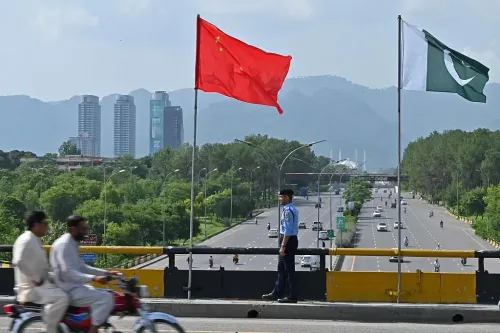
London, March 26 (NationPress) The growing dependence of Pakistan on China raises alarming questions regarding Islamabad's capacity to maintain operational independence and military sovereignty during significant conflicts, particularly in light of Beijing's evident involvement in Pakistan's Intercontinental Ballistic Missile (ICBM) development.
For many years, China has played a vital role in enhancing Pakistan's nuclear capabilities, supplying enriched uranium, along with critical materials and expertise, since the 1970s, as noted in a recent report.
In an article for the UK-based 'Royal Society for Asian Affairs', Marcus Andreopoulos, a senior research fellow at the Asia-Pacific Foundation and a member of NATO’s Global Threats Advisory Group (GTAG), pointed out that these developments have caught the attention of Washington.
He highlighted that prior to imposing sanctions on Pakistan’s National Development Complex (NDC) and other related entities, the previous Biden administration had already sanctioned various Chinese companies and a research institute for “knowingly assisting” Pakistan’s ballistic missile efforts.
This action came after sanctions were placed on three additional Chinese firms for similar infractions.
The report indicates that in June 2024, Lindsay Ford, who served as an advisor for South Asia under the Biden administration, cautioned about an “emerging nuclear threat” to the United States from Pakistan.
Ford contended that heightened paranoia within Islamabad, driven by the anticipated American strikes on Iranian nuclear facilities in 2025, could hasten Pakistan’s long-range missile initiatives, potentially leading to the creation of ICBMs capable of targeting the US directly.
“As a recognized nuclear power, this would enable Pakistan to deploy nuclear warheads over much greater distances than before. This creates an unprecedented risk to the US mainland—one previously associated only with America’s traditional nuclear foes. However, recent developments suggest that instead of addressing these threats, Washington seems to be prioritizing enhanced relations with Islamabad,” the report stated.
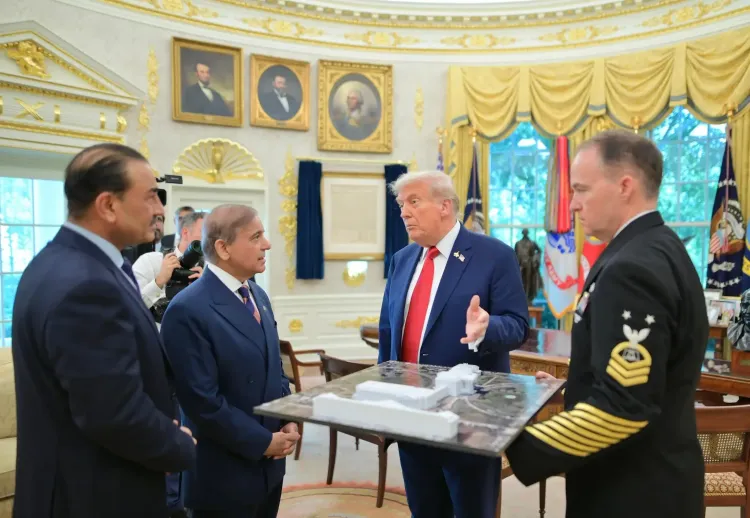
Moreover, the current US administration appears to have overlooked these critical issues, adopting a primarily transactional view of its relationship with Pakistan that emphasizes economic interests over the regional security landscape.
“This has led to tighter engagement with Pakistan’s military-led government, despite Congressional concerns regarding ongoing political repression in the nation,” it added.
Challenging Washington’s approach, the report questioned, “If US–Pakistan relations continue on this trajectory, there is little reason to believe that Trump will take action to restrain Pakistan’s ICBM development.”
Point of View
The US must reassess its diplomatic approach to ensure regional stability.
NationPress
19 Sept 2026
Frequently Asked Questions
What is the main concern regarding Pakistan's relationship with China?
The primary concern is Pakistan's increasing reliance on China, which may compromise its operational independence and military sovereignty, particularly in conflicts involving its ICBM program.
How has the US responded to Pakistan's nuclear advancements?
The US has imposed sanctions on several Chinese companies aiding Pakistan's ballistic missile program, yet recent reports suggest a focus on strengthening economic ties with Islamabad.
What potential threat does Pakistan pose to the US?
Experts warn that Pakistan could develop ICBMs capable of reaching the US, posing an unprecedented nuclear threat if its missile program accelerates.
What is the US administration's current stance towards Pakistan?
The current US administration appears to prioritize economic relations with Pakistan over addressing security concerns related to its nuclear capabilities.
Who highlighted the emerging threat from Pakistan?
Lindsay Ford, a former advisor in the Biden administration, issued warnings about the potential nuclear threat Pakistan poses to the US.