Is Pakistan Normalizing Terrorism Through State Support?
Synopsis
A new report uncovers Pakistan’s troubling affiliations with terrorist entities, revealing state-sanctioned support mechanisms that normalize violence. This deep-rooted relationship poses serious threats to global stability.
Key Takeaways
Evidence shows a structured state support for terrorist organizations in Pakistan.
Political cover and material support are employed to legitimize violence.
Significant events signal a normalization of terrorist activities.
Pakistan's actions challenge international norms and stability.
Strategic ties with other nations enhance the risk of regional destabilization.
London, Jan 12 (NationPress) Recent revelations from various reports and open-source data illustrate a concerning dynamic between Pakistan and globally recognized terrorist organizations.
These findings indicate that these are not mere isolated occurrences but rather a structured model of state support, where political protection, tolerance, and logistical backing serve to legitimize acts of violence.
As noted by DefenceNet, the demarcation between the Pakistani state and entities like Lashkar-e-Taiba (LeT) and Jaish-e-Mohammad (JeM) is not a coincidence but a deliberate construct.
The leadership, infrastructure, and mobilization efforts of these groups persist openly, despite UN sanctions, showcasing a strategy aimed at maintaining armed networks while evading international scrutiny.
A notable instance highlighted in the report is the renovation of the Markaz Syedna Bilal compound in Muzaffarabad (PoK). Once recognized as a JeM training site targeted during Operation Sindoor, the facility was rebuilt as a project supported by the state.
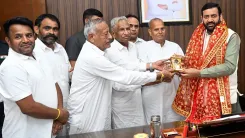
In October 2025, Federal Minister for Kashmir Affairs Rana Muhammad Qasim Noon and various senior officials visited this facility, marking the event as a political gesture of rehabilitation rather than a counterterrorism initiative.
DefenceNet also pointed out the formalization of ideological indoctrination. The week-long Daura-e-Tarbiyah seminars in Quetta, advertised as “educational courses,” actually serve as structured pathways to radicalization prior to militant training.
Between December 5-12, 2025, JeM hosted a camp at Saryab Road and Jama Masjid 'Afzal Guru Shaheed', which was openly promoted and executed without any state intervention. The political legitimization of armed factions is another facet of this situation.
The Pakistan Markazi Muslim League (PMML), widely perceived as the political wing of LeT, participated in the 2024 general elections and continued its public activities into 2025.
As per the report, high-ranking LeT members like Hafiz Talha Saeed openly engaged in PMML gatherings despite sanctions imposed by the US and UN. Public demonstrations further illustrate this normalization.
On September 14, 2025, JeM leader Masood Ilyas Kashmiri extolled Osama bin Laden during an event in Mansehra, while in Karachi, Talha Saeed led a march, visibly protected by law enforcement. Even when permits are officially denied, such events transpire, revealing the disparity between formal restrictions and actual practices.
The report emphasizes that Pakistan’s involvement surpasses domestic networks. Strategic alliances with nations like Saudi Arabia, Iran, Turkey, Malaysia, and Indonesia have established a triangular politico-military framework connecting South and Southeast Asia.
Furthermore, the report cautions that this normalization of Pakistan as a security ally, despite its connections to extremism, has ramifications for Europe, China, and the United States—fostering radicalization, disrupting trade routes, and undermining deterrence strategies.
In comparing it to the case of Abdullah Ocalan, the report points to a stark difference; while Turkey distanced itself from terrorism through arrests and trials, Pakistan integrates and repackages armed factions into its political and social frameworks.
The outcome is a systematic entrenchment of violence as a strategy, with repercussions that extend well beyond South Asia.
Point of View
I recognize the gravity of the situation. The evidence presented in the report underscores the need for a robust global response to ensure that state-sponsored terrorism is not tolerated. Pakistan’s actions could have far-reaching consequences that extend well beyond its borders, and it is vital that we remain vigilant in addressing these issues.
NationPress
1 Oct 2026
Frequently Asked Questions
What does the report say about Pakistan's support for terrorist groups?
The report outlines a systematic model of state support for terrorist organizations, indicating that groups like LeT and JeM receive political, material, and ideological backing from the Pakistani government.
How does this normalization of terrorism affect global security?
The normalization of terrorism in Pakistan poses serious risks to global security, contributing to radicalization and destabilizing trade corridors that impact countries like Europe, China, and the US.
What actions have been taken by Pakistan regarding terrorist organizations?
Despite UN sanctions, leadership and activities of groups like JeM and LeT continue without interruption, with instances of public legitimization and state-supported events.
What comparisons are made with other countries?
The report contrasts Pakistan's approach with Turkey's, highlighting how Turkey severed ties with terrorism, while Pakistan integrates armed networks into its society.
What are the implications of these findings?
The implications include increased radicalization and a potential threat to international peace, as Pakistan's actions could inspire similar behavior in other regions.