Is Pakistan Facing a $1.2 Billion Vaccine Import Bill by 2031 Following India's Supply Halt?
Synopsis
Pakistan is grappling with a $1.2 billion vaccine import bill by 2031 due to India's halted supply. With no domestic production, the country faces severe vulnerabilities as it relies heavily on foreign assistance. Health Minister Mustafa Kamal warns of dire economic impacts if local production does not commence soon.
Key Takeaways
Pakistan faces a $1.2 billion vaccine import bill by 2031.
Dependence on India for affordable vaccines has increased financial strain.
International support for vaccines may end by 2031.
Government plans to initiate local vaccine production.
Rapid population growth intensifies vaccine demand.
New Delhi, Feb 9 (NationPress) The suspension of affordable pharmaceutical imports from India, particularly vaccines, has significantly raised Pakistan's financial challenges, leading the nation to anticipate an annual import bill of $1.2 billion by 2031, as per recent reports.
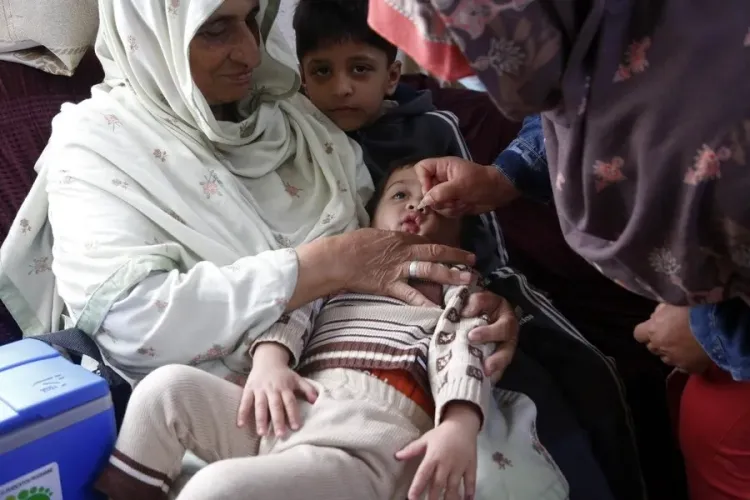
This disruption, stemming from last year’s military conflicts, has highlighted Islamabad's substantial dependence on foreign manufacturing and donor assistance for routine immunization, given that the country offers 13 vaccines at no cost but has no domestic vaccine production, reports state.
Pakistan's Health Minister, Mustafa Kamal, mentioned that the cessation of Indian vaccine deliveries is already impacting the economy and warned of a more critical situation when international aid for vaccine procurement concludes by 2031.
“Currently, Pakistan is responsible for 51 percent of the costs, and if we do not initiate local vaccine production, we will encounter an annual import bill of $1.2 billion by 2031,” the minister was quoted as saying in reports.
The minister further elaborated that Pakistan has historically acquired affordable vaccines for immunization and other needs from India via the Global Alliance for Vaccines and Immunisation (GAVI), which has served as a global purchasing and funding platform for underprivileged nations.
At present, Pakistan's vaccine imports account for around $400 million annually, with nearly 49 percent funded by international organizations through GAVI, the minister revealed.
GAVI played a crucial role in securing millions of COVID-19 doses from Indian manufacturers under the COVAX initiative. The minister asserted that the government has commenced preparatory actions to establish domestic vaccine production rather than await the expiration of donor support.
With a rapidly growing population, registering 6.2 births per year, the demand for vaccines is rising sharply, exposing the lack of domestic production as a significant vulnerability.
India halted its vaccine supply following the launch of Operation Sindoor on May 7, 2025, aimed at terror infrastructure in Pakistan and Pakistan-occupied Kashmir, in retaliation for the tragic Pahalgam attack that claimed 26 lives.
Point of View
It's crucial to recognize the implications of Pakistan's reliance on foreign vaccine imports. The current situation underscores the urgent need for domestic production to ensure self-sufficiency and protect public health. The government's proactive steps toward local manufacturing are essential for addressing this vulnerability and securing the nation's healthcare.
NationPress
19 Oct 2026
Frequently Asked Questions
Why is Pakistan's vaccine import bill increasing?
The increase is due to the disruption of affordable vaccine imports from India, resulting in a projected annual import bill of $1.2 billion by 2031.
What impact does India's supply halt have on Pakistan?
India's halt in vaccine shipments is harming Pakistan's economy and heightening its reliance on foreign support for immunization.
What is GAVI's role in vaccine procurement for Pakistan?
GAVI has historically helped Pakistan acquire affordable vaccines, covering a significant portion of the costs through international funding.
What steps is Pakistan taking in response to this situation?
Pakistan is preparing to establish domestic vaccine production to reduce reliance on imports and ensure a stable vaccine supply.
What demographic factors are contributing to vaccine demand in Pakistan?
Pakistan's rapidly growing population, with 6.2 births annually, is significantly increasing the demand for vaccines.