Is Pakistan’s Water Crisis a Recipe for Disaster?
Synopsis
Pakistan's water crisis is a pressing issue with millions facing severe challenges. This report highlights the systemic mismanagement and political negligence fueling the crisis, as well as the human toll it takes, particularly on women and children. Can Pakistan rise to the challenge before it's too late?
Key Takeaways
Millions are impacted by the water crisis in Pakistan.
Women are significantly affected, especially in drought-stricken areas.
Children face health risks from contaminated water .
Political indifference exacerbates the crisis.
Media coverage is lacking, diverting attention from urgent reforms.
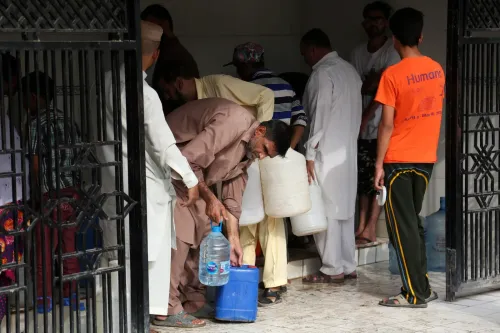
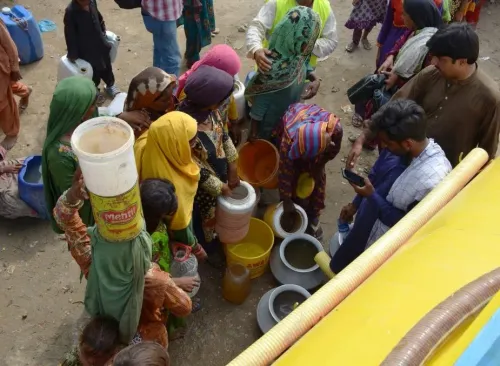
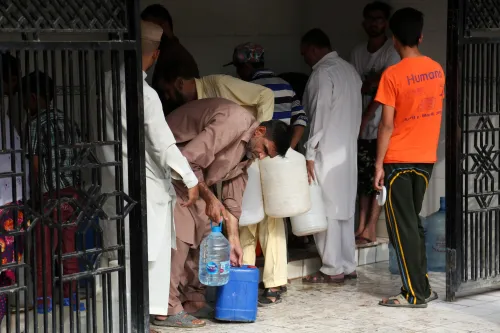
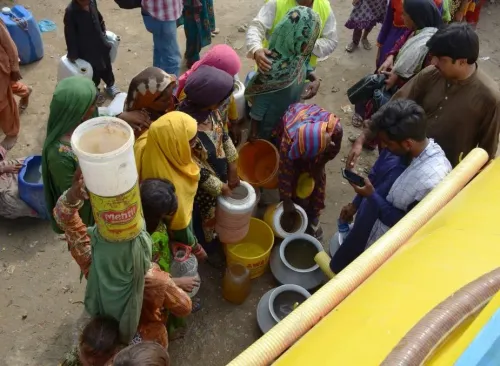
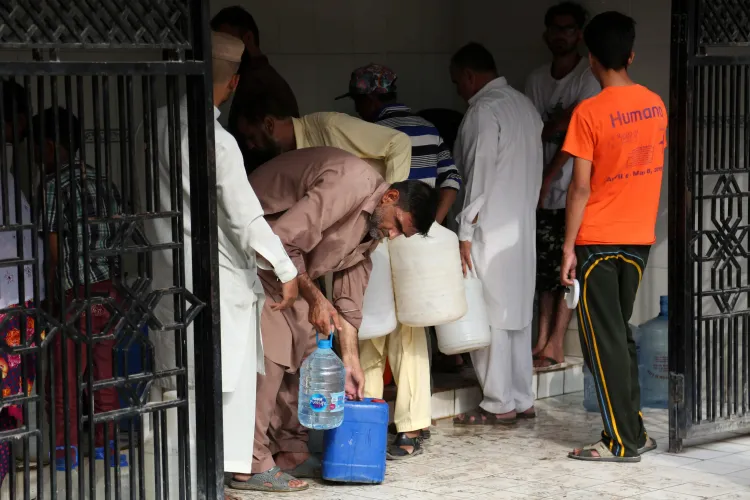
Islamabad, Nov 5 (NationPress) Pakistan is currently facing a severe water crisis that has resulted in a tremendous human cost, compelling millions to dig deeper wells and travel extensive distances to obtain water. This burden disproportionately affects women, particularly in areas afflicted by drought, according to a report released on Wednesday.
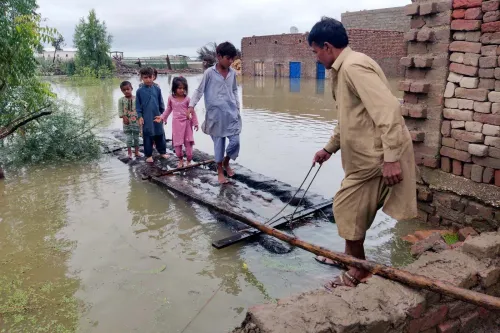
Furthermore, children are falling victim to preventable diseases stemming from contaminated water and inadequate sanitation, while urban residents deal with ongoing shortages, and rural populations remain overlooked by the government.
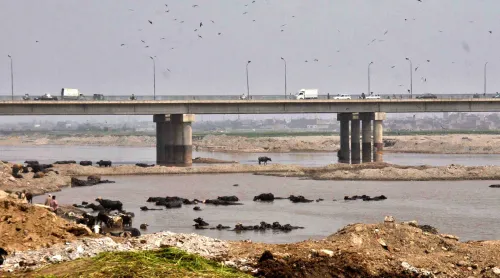
“Situated in the heart of South Asia, Pakistan is on the verge of a disastrous water crisis, one that arises not from a lack of resources, but from systemic mismanagement, governmental neglect, and political diversion. Despite being ranked as one of the more water-abundant countries worldwide, with only 35 nations ahead of it in natural water availability according to the World Bank, Pakistan finds itself among the most water-stressed countries globally. This situation unveils a deeply concerning reality: the water crisis in Pakistan is a result of human mismanagement rather than an unavoidable natural disaster,” the report from 'Islam Khabar' outlined.
The report further indicated that despite the critical nature of the crisis, the leadership in Pakistan remains unresponsive, lacking a comprehensive long-term water policy, an integrated drought early warning system, and substantial infrastructure investment. The political economy analysis by the International Water Management Institute underscored major deficiencies in Pakistan's water governance, including inadequate data, outdated planning processes, and a lack of inter-provincial cooperation.
“The media narrative and public discourse reflect this indifference. Political talk shows dominate the media landscape, while the water crisis, arguably the most urgent issue confronting the nation, receives minimal focus. Lawmakers seem more preoccupied with political maneuvering than ensuring water access for their constituents,” the report mentioned.
Additionally, the report highlighted that instead of confronting their shortcomings, political leaders in Pakistan have increasingly resorted to blame-shifting, directing criticism towards India for its suspension of the Indus Waters Treaty, or Afghanistan for its proposed Kunar River dam, which they claim could disrupt water flow to Khyber Pakhtunkhwa. These narratives only serve to distract from Pakistan's ongoing mismanagement of water resources, with external scapegoating hindering necessary solutions and diverting attention from the urgent need for domestic reform and accountability.
“Water, easily weaponized in public discussions, has become a means of deflection. Yet, the irony is clear: Islamabad and Rawalpindi, which face severe water shortages, depend on watersheds entirely located within Pakistan. The crisis in these cities cannot be attributed to external forces; it is a result of domestic neglect,” the report emphasized.
Point of View
It is imperative to understand the significance of the ongoing water crisis in Pakistan. Our nation stands at a crossroads where decisive action is essential. We must advocate for accountability and reforms to ensure water security for all citizens, prioritizing the welfare of our communities over political interests.
NationPress
22 Oct 2026
Frequently Asked Questions
What are the main causes of Pakistan's water crisis?
The primary causes include systemic mismanagement, governmental indifference, lack of a coherent long-term policy, and inadequate infrastructure investment, leading to both urban shortages and rural neglect.
How does the water crisis affect women and children?
Women, particularly in drought-affected areas, are disproportionately burdened with water collection, while children are at risk of diseases caused by contaminated water and poor sanitation.
What is the role of political leadership in this crisis?
Political leaders have largely been unresponsive, focusing on blame-shifting rather than implementing necessary reforms to address the water crisis.
How does the media portray this crisis?
The media often prioritizes political talk shows over the water crisis, leading to a lack of public awareness and urgency regarding this pressing issue.
What can be done to alleviate the water crisis in Pakistan?
Implementing a long-term water policy, enhancing infrastructure, and fostering inter-provincial cooperation are critical steps needed to address the crisis effectively.