UN refugee chief Barham Salih: Peace is the only durable fix for forced displacement
Synopsis
In his first Security Council address as UN refugee chief, Barham Salih put a blunt challenge to the world's most powerful multilateral body: with over 117 million people displaced and camps that outlive generations, humanitarians can manage suffering but only peace can end it. The speech was as much political ultimatum as humanitarian briefing.
Key Takeaways
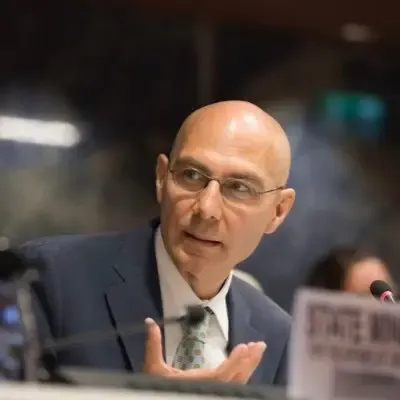
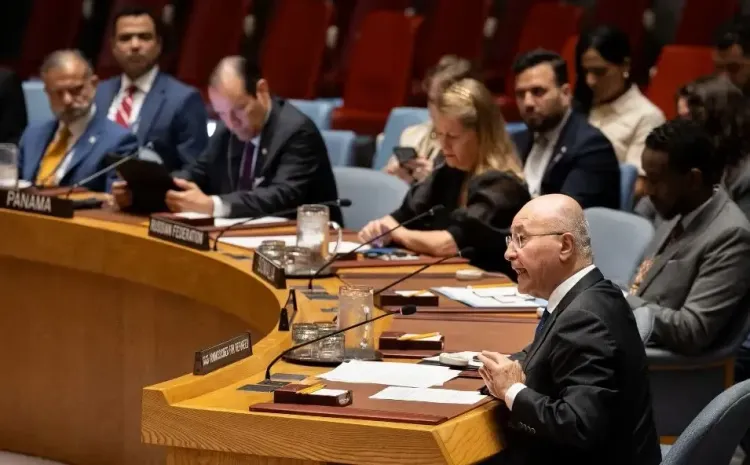
Barham Salih delivered his first briefing as UN High Commissioner for Refugees to the UN Security Council on 26 September .
More than 117 million people are currently displaced by conflict, violence, persecution, and other threats.
Salih declared peace 'the most durable solution to forced displacement,' urging the Council to use its political authority to end conflicts.
He warned that success cannot mean keeping people alive through war or leaving refugee camps standing for 50 years .
The 1951 Refugee Convention , now 75 years old , established the promise to protect people when peace fails — a promise Salih said must be kept and exceeded.
Salih made five specific asks of the Council: end conflicts, protect civilians, uphold non-refoulement , invest in solutions early, and support host countries.
UN High Commissioner for Refugees Barham Salih told the UN Security Council on 26 September that the most enduring answer to forced displacement is peace — not better-managed refugee camps or more efficient humanitarian operations. Delivering his first briefing as high commissioner, Salih called on Council members to deploy their unique political authority to end conflicts and sustain peace processes.
The Scale of the Crisis
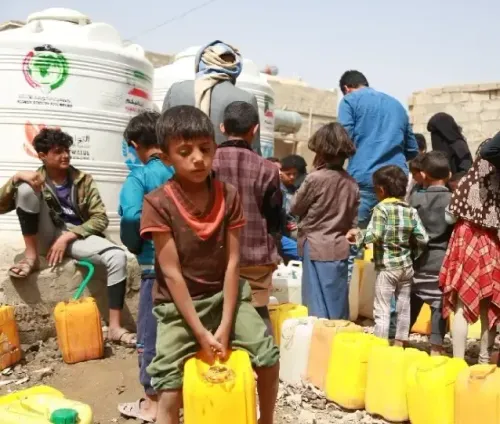
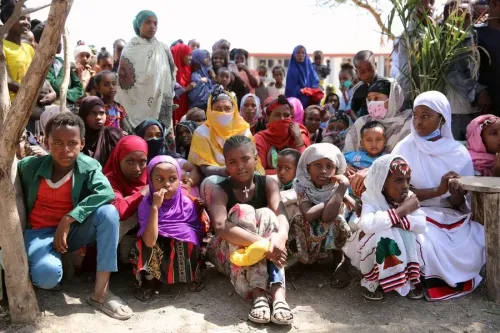
Salih placed the crisis in stark numerical terms: more than 117 million people have currently been forced from their homes by conflict, violence, persecution, and other threats to their safety. He described forced displacement as 'not only a humanitarian challenge' but 'fundamentally a challenge to international peace and security.'
'Displacement is rapidly outpacing solutions. Conflicts are multiplying. Many are becoming more protracted. Political solutions remain elusive,' Salih said, warning that millions who fled what they hoped was a temporary crisis now find themselves displaced for years — sometimes across generations.
What Success Cannot Look Like
Salih was pointed in defining the limits of humanitarian work. 'Success cannot be that we become better at keeping people alive through another year of war. It cannot be that a refugee camp established in response to an emergency is still there 50 years later. And it cannot be that children inherit displacement from their parents,' he said. 'Success must ultimately mean creating the conditions in which people no longer need us.'
The remarks signal a deliberate reframing: the mandate of the United Nations High Commissioner for Refugees (UNHCR) is not to make displacement sustainable but to make it unnecessary.
The Refugee Convention at 75
Salih noted that the 1951 Refugee Convention — now 75 years old — established a promise to protect people when peace fails. He argued the international community's collective ambition must go further: preventing displacement where possible, resolving it where it has already occurred, and enabling people to rebuild their lives in safety and dignity. 'Ultimately, the most durable solution to forced displacement is peace,' he said.
What Salih Asked of the Security Council
Addressing the UN Security Council — which the UN Charter entrusts with primary responsibility for international peace and security — Salih set out five concrete asks. He urged the Council to use its political influence to end conflicts and sustain peace processes, to protect civilians and uphold international humanitarian law, to preserve asylum and uphold the principle of non-refoulement, to invest in solutions from the outset rather than as an afterthought, and to support refugee-hosting countries and countries of return.
'For the millions of people forced from their homes — and the millions more who should never have to flee — I urge this great council to use that responsibility,' he said.
Humanitarian Work Cannot Substitute for Political Will
Salih acknowledged that humanitarian organisations deal daily with the consequences of conflict — protecting those who flee, supporting host countries and communities, and working to help people find pathways out of displacement. But he drew a clear boundary: 'Humanitarians cannot create peace.' The responsibility for that, he stressed, lies with political actors, and most directly with the fifteen members of the Security Council. His address signals that UNHCR under his leadership intends to push the political track harder than its predecessor did.
Point of View
He is, in effect, indicting the Council's own record. The tension is real: UNHCR depends on the political goodwill of the same member states it is now pressuring. Whether this framing galvanises action or merely sharpens the organisation's moral authority without moving any geopolitical needle remains the defining question of his tenure.
NationPress
26 Sept 2026
Frequently Asked Questions
Who is Barham Salih and what role does he hold?
Barham Salih is the newly appointed UN High Commissioner for Refugees, leading the United Nations High Commissioner for Refugees (UNHCR). His Security Council address on 26 September was his first formal briefing in that capacity.
How many people are currently displaced worldwide according to UNHCR?
According to Barham Salih's address to the Security Council, more than 117 million people have been forced from their homes by conflict, violence, persecution, and other threats to their safety. Displacement is described as rapidly outpacing solutions.
What did Barham Salih ask of the UN Security Council?
Salih asked the Security Council to use its political influence to end conflicts and sustain peace processes, protect civilians and uphold international humanitarian law, preserve the right to asylum and the principle of non-refoulement, invest in durable solutions from the outset, and support refugee-hosting countries and countries of return.
What is non-refoulement and why did Salih raise it?
Non-refoulement is the core international legal principle that prohibits states from returning refugees or asylum seekers to a territory where they face serious threats. Salih raised it as one of five specific commitments he urged the Security Council to uphold, amid concerns that the principle is under pressure in several regions.
What is the significance of the 1951 Refugee Convention in this context?
The 1951 Refugee Convention, now 75 years old, is the foundational international treaty establishing the rights of refugees and the obligations of states to protect them. Salih invoked it to argue that while the promise to protect people when peace fails must be kept, the collective ambition must go further — preventing and resolving displacement, not just managing it.