South Korea opposition urges President Lee to veto prosecution reform bill
Synopsis
South Korea's opposition PPP is demanding President Lee Jae Myung veto a bill that strips prosecutors of direct investigative authority — passed 175-2 despite PPP protests. With Lee's own criminal trials suspended, the opposition is framing the legislation as a law that 'only benefits criminals,' and warning that impeachment calls will grow if he lets it stand.
Key Takeaways
The People Power Party (PPP) on 3 August urged President Lee Jae Myung to veto the amended Criminal Procedure Act .
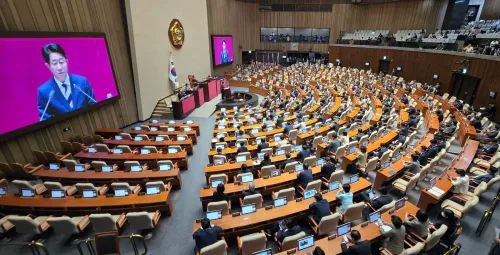
The bill passed a plenary session 175-2 last week, stripping the prosecution of its direct investigative powers.
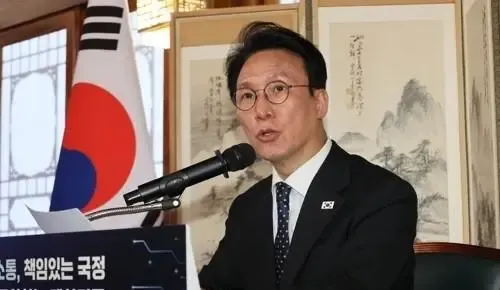
PPP leader Jang Dong-hyeok called it a 'death sentence for the rule of law' and said it 'only benefits criminals, including President Lee.' Under the law, prosecutors must request judicial police officers to conduct supplementary investigations rather than doing so directly.
The reform is part of a broader ruling-party plan to replace the prosecution with two separate agencies for investigations and indictments.
Jang warned that calls for Lee's impeachment would grow if he refuses to use his veto.
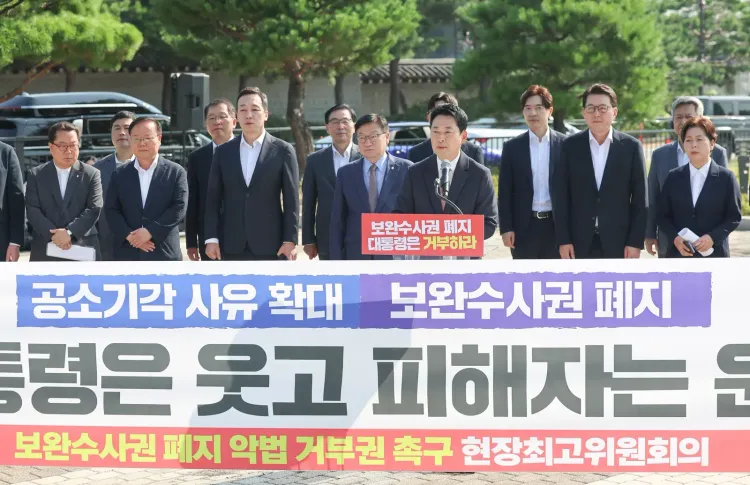
South Korea's main opposition People Power Party (PPP) on Monday, 3 August formally urged President Lee Jae Myung to exercise his veto power against a recently enacted bill that strips the prosecution of its direct investigative authority. The appeal came as PPP lawmakers convened a Supreme Council meeting outside Cheong Wa Dae, the former presidential compound in Seoul.
What the Bill Does
Under the legislation — an amendment to the Criminal Procedure Act — the prosecution will lose its authority to conduct direct and supplementary investigations. Instead, prosecutors will be required to formally request judicial police officers to carry out such inquiries on their behalf. The bill cleared a plenary session last week in a 175-2 vote, passing despite vocal resistance from the PPP.
What the Opposition Said
PPP leader Jang Dong-hyeok delivered a sharp rebuke of the legislation at the council meeting. 'When the passage of the amendment to the Criminal Procedure Act abolishing the supplementary investigative authority was declared, the rule of law in South Korea was handed a death sentence,' he said. Jang added, 'This is a bill that only benefits criminals, including President Lee,' pointing to the fact that Lee's own criminal trials are currently suspended.
Jang further warned that public pressure for Lee's impeachment would intensify if he declines to veto the bill, citing opposition from a majority of the public, legal experts, and even some lawmakers within the ruling party itself.
The Ruling Party's Broader Agenda
The bill is part of the ruling party's wider prosecution reform drive, which aims to dismantle the existing prosecutorial structure and replace it with two separate agencies — one responsible for investigations and another for indictments. Critics, including PPP lawmakers, argue the restructuring could weaken protections for victims of crime and erode institutional checks on power.
Political Stakes for President Lee
The veto demand places President Lee in a politically charged position. His own criminal proceedings — currently on hold — have made the prosecution's investigative powers a deeply personal legislative battleground. Notably, the PPP's framing of the bill as one that 'benefits criminals' is a direct reference to Lee's legal situation, a charge the ruling party has not publicly addressed. Whether Lee signs or vetoes the bill is expected to set the tone for South Korea's political trajectory in the months ahead.
Point of View
But it is not without factual basis. The deeper question mainstream coverage has underplayed is structural: dismantling a centralised prosecutorial model without a credible transition plan risks creating an accountability vacuum, not filling one. South Korea's rule-of-law reputation, hard-won over decades, is the real collateral in this legislative gamble.
NationPress
17 Sept 2026
Frequently Asked Questions
What does the South Korea prosecution reform bill do?
The bill amends the Criminal Procedure Act to remove the prosecution's authority to conduct direct and supplementary investigations. Prosecutors will instead have to formally request judicial police officers to carry out such investigations on their behalf.
Why is the PPP opposing the bill?
The People Power Party argues the bill undermines the rule of law and weakens protections for crime victims. PPP leader Jang Dong-hyeok has called it a measure that 'only benefits criminals,' with a pointed reference to President Lee Jae Myung's own suspended criminal trials.
By what margin did the bill pass?
The bill passed a plenary session of South Korea's National Assembly by a vote of 175-2 last week, with the PPP's objections failing to prevent its passage.
What happens if President Lee does not veto the bill?
PPP leader Jang Dong-hyeok warned that public demands for President Lee's impeachment would grow stronger if he declines to use his veto power. The bill would then take effect and reshape how the prosecution operates.
What is the ruling party's broader goal with this reform?
The ruling party aims to dismantle the existing prosecution structure and create two new agencies — one handling investigations and one handling indictments — as part of a wider overhaul of South Korea's criminal justice system.