South Korea strips prosecution of investigative powers in 175-2 vote
Synopsis
South Korea's ruling Democratic Party rammed through a bill eliminating the prosecution's direct investigative powers in a 175-2 vote, triggering the acting Prosecutor General's resignation and opposition demands for a presidential veto — all while President Lee Jae Myung's own criminal trials remain suspended, making the political stakes unusually personal.
Key Takeaways
South Korea's National Assembly passed the Criminal Procedure Act revision on 31 July in a 175-2 vote with one abstention.
The bill strips the prosecution of authority to conduct direct and supplementary investigations ; prosecutors must now request judicial police to act.
Acting Prosecutor General Koo Ja-hyeon resigned immediately after the vote, citing responsibility for the revision.
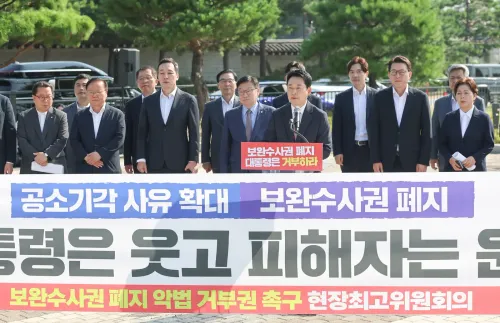
The People Power Party (PPP) called on President Lee Jae Myung to veto the bill, labelling it 'tailor-made legislation' given his suspended criminal trials.
The presidential office said it 'respects' the parliament's decision and pledged smooth implementation.
A separate bill to shorten fast-track bill review from 330 days to 90 days faces a PPP filibuster, with a vote expected next month.
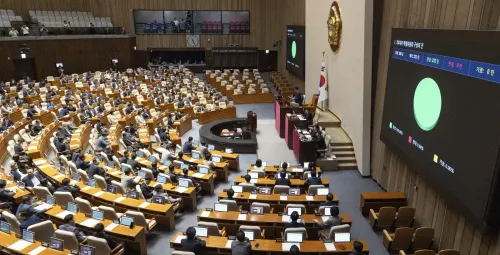
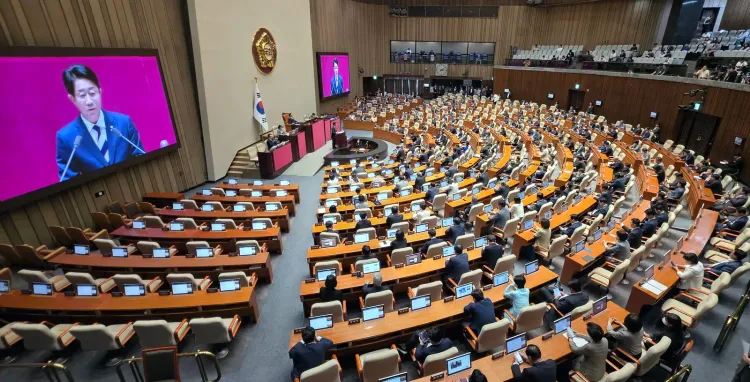
South Korea's National Assembly on Friday, 31 July passed a landmark revision to the Criminal Procedure Act, stripping the prosecution of its authority to conduct direct investigations — including supplementary probes — in a 175-2 vote with one abstention. The bill, pushed through by the ruling Democratic Party (DP), marks a sweeping restructuring of South Korea's criminal justice architecture and has drawn immediate and fierce opposition from the People Power Party (PPP).
What the Bill Changes
Under the revised law, prosecutors will no longer be permitted to lead direct investigations. Instead, they will be required to request judicial police officers to carry out supplementary investigations on their behalf. The revision is framed as a follow-up to broader prosecution reform legislation that calls for dismantling the existing prosecution structure and creating two new independent agencies — one tasked with investigations and another with indictments.
How the Vote Unfolded
The bill's passage was preceded by a procedural battle. The PPP had launched a filibuster the previous day in a bid to block the vote. The Assembly voted to invoke cloture — ending the filibuster — before proceeding to the plenary vote, where the bill cleared with an overwhelming majority. The DP's numerical dominance in the legislature proved decisive.
Acting Prosecutor General Resigns
In a striking response to the bill's passage, acting Prosecutor General Koo Ja-hyeon submitted his resignation shortly after the vote. 'I've just submitted my resignation to take responsibility for the revision,' Koo told reporters. The move signals deep institutional discontent within the prosecution over the legislative overhaul.
Opposition Calls for Presidential Veto
The PPP immediately called on President Lee Jae Myung to exercise his veto power. The party's floor leader, Jeong Jeom-sig, described the bill as 'tailor-made legislation' for the president, noting a provision that reportedly relaxes the requirements for courts to dismiss indictments — at a time when President Lee's own criminal trials are currently suspended. 'He should use his veto power as he does not want it to be remembered as the "Lee Jae Myung escape-from-prison law,"' Jeong said at a press briefing in the National Assembly.
Presidential Office Response and What Comes Next
The presidential office, Cheong Wa Dae, said it 'respects' parliament's decision. Senior presidential secretary for public relations and communication Seong Ghi-hong said in a statement: 'We'll do our utmost to ensure the revised law is implemented smoothly and that the public can feel the change in their daily lives.' Separately, the Assembly also introduced a revision to the National Assembly Act that would shorten the review period for fast-tracked bills from a maximum of 330 days to 90 days — a measure the PPP has already filibustered. That filibuster was set to expire automatically at midnight when the July extraordinary parliamentary session ended, with a vote expected at the first plenary session next month.
Point of View
Not a guardrail. The opposition's 'escape-from-prison law' framing is pointed: with President Lee's criminal trials suspended, a provision easing indictment dismissal requirements lands in uniquely convenient territory. Whether that is design or coincidence, the optics are damaging. The acting Prosecutor General's resignation is the clearest signal yet that institutional trust in the reform process has collapsed inside the very agency being reformed. South Korea's judicial overhaul now hinges on whether the presidency absorbs the PPP's veto demand or lets a structurally altered prosecution take effect — either path carries significant democratic risk.
NationPress
15 Sept 2026
Frequently Asked Questions
What does South Korea's new prosecution reform bill do?
The revised Criminal Procedure Act removes the prosecution's authority to conduct direct investigations, including supplementary probes. Prosecutors must now formally request judicial police officers to carry out such investigations on their behalf, as part of a broader plan to split prosecution functions into two separate agencies.
How did the bill pass despite opposition?
The ruling Democratic Party, which holds a majority in the National Assembly, invoked cloture to end a filibuster launched by the People Power Party, then passed the bill 175-2 with one abstention in a plenary session on 31 July.
Why did the acting Prosecutor General resign?
Acting Prosecutor General Koo Ja-hyeon submitted his resignation immediately after the vote, stating he was 'taking responsibility for the revision.' The move reflects deep institutional opposition within the prosecution to the legislative overhaul.
Why is the PPP calling the bill 'tailor-made legislation'?
The PPP's floor leader Jeong Jeom-sig argued that a provision in the bill relaxing court requirements for dismissing indictments appears designed to benefit President Lee Jae Myung, whose own criminal trials are currently suspended. The party has demanded the president exercise his veto power.
What happens next with the bill and related legislation?
The presidential office has said it respects parliament's decision and will work to implement the law smoothly. A separate bill to shorten the fast-track review period from 330 days to 90 days faces a PPP filibuster that expired at midnight on 31 July; a vote on that measure is expected at the first plenary session next month.