What measures is South Korean President Lee proposing to stabilize prices?
Synopsis
In a bid to quell public concern over rising prices, South Korean President Lee Jae Myung is calling for immediate actions to stabilize food and essential goods costs. His proactive approach includes monitoring unfair trading practices and addressing systemic issues within the distribution process. How will these measures impact the economy?
Key Takeaways
Proactive measures: President Lee is advocating for urgent actions to stabilize food and essential goods prices.
Monitoring practices: The interagency task force will focus on unfair trading practices and monopolistic behaviors.
School uniforms: A review of school uniform pricing is underway due to rising costs.
Price-fixing investigations: Corporate executives are facing legal scrutiny for price manipulation.
Public concern: Rising prices are a significant issue for households, especially ahead of the Lunar New Year.
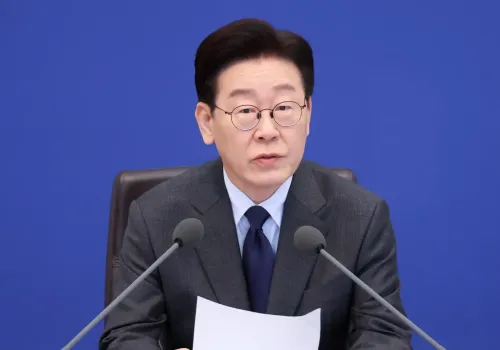
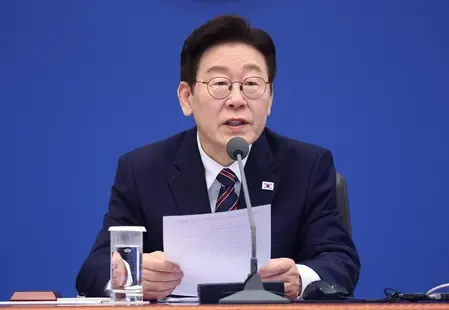
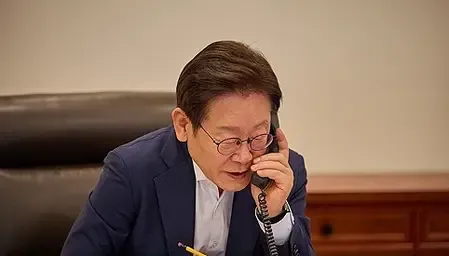
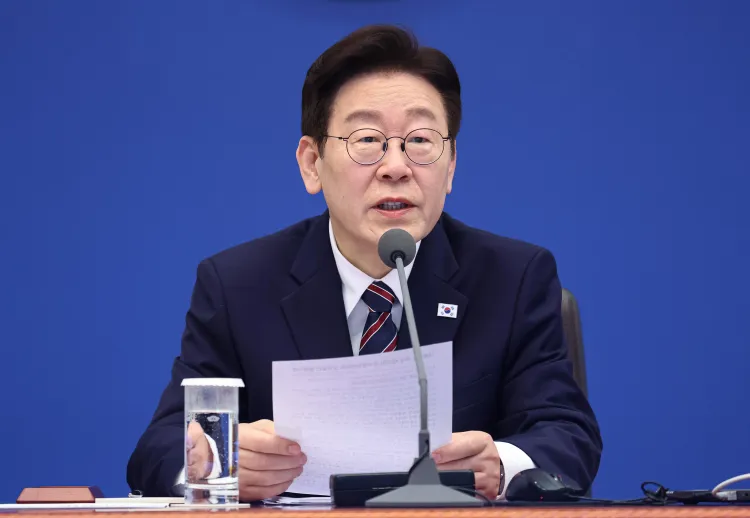
Seoul, Feb 12 (NationPress) South Korean President Lee Jae Myung emphasized the need for proactive measures to ensure the stability of food and essential goods prices. He highlighted the importance of monitoring unfair trading practices and tackling underlying issues in the distribution system.
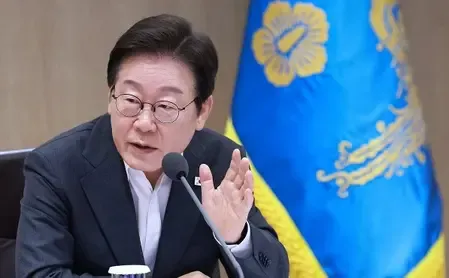
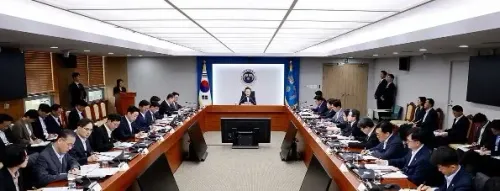
During a meeting with senior aides after his visit to a traditional market in Chungju, ahead of the upcoming Lunar New Year celebrations, Lee expressed concern over public anxiety surrounding prices and sluggish sales.
He directed a newly established interagency task force to devise immediate actions to stabilize prices and vigilantly oversee unfair practices, including price manipulation and monopolistic behaviors involving specific items.
“Proactive measures are essential to confront structural challenges at every level of the distribution chain,” he stated.
Lee also noted incidents where some firms reportedly resold imported goods, which benefitted from tariff reductions, at prices exceeding market rates, insisting that stringent actions must be pursued if such activities are confirmed.
Furthermore, he called for an evaluation of school uniform prices after reports indicated that the average expense had surged to 600,000 won (approximately USD 417), indicating that this figure is significantly higher than what it was during his tenure as mayor of Seongnam from 2014 to 2018.
“As the back-to-school season approaches, it’s crucial to assess whether the current school uniform prices are fair,” he remarked.
On February 5, President Lee instructed his aides to utilize all available tools to stabilize prices and prevent companies from exploiting monopolistic power to inflate costs.
These comments were made during a discussion with senior secretaries, coinciding with the recent indictment of corporate executives accused of price-fixing involving essential items like flour, sugar, and electricity.
“I urge you to mobilize all state resources to rectify practices that impose excessive prices on the public,” Lee stated. “Even if economic indicators show improvement, citizens will find it hard to perceive any benefit in their lives if the costs of everyday items remain unstable.”
Lee proposed forming a task force to intensively monitor prices for a designated period, pointing out systemic issues related to the distribution expenses of agricultural products, including fruits and vegetables.
The investigation into price-fixing commenced after Lee directed the government to adopt a more proactive stance against rising costs of daily goods during a Cabinet meeting last September.
Point of View
It is paramount to recognize that President Lee's initiatives demonstrate a commitment to addressing the economic concerns of citizens. In a landscape marked by rising prices, these efforts to stabilize essential goods reflect a governmental accountability that resonates with the public's pressing needs. Ensuring fair pricing and market integrity is crucial for maintaining trust in the economic system.
NationPress
7 Oct 2026
Frequently Asked Questions
What prompted President Lee to call for price stabilization measures?
Rising concerns among the public regarding the stability of food and essential goods prices prompted President Lee to initiate measures aimed at monitoring unfair trading practices and addressing distribution issues.
What specific actions is the interagency task force expected to take?
The interagency task force is tasked with preparing short-term measures to stabilize prices and closely monitoring unfair practices, such as price rigging and monopolistic behaviors.
What concerns did President Lee express regarding school uniform prices?
President Lee expressed concerns that the average cost of school uniforms had risen significantly, warranting a review to determine if current prices are justified, especially with the back-to-school season approaching.
How have companies been implicated in price-fixing activities?
Recent indictments of corporate executives accused of price-fixing on essential items such as flour and sugar have raised alarms, prompting President Lee to call for stricter enforcement against such practices.
What are the potential implications of these proposed measures?
If implemented effectively, these measures could help stabilize prices, restore public confidence, and mitigate the economic burden on households, particularly during significant cultural events like the Lunar New Year.