Why Are People Protesting Against the Plundering of Sindh's Resources?
Synopsis
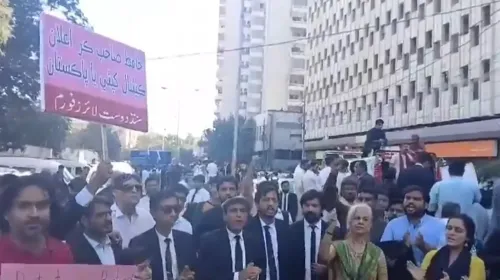
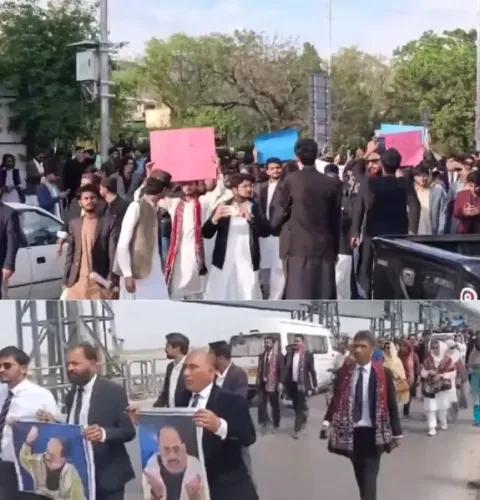
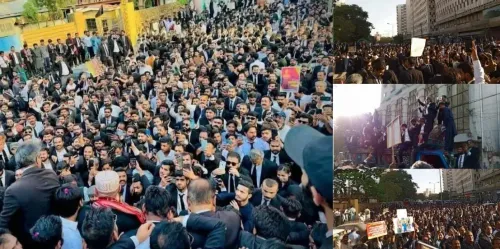
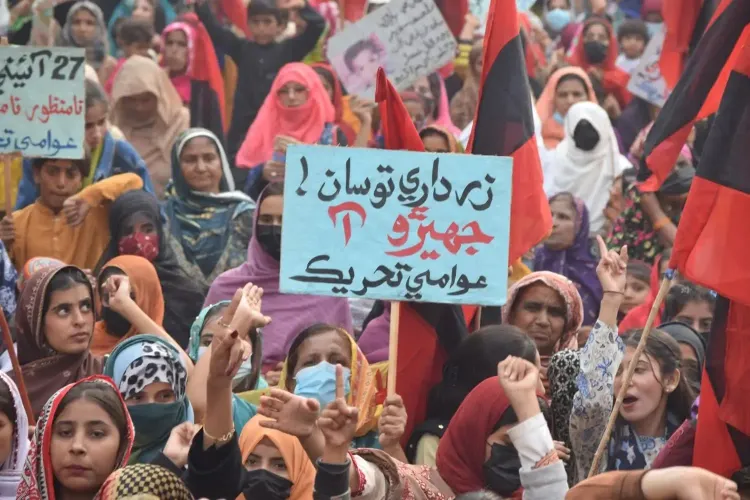
In a powerful demonstration, thousands rallied in Larkana, Pakistan, calling attention to the exploitation of Sindh's resources amidst rising political tensions. This protest highlights the growing discontent over constitutional amendments and the alleged rise of banditry in the region, raising critical questions about governance and resource management.
Key Takeaways
Thousands protested against resource exploitation in Sindh.
Issues include unconstitutional amendments and corporate farming.
Calls for accountability regarding banditry and governance.
Shafi Burfat's appeal highlights international concerns.
Protests reflect deep-rooted dissatisfaction among Sindh's citizens.
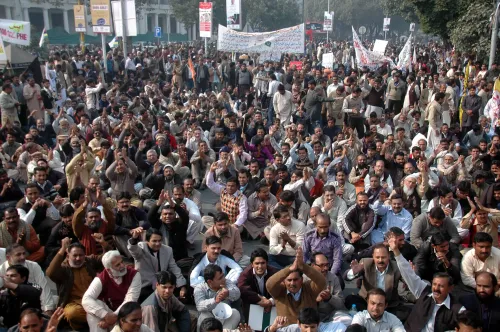
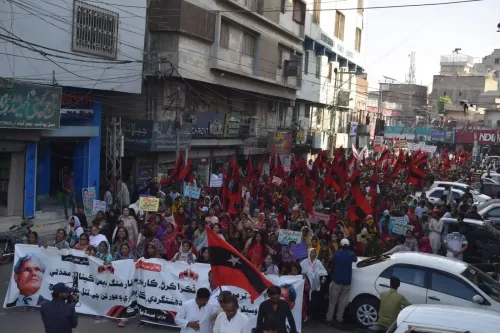
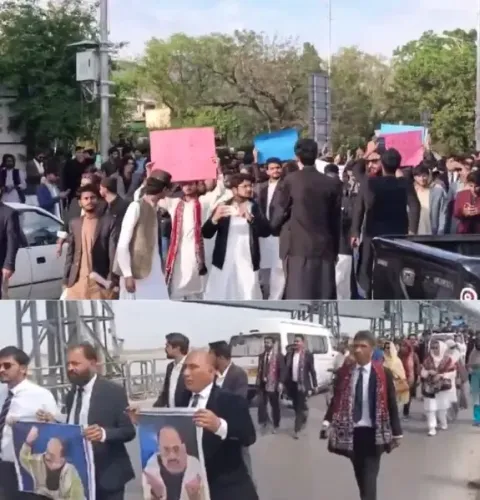
Islamabad, Dec 22 (NationPress) A significant turnout of individuals took part in the 'Save Sindh's Existence and Resources March' from Bakrani Road to Jinnah Bagh Chowk in Pakistan's Larkana, despite the enforcement of Section 144 by authorities and what the protest organizers termed as bogus FIRs, as reported by local media on Monday.
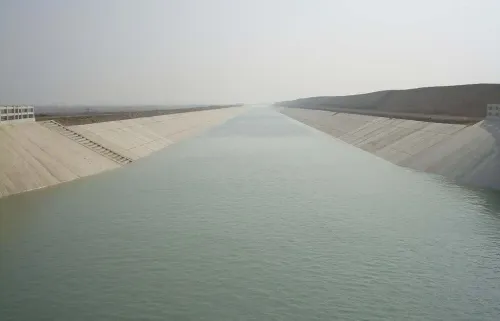
The event, facilitated by Awami Tehreek and Sindhyani Tehreek on Sunday, aimed to express dissent against the 27th Constitutional Amendment, proposed corporate farming initiatives, the construction of new canals and dams on the Indus River, the alleged misappropriation of Sindh's resources, and the proliferation of bandit rule, according to the leading daily The Express Tribune.
During the rally, Awami Tehreek Central President Advocate Vasand Thari stated that the parliament has been rendered a mere rubber stamp and that significant decisions regarding the nation are being made outside Pakistan.
He condemned the 26th and 27th Constitutional Amendments, corporate farming schemes, and the role of the Special Investment Facilitation Council (SIFC), labeling them unconstitutional and detrimental to Sindh.
Thari called for a judicial investigation into the arms supply to bandits and demanded accountability for their alleged benefactors.
Earlier this month, Jeay Sindh Muttahida Mahaz (JSMM) chairman Shafi Burfat urged Prime Minister Narendra Modi to spotlight what he termed Pakistan's 'extremist-controlled nuclear arsenal' in international forums, seeking global awareness of Islamabad's state-sponsored terrorism and radicalisation.
Burfat articulated, 'With profound respect and an unwavering commitment to peace, dignity, and regional stability, I present this extensive appeal on behalf of the people of Sindh, an ancient civilization, a unique nation, and a people enduring immense suffering under Pakistan's militarised, extremist-driven, and artificially structured state system.'
He emphasized, 'This appeal transcends mere political discourse. It serves as a warning, a clarion call for humanity. It represents the voice of a nation striving for survival under an oppressive, radicalized, and perilously unstable state.'
Burfat cautioned that Sindh faces a severe existential threat from Pakistan's 'extremist, militarized, and fundamentally corrupt state apparatus.'
With Pakistan's 'radicalized, jihadist-influenced military elite' controlling nuclear capabilities through opaque and irresponsible command structures, he asserted that the nation poses a risk not only to Sindh but also as a destabilizing force for the broader region and the world.
Expressing alarm, Burfat noted that the escalating nuclear peril under Pakistan's 'radicalised' military is no longer a matter of whether extremist factions could seize nuclear arms but rather, 'the alarming reality is that extremism has infiltrated the highest echelons of Pakistan's military hierarchy.'
Point of View
It is vital to recognize the significance of the protests in Sindh as a reflection of widespread dissatisfaction with governance and resource management. The voices of the people must be acknowledged, as they highlight pressing issues that require immediate attention and reform to ensure a stable and just society.
NationPress
29 Sept 2026
Frequently Asked Questions
What was the purpose of the protest in Larkana?
The protest aimed to oppose the 27th Constitutional Amendment, corporate farming projects, and the misappropriation of Sindh's resources.
Who organized the 'Save Sindh's Existence and Resources March'?
The march was organized by Awami Tehreek and Sindhyani Tehreek.
What issues did the protestors raise?
Protestors raised concerns about unconstitutional amendments, resource exploitation, and the rise of banditry in Sindh.
What did Shafi Burfat urge Prime Minister Modi to do?
He urged Modi to highlight Pakistan's extremist-controlled nuclear arsenal at international forums.
What are the implications for Sindh's governance?
The protest underscores the urgent need for reform and accountability in governance to protect the rights and resources of Sindh's citizens.