How are Punjab and Terracina Connected in Transnational Crime?

Synopsis
Explore how Punjab and Terracina are intertwined in the shadowy world of transnational crime. This report reveals alarming connections across continents and the urgent need for international cooperation to combat illicit drug trafficking.
Key Takeaways
Transnational crime is a growing concern that transcends borders.
Punjab and Terracina serve as examples of global narcotics networks .
Enhanced intelligence cooperation is crucial to combat organized crime.
The EU-India FTA plays a significant role in addressing these issues.
Local crimes are often linked to wider international ecosystems .
Brussels, Feb 7 (NationPress) Recent operations executed by law enforcement agencies located thousands of kilometres apart — one in Punjab, India, and the other in Terracina, Italy — shed light on the intricate workings of modern organized crime that spans across borders, jurisdictions, and legal frameworks, according to a recent report.
This report emphasizes the significance of the newly-signed European Union-India Free Trade Agreement (FTA) and mobility agreement, illustrating that both India, Italy, and Europe face the pressing reality that mere border controls are inadequate. There is a critical need for enhanced intelligence collaboration, financial oversight, monitoring of extremist funding, and synchronized efforts among source, transit, and destination nations.
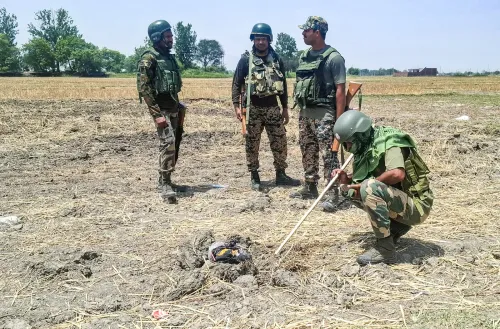
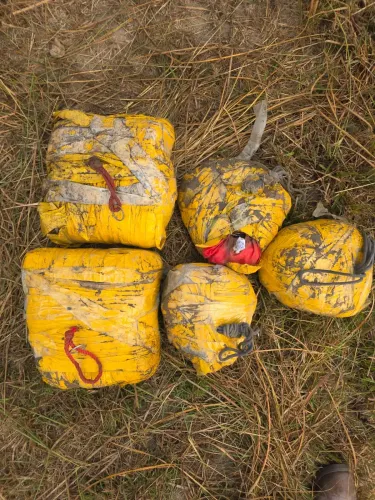
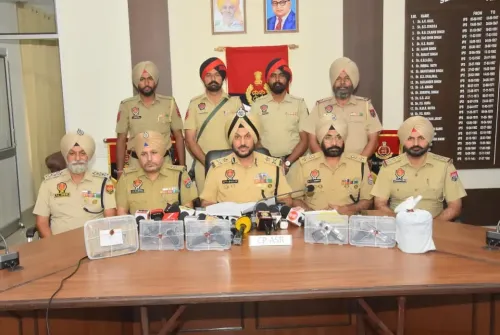
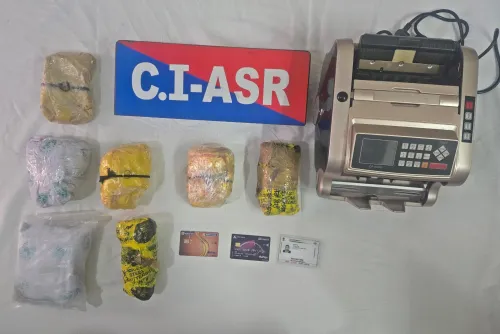
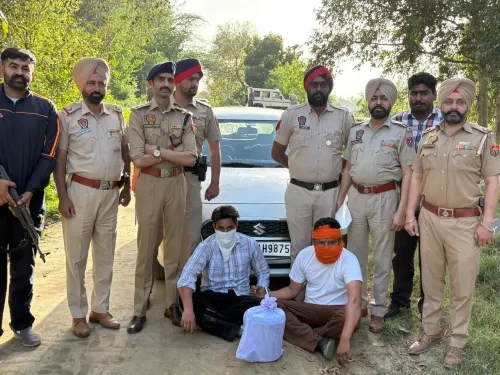
In late January, Punjab Police successfully confiscated 51.5 kilograms of heroin in Amritsar, dismantling a cross-border drug trafficking network associated with operatives based in Pakistan. Similarly, in late December, Italy's Guardia di Finanza apprehended an Indian Sikh living illegally in Italy after seizing over 20 kilograms of opium poppy bulbs from his residence in Terracina,
the 'European Times' reported.
“Additionally, a 39-year-old Sikh Indian was taken into custody in late January in Sabaudia for possessing 50 poppy bulbs, weighing around 100 grams. These opium poppy bulbs can be consumed in various forms and have narcotic effects, often linked to the exploitation of labor in agricultural settings,” the report indicated.
At first glance, these incidents may seem unrelated — distinct countries, different substances, and varying operational contexts. However, collectively, they illustrate the vast landscape of the global narcotics economy, where production areas, transit routes, and target markets increasingly overlap. Local crimes are intricately tied to broader transnational networks.
Punjab has long been recognized as a frontline region in India's battle against narcotics trafficking, especially concerning drugs originating from Pakistan. Its geography, proximity to a volatile border, and historical smuggling routes have rendered it susceptible to organized groups that meld local couriers with international handlers, utilizing encrypted communications and advanced financial laundering techniques,” the report emphasized.
Indian security agencies have consistently warned that narcotics trafficking in the region is not merely a criminal issue but a strategic one, with proceeds aimed at undermining societal stability, funding parallel economies, and, in some instances, supporting extremist agendas,” the report underlined.
It concludes by stressing that while Punjab and Terracina appear to be worlds apart, they are interconnected within the domain of transnational crime and influence operations.
“As long as law enforcement and security cooperation do not evolve to match the adaptive and transnational nature of the networks they confront, these connections will persist — quietly, locally, and with global ramifications,” the report stated.
Point of View
It is essential to recognize that while the operations in Punjab and Terracina may seem geographically distant, they exemplify the global nature of organized crime. The need for enhanced international collaboration cannot be overstated. The implications of neglecting these connections could be profoundly detrimental to societal stability and security.
NationPress
20 Sept 2026
Frequently Asked Questions
What recent operations highlight the connection between Punjab and Terracina?
Punjab Police seized 51.5 kilograms of heroin linked to cross-border trafficking, while Italy's Guardia di Finanza arrested individuals for possessing opium poppy bulbs.
How do these crimes relate to transnational networks?
They reveal a spectrum of the global narcotics economy, showing how local crimes are linked to broader international drug trafficking ecosystems.
What is the significance of the EU-India FTA in this context?
The agreement underlines the necessity for robust intelligence cooperation to combat organized crime effectively.
Why is Punjab considered a frontline region in narcotics trafficking?
Its geographical proximity to Pakistan, unstable border, and historical smuggling routes make it vulnerable to organized crime.
What are the broader implications of narcotics trafficking?
The proceeds from these activities can destabilize societies, fuel parallel economies, and support extremist causes.