Did Putin Alert Bush About Nuclear Threats Linked to Pakistan?
Synopsis
The newly disclosed transcripts of private discussions between Putin and Bush reveal alarming insights into Pakistan’s nuclear proliferation concerns, particularly its uranium links to Iran. The dialogue underscores a deep-rooted anxiety over nuclear stewardship in Islamabad, raising critical questions about global nuclear security.
Key Takeaways
Putin and Bush expressed mutual concerns over Pakistan's nuclear capabilities.
The transcripts reveal fears about Pakistani uranium in Iran's nuclear program.
Concerns over Abdul Qadeer Khan's network were highlighted.
Pakistan's nuclear governance remains a critical issue.
Both leaders acknowledged ongoing nuclear cooperation issues.
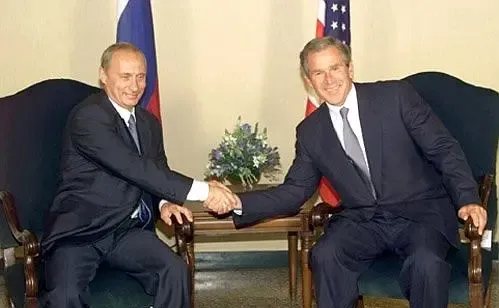
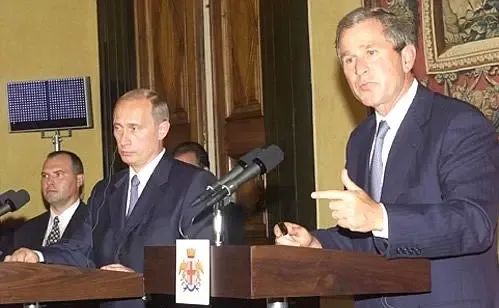
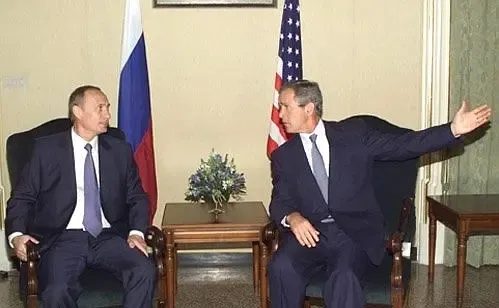
Washington, Dec 25 (NationPress) In private discussions between Russian President Vladimir Putin and U.S. President George W. Bush, Pakistan emerged as a significant concern regarding nuclear proliferation, as revealed by newly declassified transcripts. Both leaders expressed their worries about uranium sourced from Pakistan appearing in Iran’s nuclear initiatives and voiced serious concerns over Islamabad’s management of its nuclear arsenal.
The transcripts, made available by the National Security Archive due to a successful Freedom of Information Act lawsuit, document frank conversations where the two nations prioritized candid dialogue over formal diplomacy to address what they regarded as a critical risk in global nuclear security.
During their meeting in the Oval Office on September 29, 2005, Putin informed Bush that uranium found in Iranian centrifuges originated from Pakistan, a startling confirmation of long-held suspicions regarding connections between Pakistan’s nuclear program and illicit proliferation networks.
Bush promptly acknowledged the troubling nature of this discovery, labeling it a serious violation that made the United States “nervous,” as indicated in the transcripts.
“It makes us nervous, too,” Bush stated, as both leaders deliberated on the perils of sensitive nuclear materials escaping governmental oversight. Putin remarked directly, “Think about us,” emphasizing Moscow’s apprehension that such leaks could pose a direct danger to Russian security as well.
Bush conveyed to Putin that he had personally addressed this issue with then-Pakistani President Pervez Musharraf, detailing that Washington had exerted considerable pressure on Islamabad after uncovering the activities of Abdul Qadeer Khan, the mastermind behind Pakistan’s nuclear weapons program. Bush noted that Khan and several of his associates had faced imprisonment or house arrest, yet emphasized that the U.S. sought clarity on what materials had been transferred and to whom.
“We want to know what they said,” Bush remarked to Putin, reflecting frustration over what the U.S. perceived as incomplete disclosures from Pakistani officials. This exchange indicates that years after the exposure of the A.Q. Khan network, significant doubts lingered at the highest levels regarding whether its full extent had been dismantled.
Putin, in response, questioned why Pakistan did not experience the same level of persistent international scrutiny as other nations accused of nuclear transgressions. He described Pakistan starkly as “just a junta with nuclear weapons,” revealing Moscow’s skepticism toward Western leniency regarding Islamabad despite its troubled proliferation track record.
The Russian leader contrasted the treatment of Pakistan with the intense scrutiny directed at Iran and North Korea, both of which were topics of significant discourse during their discussions. The transcripts reveal that Bush did not contest Putin’s characterization, instead admitting that Pakistan’s involvement in illicit transfers remained a grave concern for the United States.
The two leaders also addressed reports of ongoing collaborations between Pakistani factions and foreign nuclear programs. Putin stated that Russian analysts believed there had been continued interactions related to Iran’s enrichment activities, while Bush confirmed that U.S. intelligence shared comparable concerns.
Despite Pakistan officially being a crucial U.S. ally in the post-9/11 conflict against terror, the transcripts disclose that both Washington and Moscow harbored profound skepticism regarding its nuclear governance.
The documents illustrate that the Pakistani nuclear program was not perceived as a standalone issue but rather as part of a broader pattern of instability characterized by weak governance, opaque decision-making, and the risk of catastrophic leaks.
Putin consistently highlighted the perils associated with nuclear weapons in the hands of regimes lacking democratic accountability, while Bush underscored the necessity to prevent any further proliferation of sensitive technology.
The National Security Archive noted that these records provide “previously unavailable evidence” of the depth of concern shared privately by U.S. and Russian leaders regarding Pakistan, contrasting sharply with the more muted public statements made at the time.
Pakistan developed its nuclear arsenal independently of the Nuclear Non-Proliferation Treaty and has been under sustained international scrutiny, especially following revelations in the early 2000s that the A.Q. Khan network had provided nuclear technology to Iran, North Korea, and Libya.
Point of View
It is crucial to recognize the significance of the discussions between Putin and Bush. The private concerns voiced about Pakistan's nuclear capabilities underscore the delicate balance of global security. This narrative reflects the need for transparency and accountability in nuclear governance, a matter that should remain at the forefront of international dialogue.
NationPress
4 Oct 2026
Frequently Asked Questions
What were the main concerns raised by Putin and Bush?
Putin and Bush discussed the alarming links between Pakistani uranium and Iran's nuclear program, expressing serious concerns over Pakistan’s control of its nuclear assets.
Why is Pakistan's nuclear program under scrutiny?
Pakistan's nuclear program has been scrutinized due to its development outside the Nuclear Non-Proliferation Treaty and its connections to illicit nuclear technology transfers.
How did the leaders address the issue of Abdul Qadeer Khan?
Bush mentioned that he had raised concerns with Pakistani President Musharraf regarding Abdul Qadeer Khan's activities and the need for clarity on nuclear material transfers.
What was Putin's view on Pakistan's nuclear status?
Putin described Pakistan as 'just a junta with nuclear weapons', highlighting skepticism towards international tolerance for Islamabad's proliferation activities.
What does this mean for global nuclear security?
The discussions indicate a significant concern for global nuclear security, emphasizing the risks associated with nuclear weapons in the hands of undemocratic regimes.