Sheikh Hamad's death reshapes Qatar's strategic outlook for Tamim
Synopsis
Sheikh Hamad built Qatar from a minor Gulf state into a global diplomatic and energy powerhouse — and even after abdicating in 2013, he remained an invisible anchor for his son's rule. His death at 74 ends that backstop, leaving Sheikh Tamim to make the defining foreign policy choice of his reign: preserve his father's activist legacy or recalibrate toward Gulf reconciliation.
Key Takeaways
Sheikh Hamad bin Khalifa Al Thani , Qatar's former Amir, died on 12 July 2025 at the age of 74 .
During his 18-year rule from 1995 , he built the global LNG industry, founded the Qatar Investment Authority , and launched Al Jazeera .
Though he abdicated in 2013 , analysts say he remained an influential behind-the-scenes figure, providing continuity through the 2017 Gulf blockade .
Reigning Amir Sheikh Tamim has already adopted a more restrained diplomatic style, repositioning Qatar's ties with groups like Hamas as mediation rather than patronage.
According to geopolitical expert Sergio Restelli , Sheikh Tamim now faces a core choice: preserve his father's foreign policy architecture or recalibrate toward closer ties with Saudi Arabia , the UAE , and Western partners.
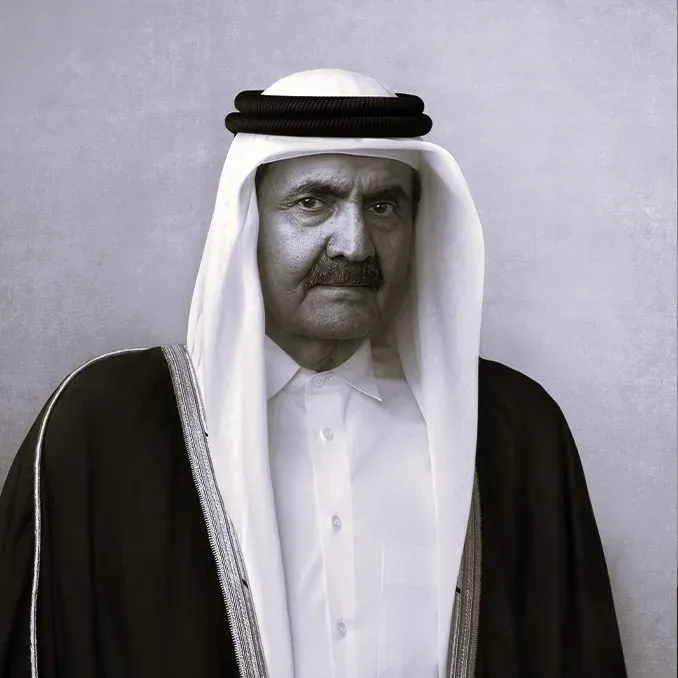
The death of Sheikh Hamad bin Khalifa Al Thani, Qatar's former Amir and the architect of the emirate's modern identity, has removed a quietly powerful stabilising force from the Gulf state's political landscape. For the reigning Amir, Sheikh Tamim bin Hamad Al Thani, the road ahead is considerably more complex than the one his father navigated. Sheikh Hamad passed away on 12 July 2025 at the age of 74.
The Man Who Built Modern Qatar
When Sheikh Hamad seized power in 1995, Qatar was, by regional standards, a minor Gulf state — modest in influence despite sitting atop one of the world's largest reserves of natural gas. Over the next 18 years, he engineered a transformation that few small nations have matched. According to Sergio Restelli, an Italian political advisor, author, and geopolitical expert writing in the Times of Israel, Sheikh Hamad 'built the global LNG industry, created the Qatar Investment Authority, launched Al Jazeera, established Qatar as an indispensable diplomatic actor and positioned Doha at the centre of Middle Eastern geopolitics.'
Restelli described the former Amir's core strategic insight as choosing to project influence 'through finance, energy, media, diplomacy and strategic partnerships instead of military competition with its larger neighbours' — a model that elevated a nation of just over 300,000 citizens to a position of global political relevance.
The Shadow Behind the Throne
Although Sheikh Hamad formally abdicated in favour of his son Sheikh Tamim in 2013, analysts widely acknowledged that he remained a consequential behind-the-scenes figure. His counsel carried significant weight within the ruling family, and his stature provided continuity during moments of acute regional stress — most notably the 2017 Gulf blockade, when Saudi Arabia, the United Arab Emirates, Bahrain, and Egypt severed diplomatic ties with Doha. With that informal anchor now gone, Sheikh Tamim governs without the same safety net.
Sheikh Tamim's Restrained Style — and Its Limits
According to Restelli's analysis, Sheikh Tamim has already moved toward a more measured foreign policy posture than his father, pulling back from the bold ideological activism that characterised Qatar's role during the Arab Spring and pivoting instead toward mediation and pragmatic diplomacy. Qatar's continued engagement with groups such as Hamas, for instance, has been reframed publicly as the work of a neutral intermediary rather than a political patron — a distinction that Restelli argues 'may become even more pronounced' in the post-Hamad era.
Notably, this shift has not fully resolved Qatar's friction with its Gulf neighbours, who remain wary of Doha's relationships with Islamist networks. The strategic environment Sheikh Tamim now faces is, as the report characterises it, 'less forgiving' than the one his father managed — marked by elevated geopolitical competition, a more assertive Saudi Arabia, and a West increasingly focused on Gulf alignment.
The Strategic Choice Ahead
Restelli frames the central question starkly: Sheikh Tamim must decide whether to preserve the foreign policy architecture his father built — accepting the diplomatic friction that accompanies it — or to 'gradually recalibrate Qatar's regional posture by reducing the political visibility of Islamist networks while strengthening relations with Saudi Arabia, the United Arab Emirates and Western partners.'
Neither path is without cost. Continuity risks prolonged tension with Gulf neighbours and periodic Western pressure; recalibration risks alienating the mediation networks that give Qatar its outsized diplomatic leverage. How Sheikh Tamim navigates that choice — without his father's counsel — will define Qatar's trajectory through the coming decade.
Point of View
At a moment when Saudi Arabia is more assertive and Western patience with Doha's Islamist ties is thinner. The analysis that frames this as a binary choice — preserve or recalibrate — may underestimate how much Qatar's value to the West depends on precisely the ambiguity that makes its Gulf neighbours uncomfortable. Resolving that tension cleanly may not be possible.
NationPress
27 Jul 2026
Frequently Asked Questions
When did Qatar's former Amir Sheikh Hamad bin Khalifa Al Thani die?
Sheikh Hamad bin Khalifa Al Thani died on 12 July 2025 at the age of 74. He had ruled Qatar from 1995 until his abdication in 2013 in favour of his son, Sheikh Tamim bin Hamad Al Thani.
What was Sheikh Hamad's legacy for Qatar?
Sheikh Hamad transformed Qatar from a small Gulf state with limited regional influence into one of the world's wealthiest and most diplomatically active nations. He built the global LNG industry, established the Qatar Investment Authority, launched Al Jazeera, and positioned Doha as a key Middle Eastern diplomatic actor, according to geopolitical expert Sergio Restelli.
How does Sheikh Hamad's death affect current Amir Sheikh Tamim?
Sheikh Hamad was widely regarded as an influential behind-the-scenes figure even after abdicating, providing continuity and counsel during crises such as the 2017 Gulf blockade. His death removes that informal backstop, leaving Sheikh Tamim to govern without the same family anchor at a strategically demanding moment.
What strategic choice does Sheikh Tamim now face?
According to Sergio Restelli's analysis, Sheikh Tamim must decide whether to maintain the foreign policy architecture built by his father — including relationships with groups like Hamas — or to gradually reduce Qatar's association with Islamist networks and deepen ties with Saudi Arabia, the UAE, and Western partners.
How has Sheikh Tamim's approach to foreign policy differed from his father's?
Sheikh Tamim has pursued a more restrained style than his father, moving away from the ideological activism associated with the Arab Spring toward mediation and pragmatic diplomacy. Qatar's engagement with groups such as Hamas has been publicly framed as that of a neutral intermediary rather than a political patron.