Did Quad Nations Conduct Their First Field Exercise to Enhance Indo-Pacific Disaster Response?
Synopsis
The Quad nations have taken a significant step by conducting their first-ever Field Training Exercise aimed at enhancing disaster response capabilities across the Indo-Pacific, focusing on collaborative logistics networks. This initiative is essential for improving coordination during humanitarian crises.
Key Takeaways
Quad nations completed their first Field Training Exercise.
Focus on enhancing rapid civilian disaster response.
Conducted at Andersen Air Force Base in Guam.
Emphasized coordination and interoperability among nations.
Future plans include regular training and expert exchanges.
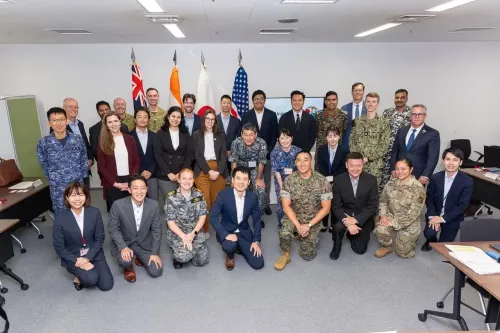
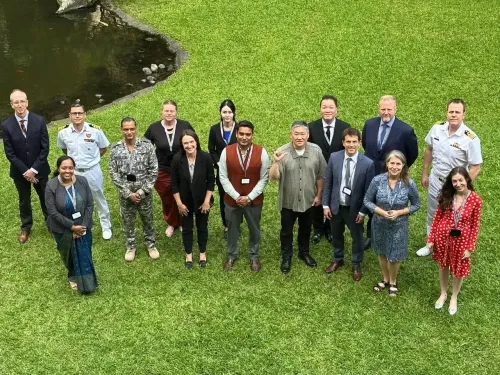
Washington, Dec 16, (NationPress) The partnership known as Quad, comprising Australia, India, Japan, and the United States, has successfully concluded its inaugural Field Training Exercise aimed at fortifying a collaborative logistics framework for swift civilian disaster response across the Indo-Pacific, as stated in an official announcement on Tuesday.
The exercise took place from December 8 to 12 at Andersen Air Force Base in Guam, coinciding with Operation Christmas Drop, marking a significant operational achievement for the Quad Indo-Pacific Logistics Network (IPLN), according to the US Department of State.
The IPLN is structured to empower participating nations to utilize shared logistics capabilities to facilitate quicker and more efficient civilian responses to extensive natural disasters throughout the Indo-Pacific, the State Department indicated.
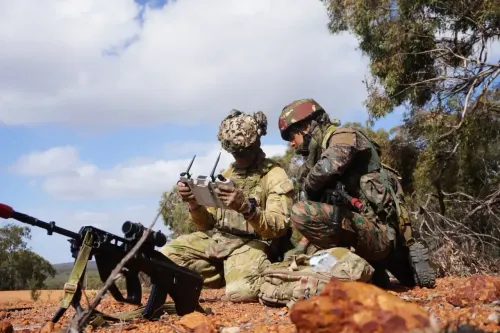
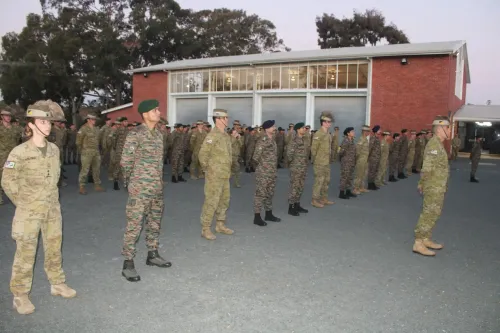
The primary goal is to save lives, speed up recovery efforts, and extend timely assistance to regional partners impacted by crises. The field training exercise emphasized enhancing disaster response capabilities through practical, hands-on activities that evaluated coordination and interoperability among the four nations.
A significant training element involved boarding a Japan Air Self-Defence Force C-130H transport aircraft, highlighting the focus on airlift coordination and logistics integration. The exercise aimed to harmonize capabilities and procedures among the partners, deemed essential for improving collective responses during humanitarian crises.
Interoperability and coordination were prioritized in the training, reflecting the broader objective of the Quad to assist regional partners in times of acute need. The Guam-based exercise built upon previous planning efforts under the IPLN framework, with a tabletop exercise held in April 2025 to outline coordinated logistics responses to hypothetical disaster situations.
The December field exercise aimed to translate those discussions into actionable operational practice. The combination of the April tabletop exercise and the December field training showcases the Quad’s commitment to enhancing practical collaboration in tackling regional challenges, reinforcing their shared goal of maintaining a free and open Indo-Pacific.
“Future initiatives will include exploring regular activities such as additional tabletop and field training exercises, confidence-building measures, and exchanges among subject matter experts,” stated the State Department.
These efforts seek to institutionalize cooperation and ensure that shared logistics systems remain effective and responsive. Analysts observe that the emphasis on disaster response signifies a growing awareness among Indo-Pacific nations regarding the frequency and severity of natural disasters in the region, including cyclones, earthquakes, floods, and volcanic eruptions. By merging logistics capabilities, the Quad aims to expedite response times and enhance coordination when civilian populations urgently require help.
The Quad partners reiterated that the IPLN is specifically focused on civilian disaster response, not military operations, and is intended to complement existing national and regional mechanisms. Providing support to regional partners is central to this initiative.
The Quad, which unites four significant Indo-Pacific democracies, has progressively broadened its agenda in recent years, moving beyond traditional security discussions to embrace practical collaboration in areas such as health, climate, technology, and disaster resilience.
India, recognized as a first responder in the Indian Ocean region, has increasingly highlighted humanitarian aid and disaster relief as a vital aspect of its regional strategy. The IPLN framework aligns with New Delhi’s broader aims to enhance collaboration with like-minded partners in confronting non-traditional security challenges.
Point of View
The Quad's recent field exercise signifies a proactive approach to regional disaster management. The emphasis on civilian aid over military operations reflects a growing commitment to humanitarian assistance, which is essential given the increasing frequency of natural disasters in the Indo-Pacific. This collaborative effort not only strengthens ties among Quad nations but also enhances their ability to respond effectively to crises—a priority that resonates deeply with the needs of affected communities.
NationPress
30 Sept 2026
Frequently Asked Questions
What is the Quad Indo-Pacific Logistics Network?
The Quad Indo-Pacific Logistics Network (IPLN) is a collaborative initiative among Australia, India, Japan, and the United States aimed at enhancing rapid civilian disaster response through shared logistics capabilities.
Where was the first Field Training Exercise conducted?
The inaugural Field Training Exercise took place at Andersen Air Force Base in Guam from December 8 to 12.
What was the purpose of the exercise?
The primary goal of the exercise was to strengthen coordination and interoperability among Quad nations for efficient disaster response in the Indo-Pacific.
What future activities are planned under the IPLN?
Future plans include additional tabletop and field training exercises, confidence-building measures, and exchanges among subject matter experts.
How does the Quad support regional partners?
The Quad emphasizes civilian disaster response and aims to complement existing national and regional mechanisms to provide timely assistance to affected communities.