Cyril Ramaphosa to seek judicial review of panel report amid impeachment push
Synopsis
South Africa's President Cyril Ramaphosa is pushing back against an Independent Panel report that found he may have breached the constitution, announcing a judicial review even as the Constitutional Court has ordered Parliament to begin impeachment proceedings. The Phala Phala cash scandal — $580,000 found at his private farm in 2020 — now threatens to define his presidency.
Key Takeaways
President Cyril Ramaphosa announced he will seek judicial review of the Independent Panel report that found he may have violated South Africa's constitution.
The move follows a Constitutional Court ruling ordering Parliament to refer the matter to an impeachment committee.
The crisis stems from the Phala Phala scandal , in which $580,000 in cash was found at his private farm in February 2020 .
Ramaphosa maintains he committed no crime and argues the court made no direct finding of guilt against him.
House Speaker Thoko Didiza confirmed Parliament will comply with the Constitutional Court's judgment.
Opposition parties have demanded his immediate resignation, which Ramaphosa has firmly rejected.
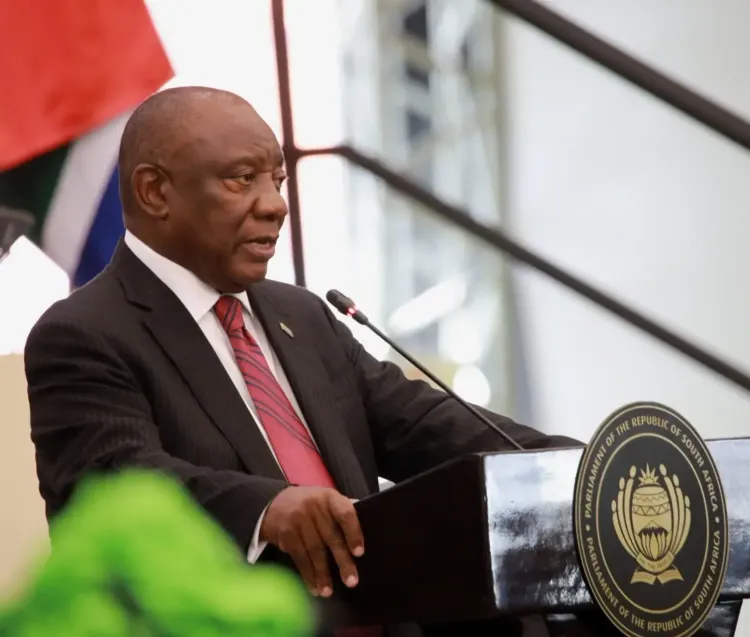
South African President Cyril Ramaphosa has announced his intention to seek a judicial review of an Independent Panel report that found he may have violated the country's constitution, as Parliament prepares to initiate impeachment proceedings against him. The announcement came during a national address on Monday night, following a landmark Constitutional Court ruling the previous Friday that ordered Parliament to refer the matter to an impeachment committee.
Background: The Phala Phala Scandal
The legal battle traces back to the so-called "Phala Phala" scandal, in which $580,000 in cash was discovered at Ramaphosa's private farm in February 2020. An Independent Panel, established by Parliament, subsequently found evidence suggesting the president may have breached the constitution. The case has since become one of the most consequential legal and political crises of Ramaphosa's presidency.
What Ramaphosa Said
Addressing the nation, Ramaphosa stated: "On the basis of advice from my legal team and as envisaged by the Constitutional Court... I have therefore decided to proceed to take the independent panel's report on review on an expeditious basis." He was careful to frame the move not as defiance, adding: "I do so not out of disrespect for Parliament or its processes, but to affirm the need for such findings to be correct in law and in fact."
The president clarified that he had initially intended to seek a review sooner but deferred after a parliamentary majority voted against his impeachment — a decision the Constitutional Court has now ruled was incorrect. He maintained that he did not steal public funds or commit any crime, while pledging full cooperation with relevant institutions.
The Constitutional Court Ruling
The Constitutional Court's ruling on the previous Friday marked a turning point, directing that the Independent Panel's report must be referred to a parliamentary impeachment committee rather than being shelved following the earlier parliamentary vote. The ruling effectively reopened the formal impeachment process, placing renewed pressure on Ramaphosa's administration. House Speaker Thoko Didiza confirmed that Parliament will comply with the court's judgment.
Political Pressure and Ramaphosa's Stance
Opposition parties have called for Ramaphosa's immediate resignation, but he has remained firm. He argued that the Constitutional Court made no direct finding of guilt against him and that resigning at this stage would preempt a constitutionally defined process. He concluded his address by pledging to continue his administration's work in fighting crime and strengthening state institutions.
This is the latest chapter in a saga that has tested the resilience of South Africa's constitutional framework, with the outcome of the judicial review and the impeachment committee process likely to define the remainder of Ramaphosa's term.
Point of View
But it carries significant risk: it could be read as a sitting president using institutional tools to delay accountability, even as the Constitutional Court has already signalled that Parliament erred in shelving the matter. The Phala Phala saga has exposed a deeper tension in South Africa's constitutional architecture — between the letter of impeachment law and the political will to enforce it. With the African National Congress holding a parliamentary majority, the impeachment committee process may yet prove toothless. The real test is whether South Africa's institutions can demonstrate that no sitting president is above the scrutiny the constitution demands.
NationPress
22 Oct 2026
Frequently Asked Questions
What is the Phala Phala scandal involving President Ramaphosa?
The Phala Phala scandal refers to the discovery of $580,000 in cash at President Cyril Ramaphosa's private farm in February 2020. An Independent Panel established by Parliament found evidence suggesting the president may have breached the constitution in connection with the incident.
Why has the Constitutional Court ordered impeachment proceedings against Ramaphosa?
The Constitutional Court ruled that Parliament erred when a parliamentary majority voted against impeachment following the Independent Panel's findings. The court directed that the report must instead be referred to a parliamentary impeachment committee, effectively restarting the formal process.
Why is Ramaphosa seeking a judicial review of the panel's report?
Ramaphosa says he is seeking a judicial review to ensure the Independent Panel's findings are correct in law and in fact. He maintains he did not steal public funds or commit any crime, and argues the review is not an act of defiance against Parliament.
Will Ramaphosa resign amid calls from opposition parties?
No. Ramaphosa has firmly rejected calls for his immediate resignation, arguing that the Constitutional Court made no direct finding of guilt against him and that resigning would preempt a constitutionally defined process.
What happens next in the South African impeachment process?
Parliament, as confirmed by House Speaker Thoko Didiza, will comply with the Constitutional Court's ruling and refer the Independent Panel's report to an impeachment committee. Simultaneously, Ramaphosa's legal team is moving to seek a judicial review of the same report on an expeditious basis.