Ramaswamy Backs Ohio Voter Photo ID Amendment
Synopsis
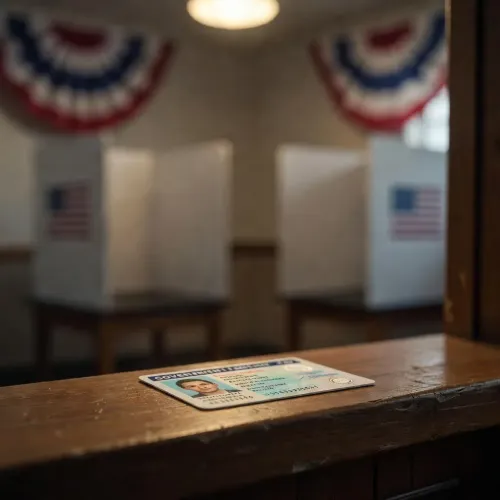
Entrepreneur Vivek Ramaswamy has publicly backed a November 2026 Ohio constitutional amendment mandating government-issued photo ID to vote, arguing everyday Ohioans support the measure. The push fits a broader Republican pattern of pursuing constitutional voter ID mandates after years of statutory battles.
Key Takeaways
Entrepreneur Vivek Ramaswamy endorsed the Ohio constitutional amendment requiring government-issued photo ID to vote, posting his support on June 26, 2026 .
The amendment is scheduled for a November 2026 ballot vote in Ohio .
Ramaswamy cited public opinion among 'everyday Ohioans' as backing for the measure, though the specific survey was not detailed in the post.
A constitutional amendment, if passed, would be harder to overturn than a statute and would likely face federal or state court challenges.
The move fits a wider Republican-led effort across multiple US states to enshrine photo ID requirements following the 2013 Shelby County v.
Ramaswamy's national profile from his 2024 presidential campaign and his DOGE advisory role gives the endorsement significant amplification potential.
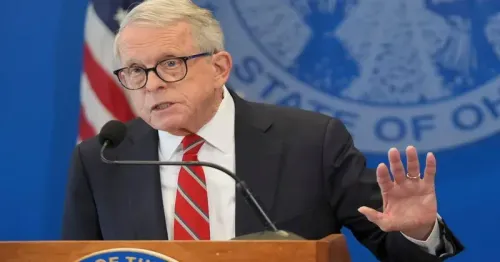
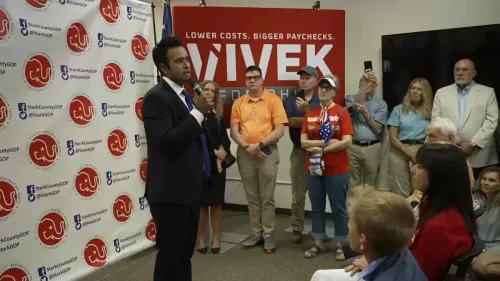
Entrepreneur Vivek Ramaswamy, founder and executive chairman of Strive Asset Management and former co-lead of the US Department of Government Efficiency (DOGE) advisory effort, on Thursday, June 26, 2026, publicly endorsed a constitutional amendment on the Ohio ballot that would make government-issued photo identification mandatory for voting in state elections.
Context
Ramaswamy posted on X that 'most everyday Ohioans agree with us: government-issued photo ID should be a requirement to vote in elections,' urging followers to 'vote YES on the constitutional amendment in November.' The post signals his continued political engagement in Ohio, his home state, following his unsuccessful 2024 Republican presidential primary campaign.
The framing — 'most everyday Ohioans agree with us' — suggests Ramaswamy is drawing on public sentiment data, though the specific poll or survey he references has not been independently detailed in the post. The research notes that specific poll results cited cannot be verified from available data.
Policy Backdrop
Voter identification requirements have been a persistent flashpoint in American electoral politics for more than two decades. The Help America Vote Act of 2002 established federal minimum standards requiring identification for certain first-time mail registrants, but left states broad latitude to set their own rules.
After the US Supreme Court's 2013 ruling in Shelby County v. Holder weakened federal preclearance requirements, multiple Republican-led states moved to enact or strengthen photo ID mandates. Proponents argue such laws protect election integrity; opponents contend they create barriers for low-income, elderly, and minority voters who are less likely to hold qualifying government-issued documents.
Ohio has seen recurring legislative and judicial battles over its election laws. A constitutional amendment — rather than a statute — would entrench the requirement in a way that is harder to reverse through ordinary legislation or executive action.
Stakeholders and Impact
Ohio's roughly 8 million registered voters would be directly affected if the amendment passes. Election administrators would face the task of implementing new verification procedures, which typically require public education campaigns and provisional-ballot systems for voters who arrive without qualifying ID.
Civil liberties groups and Democratic-aligned organisations have historically challenged photo ID laws in federal and state courts, arguing they function as a de facto poll tax. Republican officials and conservative advocacy groups, including those aligned with figures like Ramaswamy, counter that broad public support makes such measures democratically legitimate.
As a prominent Ohio-based entrepreneur and national Republican figure, Ramaswamy's endorsement adds a high-profile voice to the 'Yes' campaign and may help mobilise donor and volunteer networks built during his 2024 presidential run.
What's Next
The constitutional amendment is scheduled to appear on the Ohio ballot in November 2026. A successful vote would enshrine the photo ID requirement in the state constitution, after which legal challenges in federal or state courts would be the most likely avenue for opponents seeking to block implementation.
Ramaswamy's post indicates he intends to remain an active advocate through the campaign period, and his national profile could draw broader Republican attention — and resources — to the Ohio race. The outcome will be watched as a bellwether for similar constitutional efforts in other states.
Point of View
The move is part of a decade-long Republican effort to lock voter ID requirements into foundational law, a pattern accelerated after the Shelby County ruling. The November outcome in Ohio will be read nationally as a test of whether constitutional ballot measures can succeed where statutes have been struck down.
NationPress
26 Jun 2026
Frequently Asked Questions
What is the Ohio voter ID constitutional amendment Ramaswamy supports?
It is a proposed amendment to the Ohio state constitution that would make government-issued photo identification a mandatory requirement for casting a ballot in elections. It is scheduled for a public vote in November 2026 .
Why is Vivek Ramaswamy involved in Ohio politics?
Vivek Ramaswamy is an Ohio -based entrepreneur and prominent national Republican figure who ran for president in 2024 . He has maintained political involvement in his home state since ending his presidential campaign.
What does a constitutional amendment on voter ID mean compared to a regular law?
Embedding a voter ID requirement in the state constitution makes it significantly harder to repeal or weaken, as it would require another constitutional amendment rather than a simple legislative vote or gubernatorial action.
Have voter photo ID laws faced legal challenges in the US?
Yes. Since the Help America Vote Act of 2002 and especially after the 2013 Shelby County v. Holder Supreme Court ruling, photo ID laws have repeatedly been challenged in federal and state courts on grounds of voter access and discrimination.
When will Ohio vote on the photo ID constitutional amendment?
The amendment is set to appear on the Ohio ballot in November 2026 , when voters will decide whether to enshrine the photo ID requirement in the state constitution.