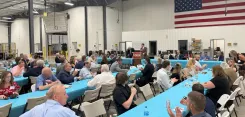
Trump Hosts Rose Garden Dinner with American Farmers

Synopsis
President Trump hosted American farmers at a formal Rose Garden Club Dinner at the White House on 25 June 2026, reinforcing the administration's outreach to rural constituencies amid ongoing debates over trade, tariffs, and farm support programmes.
Key Takeaways
The White House announced President Trump participated in a Rose Garden Club Dinner with American farmers on 25 June 2026 .
The Rose Garden is a high-profile White House venue used for key stakeholder engagements and presidential announcements.
During Trump's first term, approximately $28 billion was paid to farmers through the Market Facilitation Program to offset losses from Chinese retaliatory tariffs.
The Agricultural Improvement Act of 2018 (Farm Bill) authorised crop insurance, conservation, and commodity support for US farmers.
The next Farm Bill reauthorisation and potential new trade measures are key near-term policy flashpoints for the agricultural sector.
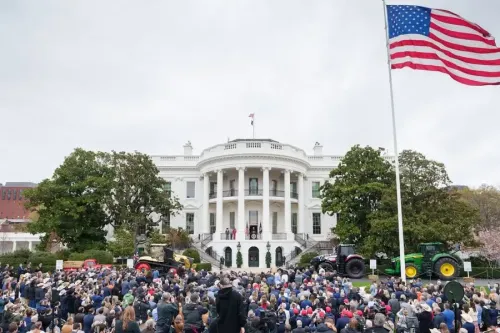
The White House announced on Thursday, 25 June 2026 that President Donald Trump participated in a Rose Garden Club Dinner with American farmers, bringing agricultural stakeholders to the seat of executive power for a high-profile evening event.
Context
The Rose Garden at the White House has long served as a venue for presidential engagement with key economic constituencies. Hosting farmers at a formal dinner there signals a deliberate effort to recognise the agricultural community as a central pillar of the administration's economic outreach.
Presidential dinners of this nature typically combine ceremonial recognition with direct messaging on farm policy, trade access, and federal support programmes. The setting lends the occasion a degree of prestige that underscores the administration's stated commitment to rural America.
Policy Backdrop
The Trump administration has a well-established record of engagement with the farming community. During 2018 and 2019, the administration disbursed approximately $28 billion through the Market Facilitation Program to offset losses that American farmers suffered from retaliatory tariffs imposed by China on US soybeans, pork, and other agricultural commodities.
The Agricultural Improvement Act of 2018, commonly known as the Farm Bill, signed during Trump's first term, authorised expanded crop insurance, conservation programmes, and commodity support mechanisms for farmers across the country. Trade policy and its downstream effects on commodity markets have remained a defining tension in the relationship between the White House and America's farming sector.
Stakeholders and Impact
American farmers and the broader rural communities they anchor represent a significant political and economic constituency. Agriculture underpins vast swathes of the Midwest, South, and Great Plains, with commodity exports — particularly soybeans, corn, wheat, and pork — directly tied to the health of US trade relationships.
Events such as the Rose Garden Club Dinner provide farmers with direct access to the executive, an opportunity to raise concerns about input costs, export market access, and federal subsidy structures. For the administration, such gatherings reinforce messaging around economic nationalism and support for domestic producers.
What's Next
Congressional action on the next Farm Bill reauthorisation cycle remains a closely watched legislative priority for the agricultural sector. Any new tariff measures or bilateral trade agreements will have immediate knock-on effects for commodity prices and farm income.
The Rose Garden dinner is likely to be followed by further policy signals on agricultural subsidies and export facilitation, as the administration continues to court one of its most reliable support bases ahead of ongoing legislative negotiations.
Point of View
Placing farmers — a constituency central to Trump's electoral coalition — at the symbolic heart of American executive power. It continues a pattern of direct presidential engagement with rural America that has been a consistent feature of Trump-era governance, from Market Facilitation Program payouts to Farm Bill signings. With Farm Bill reauthorisation on the congressional horizon and trade policy remaining volatile, the dinner sends a clear signal that the administration intends to keep agricultural interests front and centre. For Indian observers, the event is a reminder that US farm policy and trade postures have direct implications for global commodity markets, including those that affect Indian agricultural exports and import costs.
NationPress
26 Jun 2026
Frequently Asked Questions
What is the Rose Garden Club Dinner at the White House?
The Rose Garden Club Dinner is a formal presidential event held in the Rose Garden of the White House, bringing key stakeholders — in this case American farmers — together with the President for a high-profile dinner combining ceremony and policy messaging.
Why did Trump meet with American farmers at the White House in 2026?
The White House announced the meeting on 25 June 2026 as part of ongoing presidential outreach to the agricultural community, a constituency central to the administration's economic and political priorities.
What is the US Farm Bill and when is it up for renewal?
The US Farm Bill is a major piece of legislation that authorises crop insurance, conservation programmes, and commodity support for American farmers. The reauthorisation cycle is a key near-term legislative priority being watched closely by the farming sector.
How did Trump's trade tariffs affect American farmers?
During 2018 and 2019, China imposed retaliatory tariffs on US agricultural exports including soybeans and pork, prompting the Trump administration to pay approximately $28 billion to farmers through the Market Facilitation Program to offset those losses.
What does the White House farmer dinner mean for global agriculture?
Presidential engagement with farmers often precedes or accompanies major policy announcements on subsidies, tariffs, and trade access. Shifts in US agricultural trade policy can ripple through global commodity markets, affecting prices and export competition worldwide.