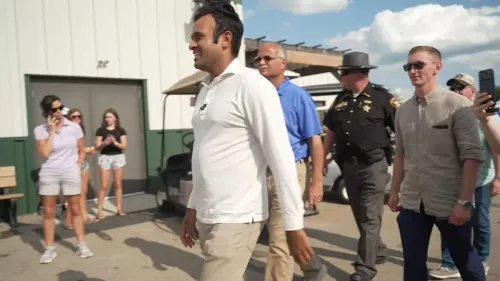
Vivek Ramaswamy Issues Public Debate Challenge to Election Opponent
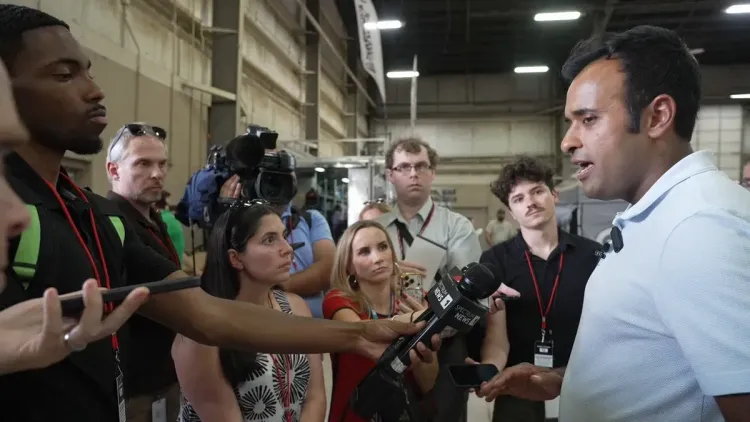
Synopsis
Entrepreneur Vivek Ramaswamy issued a public debate challenge to his election opponent on August 11, 2026, arguing that voters benefit most when both candidates face each other directly. The move follows a well-worn US electoral playbook — but Ramaswamy's debate-stage reputation makes the challenge particularly pointed.
Key Takeaways
On August 11, 2026 , Vivek Ramaswamy posted a public debate challenge to his unnamed election opponent on X.
He framed the challenge around voter interest: 'The voters win when they actually get to hear directly from both candidates.' The post included a video, suggesting an accompanying direct address or campaign message.
Ramaswamy built national recognition through his debate performances in the 2024 Republican presidential primaries .
No formal response from the opponent or scheduling announcement from a debate body has been confirmed.
A debate challenge is the oldest move in electoral politics — and entrepreneur Vivek Ramaswamy is playing it, issuing a public call on August 11, 2026 for a head-to-head exchange with his unnamed opponent, framing the demand squarely around voter interest.
Posting on X, Ramaswamy wrote: 'A friendly challenge to my opponent. The voters win when they actually get to hear directly from both candidates.' The framing is deliberate — by centering voters rather than personal ambition, the challenge is harder for an opponent to dismiss without appearing to dodge public scrutiny.
Why the 'Friendly Challenge' Framing Carries Weight
The language Ramaswamy chose is calibrated. Calling it 'friendly' deflates any accusation of aggression, while the voter-first rationale turns a tactical move into a civic argument. Any refusal by the opponent now risks being read not as a strategic decision, but as an unwillingness to face voters directly.
US electoral campaigns have long used public debate challenges precisely for this pressure dynamic. When one candidate goes on record demanding an open exchange and the other stays silent, the silence itself becomes part of the story — a pattern seen across party lines in races from local contests to presidential primaries.
Ramaswamy's Debate Track Record
Ramaswamy built a national profile in large part through his performance on the debate stage during the 2024 Republican presidential primaries, where he was widely noted for aggressive, direct exchanges with rivals. His comfort in that format makes the challenge a natural weapon — and his opponent, whoever they are, likely knows it.
The post included a video, suggesting the challenge may have been accompanied by a direct address or campaign messaging, though the specific content of that video is not confirmed here.
The next move belongs to the opponent. A formal acceptance, a counter-proposal, or continued silence — each carries its own political cost. Voters, as Ramaswamy put it, are watching.
Point of View
He frames any non-response as an affront to democratic accountability rather than mere political caution. The move signals that his current campaign, details of which remain unconfirmed, is leaning into the same insurgent, direct-to-voter energy that defined his 2024 presidential run. How his opponent responds — or fails to — will shape the early narrative of this race.
NationPress
26 Sept 2026
Frequently Asked Questions
Who is Vivek Ramaswamy challenging to a debate?
Ramaswamy did not name his opponent in the post. The specific race and opponent have not been publicly confirmed in available information.
What did Vivek Ramaswamy say in his debate challenge?
He wrote: 'A friendly challenge to my opponent. The voters win when they actually get to hear directly from both candidates.'
What election is Vivek Ramaswamy currently running in?
The specific 2026 election Ramaswamy is contesting has not been independently verified from available information at this time.
What is Vivek Ramaswamy known for politically?
Ramaswamy is known as a 2024 Republican presidential candidate, former co-lead of the DOGE advisory effort under the Trump administration, and founder of Strive Asset Management.
Has Ramaswamy debated political opponents before?
Yes. Ramaswamy participated in multiple Republican presidential primary debates in 2024, where he was widely recognised for his direct and assertive debating style.