Ramaswamy Visits Ohio Firm, Ties Energy to Manufacturing Push
Synopsis
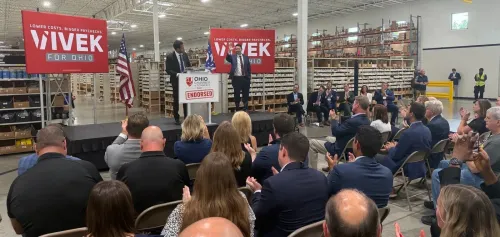
Entrepreneur Vivek Ramaswamy visited Kimble Company in Dover, Ohio, arguing that energy and manufacturing dominance are linked goals. He pledged to deliver both to Ohioans by 2027, signalling an active political agenda in a key Midwestern industrial state.
Key Takeaways
Vivek Ramaswamy visited the Kimble Company in Dover, Ohio on 7 June 2026 .
He argued that 'energy dominance and manufacturing dominance are two sides of the same coin.' Ramaswamy pledged to deliver both goals to Ohioans 'in 2027 after we win big,' signalling a forward political timeline.
The 'energy dominance' framing echoes Republican federal policy from 2017–2021 and Ramaswamy's own 2024 presidential campaign platform.
Ohio's manufacturing sector and shale energy resources make it a natural fit for this economic argument in the industrial Midwest.
Ohio statewide elections in 2026 make the state a key staging ground for Republican political infrastructure-building.
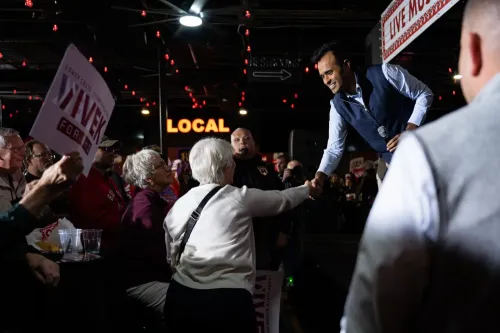
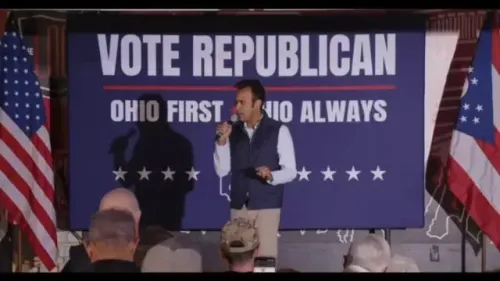
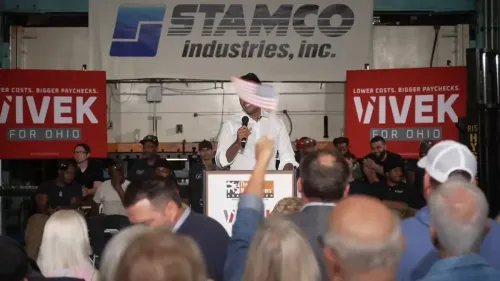
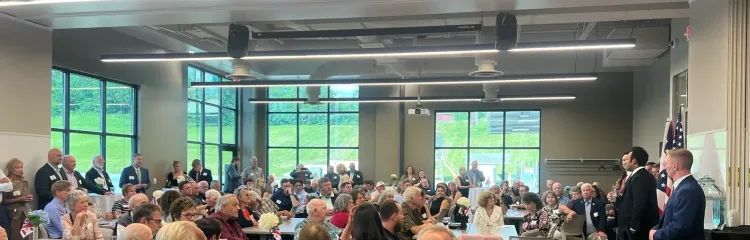
Entrepreneur Vivek Ramaswamy visited the Kimble Company in Dover, Ohio on 7 June 2026, using the stop to advance his argument that energy abundance and manufacturing revival are inseparable goals, and signalling an intent to 'win big' ahead of 2027.
Context
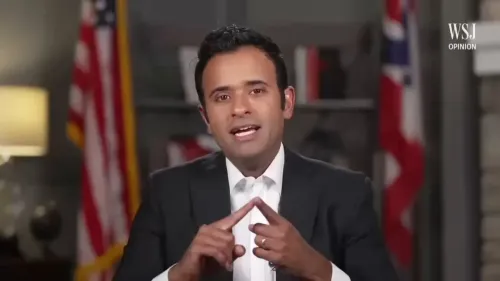
Ramaswamy, founder and executive chairman of Strive Asset Management and a former co-lead of the US Department of Government Efficiency (DOGE) advisory effort, posted on X that 'energy dominance and manufacturing dominance are two sides of the same coin.' The visit to Kimble Company — a Dover, Ohio-based industrial firm — was framed as a ground-level engagement with the kind of Midwestern manufacturer central to his economic pitch.
The phrase 'win big' in 2027 signals an active political horizon, though the specific office or contest he is targeting has not been formally announced. Ohio holds statewide elections in 2026, making the state a natural staging ground for Republican candidates building a political infrastructure.
Policy Backdrop
The 'energy dominance' framing has deep roots in recent Republican federal policy. During the 2017–2021 Trump administration, it was operationalised through expanded drilling leases, liquefied natural gas export approvals, and rollbacks of federal permitting timelines. Ramaswamy's own 2024 presidential campaign carried the same architecture: lower energy costs as a direct subsidy to domestic manufacturers competing against cheaper overseas production.
The argument rests on a straightforward industrial logic — energy is a primary input cost for heavy manufacturing, and states with abundant, affordable energy have historically attracted capital-intensive industry. Ohio, with both a legacy manufacturing base and significant shale energy resources, sits at the intersection of that thesis.
Stakeholders and Impact
Ohio's manufacturing sector employs hundreds of thousands of workers, and the state has been a recurring battleground for economic messaging since the 2016 election cycle. Republican candidates have consistently tested the energy-manufacturing linkage in industrial Midwest states, where plant closures and energy costs resonate with voters.
Energy sector workers and manufacturers in eastern Ohio — a region that overlaps with the Utica and Marcellus shale formations — stand to be the most direct audience for Ramaswamy's pitch. Any policy package that reduces permitting timelines or expands energy production could lower input costs for firms like those in the Dover area.
What's Next
The reference to delivering results 'in 2027' suggests Ramaswamy is positioning himself for a role — electoral or executive — that would give him policy leverage in that timeframe. Ohio's statewide political calendar and any forthcoming announcements on state-level energy or manufacturing incentive packages will be the clearest signal of how this messaging translates into a formal campaign or policy effort. Observers will watch whether this factory-floor outreach is the opening of a sustained Ohio political operation.
Point of View
Both of which would give him direct leverage over Ohio's energy and industrial policy. The visit suggests Ramaswamy is methodically building a state-level political identity distinct from his federal DOGE role.
NationPress
26 Oct 2026
Frequently Asked Questions
What did Vivek Ramaswamy say during his Ohio visit?
Ramaswamy said 'energy dominance and manufacturing dominance are two sides of the same coin' after visiting the Kimble Company in Dover, Ohio, and pledged to deliver both to Ohioans in 2027.
What is the Kimble Company in Dover, Ohio?
Kimble Company is an industrial firm based in Dover, Ohio, which Ramaswamy visited in June 2026 as part of his economic outreach in the Midwestern manufacturing belt.
Is Vivek Ramaswamy running for office in Ohio?
Ramaswamy has not formally announced a candidacy, but his reference to 'winning big' ahead of 2027 strongly signals political ambitions in Ohio, where statewide elections are scheduled in 2026.
What is 'energy dominance' in US Republican policy?
'Energy dominance' is a Republican policy frame, prominent during the 2017–2021 period, that calls for expanded domestic energy production — including oil, gas, and LNG exports — to lower costs and strengthen US economic competitiveness.
Why is Ohio important for US manufacturing politics?
Ohio has a large legacy manufacturing base and significant shale energy resources, making it a recurring focus for Republican economic messaging in the industrial Midwest since the 2016 election cycle.