Vivek Ramaswamy loses Ohio governor race; Amy Acton first Democrat to win in 20 years
Synopsis
Ohio just handed Republicans a jolt: Amy Acton won the governor's race by roughly 5 points in a state Trump carried by 11 in 2024 — a 16-point swing. With Trump and Vance personally invested in Vivek Ramaswamy's campaign, the double loss in Ohio's gubernatorial and Senate races raises hard questions about the party's Midwestern hold.
Key Takeaways
Amy Acton won the Ohio governor's race on 4 November 2026 , receiving approximately 51% of the vote against Vivek Ramaswamy's 46% .
Acton is the first woman elected governor of Ohio and the first Democrat to hold the office since 2006 .
The result represents a swing of roughly 16 percentage points toward Democrats compared with Trump's 11-point Ohio victory in 2024 .
Democrat Sherrod Brown also defeated Republican Jon Husted in a separate Senate contest, doubling Republican losses in the state.
Ramaswamy lent more than $36 million of his own money to his campaign and had been backed by both President Trump and Vice President J.D.
Ramaswamy's family has ancestral roots in Vadakkencherry , Palakkad district, Kerala ; he was born in Cincinnati in 1985 .
Democrat Amy Acton won the Ohio gubernatorial election on 4 November 2026, defeating Indian-American Republican Vivek Ramaswamy to become the first woman elected governor of Ohio and the first Democrat to hold the office since 2006. The result was a stinging setback for the Republican Party in a state President Donald Trump had carried by 11 points in the 2024 presidential election.
How the Vote Broke Down
Late election-night returns showed Acton receiving approximately 51 per cent of the vote against Ramaswamy's 46 per cent, with Libertarian Don Kissick securing roughly 3 per cent. The margin represented a swing of approximately 16 percentage points toward Democrats compared with Trump's performance in Ohio in 2024 — a dramatic reversal in a state long trending Republican.
In a separate contest, Democrat Sherrod Brown also defeated Republican Senator Jon Husted, compounding the party's losses on the night.
Ramaswamy Concedes, Thanks Family and Supporters
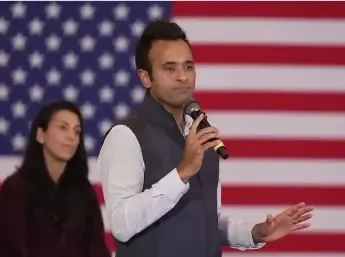
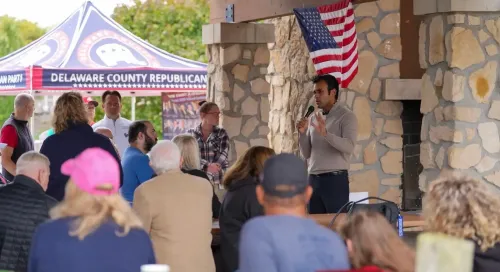
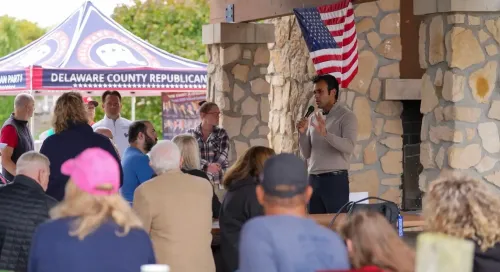
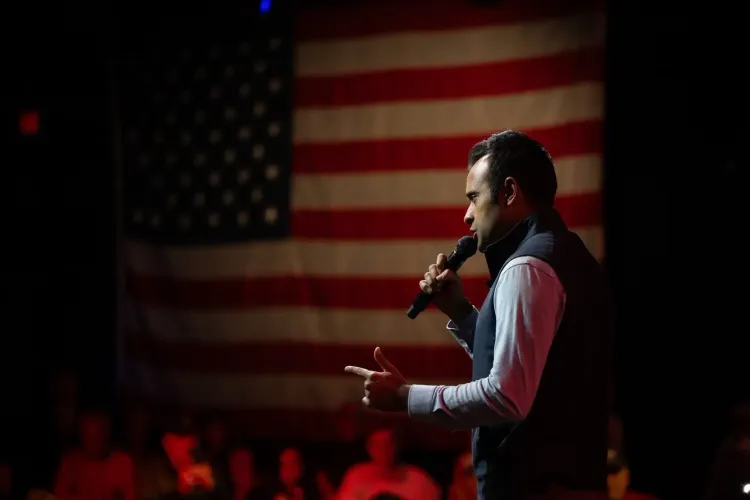
Speaking at his election-night gathering in Ohio, Ramaswamy acknowledged the defeat and confirmed he had contacted Acton to offer his congratulations. He thanked his supporters and indicated he intended to continue serving Ohio outside of public office. He also singled out his parents, wife Apoorva, their three children, and his running mate, Ohio Senate President Rob McColley.
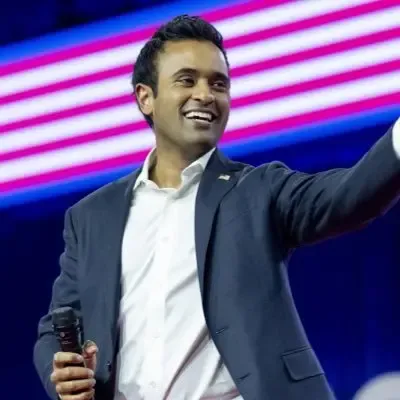
The 41-year-old Cincinnati-born politician had sought to become Ohio's first Indian-American governor following his prominent — though ultimately unsuccessful — bid for the 2024 Republican presidential nomination. His family traces its ancestral roots to Vadakkencherry in Kerala's Palakkad district; his father, V.G. Ramaswamy, migrated from Kerala to the United States and worked as an engineer, while his mother, Geetha Ramaswamy, is a psychiatrist. Ramaswamy himself graduated from Harvard University and Yale Law School before founding the biotechnology firm Roivant Sciences in 2014.
Trump and Vance Had Invested Heavily in the Race
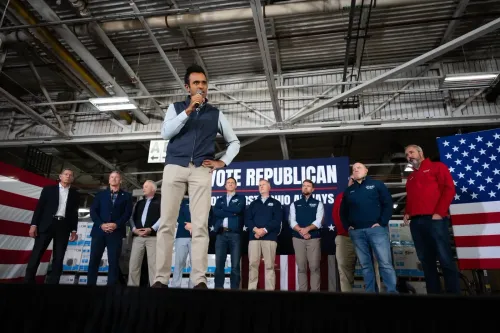
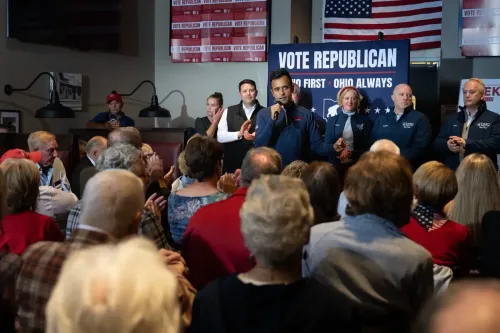
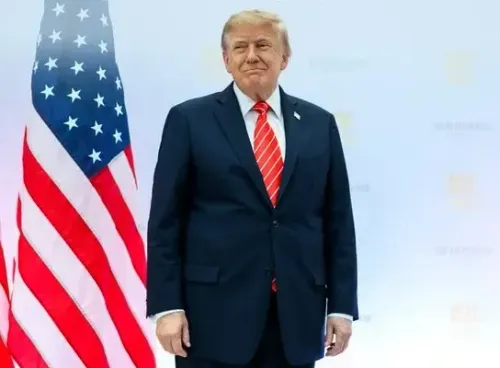
The defeat carries consequences well beyond Ohio because both President Trump and Vice President J.D. Vance had staked considerable political capital on a Ramaswamy victory. At a Republican rally in Chillicothe on 28 October, Trump declared: 'Six days from now, the people of Ohio are going to elect Vivek Ramaswamy as your Governor.' Trump followed up with a telephone campaign event on 31 October, urging Republican turnout for Ramaswamy and other party candidates.
Vance, a former Ohio senator, returned to his home state on 2 November for an election-eve rally in Swanton, telling supporters: 'So I know that we are going to elect Vivek Ramaswamy and Jon Husted.' Both predictions proved wrong.
A Controversial Closing Campaign
Ramaswamy's campaign grew markedly contentious in its final weeks after an advertisement featuring Acton's estranged mother accused the Democrat of dishonesty. The move drew sharp criticism from Democrats and from Republicans including outgoing Governor Mike DeWine, though Trump publicly defended Ramaswamy's decision to run it. Ramaswamy had lent more than $36 million of his own money to the campaign by late September, underscoring the scale of his personal commitment to the race.
Acton, a 60-year-old physician and former Ohio health director, ran on a platform of affordability, healthcare, education, and economic relief for working families, contrasting sharply with Ramaswamy's agenda of tax cuts, deregulation, and reduced government spending.
What the Result Signals
Ohio had not elected a Democratic governor since 2006, making Acton's win a noteworthy data point for national political strategists assessing Republican vulnerability in Sun Belt and Rust Belt states ahead of the next electoral cycle. The combined Democratic victories in the gubernatorial and Senate races in a Trump-leaning state will intensify scrutiny of the Republican Party's candidate selection and campaign strategy in competitive Midwestern contests going forward.
Point of View
Condemned even by outgoing Republican Governor Mike DeWine, illustrates a recurring tension in the MAGA playbook: aggressive personal attacks that consolidate the base can simultaneously alienate the suburban moderates needed to win statewide. With both the governor's mansion and a Senate seat flipping Democratic in one night, Ohio's status as a reliably red state deserves fresh scrutiny — and Republican strategists preparing for 2028 would be unwise to dismiss the result as an anomaly.
NationPress
4 Nov 2026
Frequently Asked Questions
Who won the Ohio governor's race in 2026?
Democrat Amy Acton won the Ohio gubernatorial election on 4 November 2026, defeating Republican Vivek Ramaswamy with approximately 51% of the vote to his 46%. She became the first woman elected governor of Ohio and the first Democrat to win the office since 2006.
Why is Vivek Ramaswamy's defeat significant?
Ramaswamy's loss is significant because President Trump and Vice President J.D. Vance had invested considerable political capital in his candidacy, and Ohio was a state Trump had won by 11 points in 2024. The roughly 16-point swing toward Democrats in a single election cycle signals potential Republican vulnerability in Midwestern states.
What is Vivek Ramaswamy's connection to India?
Ramaswamy was born in Cincinnati in 1985 and his family traces its ancestral roots to Vadakkencherry in Kerala's Palakkad district. His father, V.G. Ramaswamy, migrated from Kerala to the United States and worked as an engineer, and his mother, Geetha Ramaswamy, is a psychiatrist.
What happened in Ohio's Senate race on the same night?
Democrat Sherrod Brown defeated Republican Jon Husted in Ohio's Senate contest, handing Republicans a second major loss in the state on the same election night. Vice President Vance had also publicly predicted a Husted victory at a campaign rally days earlier.
What controversies marked Ramaswamy's campaign in its final weeks?
In the closing weeks of the race, Ramaswamy's campaign aired an advertisement featuring Acton's estranged mother, accusing the Democrat of dishonesty. The move drew criticism from both Democrats and Republicans, including outgoing Governor Mike DeWine, though President Trump defended the decision.