Ramaswamy Pitches Ohio Fight, From Toledo to Appalachia
Synopsis
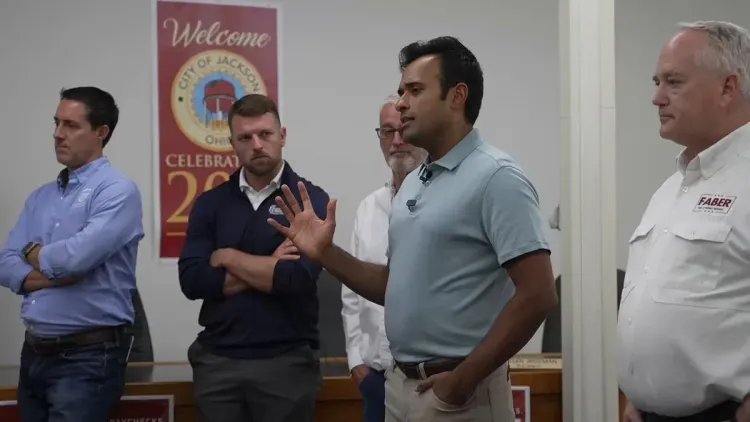
Entrepreneur Vivek Ramaswamy declared on X that his mission is to 'fight' for a better life for Ohioans — from Toledo's industrial corridors to Appalachian rural counties — framing himself as a champion of working families over a cultural preacher.
Key Takeaways
Entrepreneur Vivek Ramaswamy posted on X on September 30, 2026 , pledging to fight for Ohioans' quality of life rather than 'preach' to them.
The post spans Toledo (northwest Ohio manufacturing hub) and Appalachia (rural southern Ohio), signalling a broad, cross-demographic coalition appeal.
Ramaswamy founded Strive Asset Management , ran in the 2024 Republican presidential primary , and co-led the DOGE advisory effort with Elon Musk.
The messaging continues a pattern among Republican figures of prioritising economic uplift over cultural commentary in Rust Belt outreach.
No specific new Ohio programme has been publicly announced; the post may signal future electoral or advisory moves.
Two years after his high-profile 2024 Republican presidential run, entrepreneur Vivek Ramaswamy is keeping his gaze fixed squarely on Ohio — and he wants working families there to know exactly where he stands. In a post on X on Wednesday, September 30, 2026, Ramaswamy drew a direct line from the industrial corridors of Toledo to the hollowed-out hills of Appalachia, pledging to fight for a better life rather than lecture voters on how to live one.
The message: service over sermon
Ramaswamy's post was pointed and brief: 'Our job isn't to preach to you, it's to fight for you to have a better life. From urban to rural Ohio, from Toledo all the way to Appalachia.' The framing is deliberate — it positions him not as a moralist but as an economic champion, distancing himself from the cultural-messaging lane that has often dominated Republican politics and leaning hard into the bread-and-butter concerns of the Rust Belt.
The geographic sweep matters. Toledo, in northwest Ohio, carries a history of automotive and manufacturing employment that has eroded over decades. Appalachia — spanning southern Ohio and stretching into neighbouring states — represents some of the country's most persistent pockets of rural economic decline. By naming both in a single breath, Ramaswamy signals an attempt to hold together the urban working class and the rural forgotten in one political coalition.
Ramaswamy's Ohio roots and the 2024 campaign arc
Ramaswamy, a Cincinnati-born entrepreneur and founder of Strive Asset Management, made economic revitalization of Rust Belt states a centrepiece of his 2024 presidential campaign before ultimately stepping aside. He later served as co-lead of the US Department of Government Efficiency (DOGE) advisory effort alongside Elon Musk, bringing a disruptor's credential to government-cost debates. The September 2026 post suggests his political ambitions — or at minimum his public voice on Ohio's economic future — remain very much alive.
A broader Midwest pattern
Ramaswamy's framing mirrors a wider Republican playbook that has sought to win deindustrialised Midwestern communities by emphasising economic opportunity over social commentary. The strategy reflects lessons drawn from successive election cycles in which Ohio — once a reliable presidential bellwether — swung sharply toward candidates who spoke the language of jobs and dignity over identity politics. Whether Ramaswamy translates this rhetoric into a concrete policy or electoral initiative remains the open question.
If the post is a prelude to something larger — a Senate run, a renewed advisory role, or a state-focused economic initiative — Ohio's working families will be watching to see whether the fight he is promising has a specific address.
Point of View
He distances himself from a Republican cultural-warrior lane and reclaims the economic-populist ground that delivered Rust Belt victories in recent cycles. The Toledo-to-Appalachia geographic frame is not incidental — it threads together two voter blocs, urban blue-collar workers and rural working poor, that any statewide Ohio candidacy would need to hold simultaneously. Two years on from his presidential bid and following his DOGE stint, this kind of public signalling rarely appears without a downstream electoral or policy calculation. Ohio remains one of America's most consequential Midwestern proving grounds, and Ramaswamy clearly has not finished his argument there.
NationPress
30 Sept 2026
Frequently Asked Questions
What did Vivek Ramaswamy post on X in September 2026?
Ramaswamy posted that his job is not to preach to voters but to fight for them to have a better life, specifically calling out urban and rural Ohio from Toledo to Appalachia.
Is Vivek Ramaswamy running for office in Ohio?
No specific candidacy has been announced. The September 2026 post signals continued political engagement with Ohio voters, but no formal electoral campaign has been confirmed.
What is Vivek Ramaswamy's connection to Ohio?
Ramaswamy was born in Cincinnati, Ohio, and made Rust Belt economic revitalization a key theme of his 2024 Republican presidential campaign, which gave him a strong Ohio political profile.
What is the significance of Toledo and Appalachia in Ramaswamy's message?
Toledo represents Ohio's industrial, urban working class, while Appalachia covers economically distressed rural counties — together they span the full spectrum of working-family voters Ramaswamy is courting.
What was Vivek Ramaswamy's role in DOGE?
Ramaswamy co-led the US Department of Government Efficiency advisory effort alongside Elon Musk after his 2024 presidential campaign, focusing on federal cost reduction.