Ramaswamy Pledges Lower Costs and Better Schools for All
Synopsis
Entrepreneur Vivek Ramaswamy posted a universalist campaign pledge on X on July 27, 2026, promising lower costs, bigger paychecks, and better schools to every American — voter or not. The statement echoes his 2023-24 presidential platform centred on deregulation, tax cuts, and school choice.
Key Takeaways
Vivek Ramaswamy posted a campaign-style pledge on X on July 27, 2026 , promising lower costs, bigger paychecks, and better schools to all Americans.
The promise was explicitly framed as universal — identical for those who vote for him and those who do not.
Ramaswamy is the Founder and Executive Chairman of Strive Asset Management and former co-lead of the US Department of Government Efficiency (DOGE) advisory effort.
His prior 2023–2024 presidential campaign platform rested on deregulation, energy expansion, tax cuts, and school-choice expansion.
No specific legislative proposal or formal campaign announcement accompanied the post.
The rhetoric aligns with a broader conservative strategy of framing economic and education policies as non-partisan deliverables to attract independent and working-class voters.
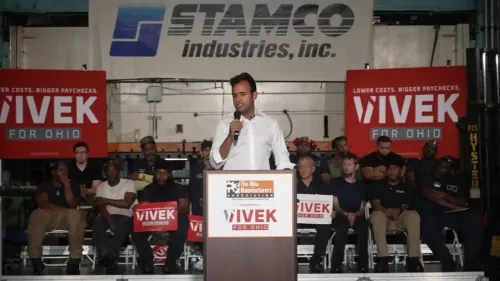
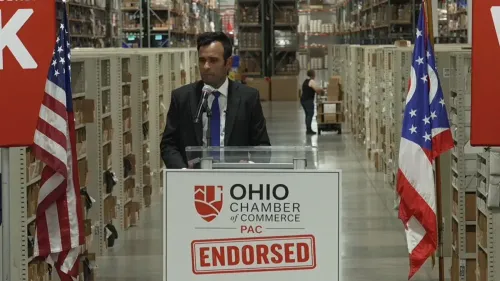
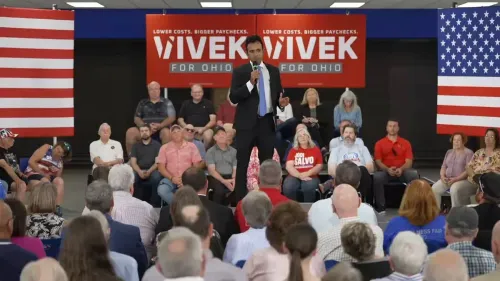
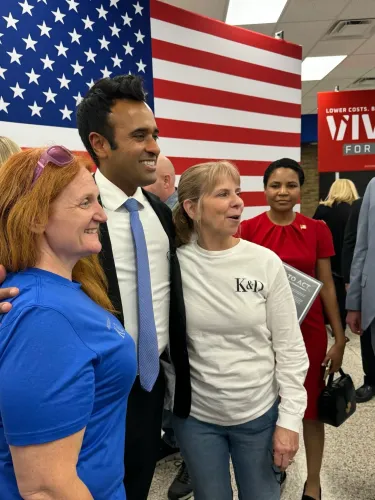
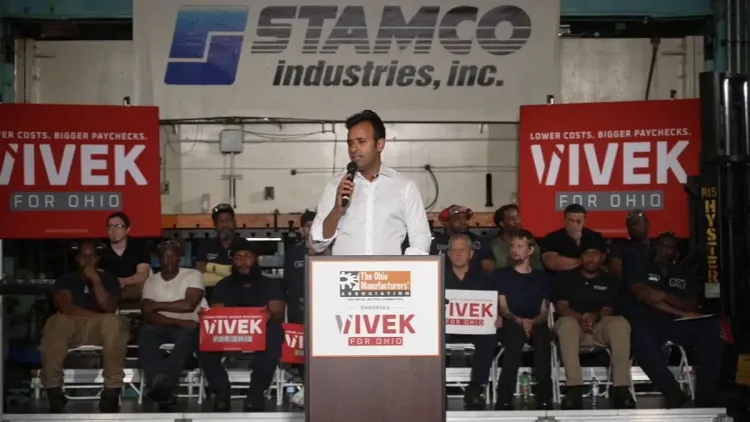
Entrepreneur and former 2024 Republican presidential candidate Vivek Ramaswamy posted a campaign-style pledge on X on Monday, July 27, 2026, promising lower costs, bigger paychecks, and better schools — framing the commitments as universal, regardless of whether a voter supports him.
Context
Ramaswamy's post read: 'My promise to everyone who votes for me: lower costs, bigger paychecks, better schools. My promise to everyone who doesn't vote for me: lower costs, bigger paychecks, better schools.' The deliberate repetition is a rhetorical device designed to signal that his policy goals are not partisan rewards but universal deliverables.
The statement arrives as Ramaswamy remains a prominent voice in the American conservative policy space, serving as Founder and Executive Chairman of Strive Asset Management and having previously co-led the US Department of Government Efficiency (DOGE) advisory effort alongside Elon Musk.
Policy Backdrop
During his 2023–2024 presidential primary campaign, Ramaswamy built his platform around three interlocking pillars: aggressive deregulation and expanded domestic energy production to reduce the cost of living, tax and federal spending cuts aimed at lifting real wages, and expanded school-choice mechanisms to improve K-12 outcomes without increasing public expenditure.
The July 2026 post echoes that same framework almost verbatim, suggesting continuity in his political positioning. The broader conservative movement has consistently framed economic and education policies as non-partisan goods — a rhetorical posture intended to appeal beyond the Republican base to independent and working-class voters.
Stakeholders and Impact
American working families are the explicit audience for the pledge. On costs, Ramaswamy's prior proposals leaned on energy deregulation and rollback of federal mandates rather than direct subsidies. On wages, the emphasis has been on reducing the tax burden on both employers and employees. On schooling, the focus has been parental choice — including charter schools and voucher programmes — rather than increased federal education spending.
Critics of this approach argue that deregulation alone does not guarantee lower consumer prices, and that school-choice expansion can divert resources from public school systems that serve the majority of American children. Supporters contend that market competition and reduced government overhead are the most durable routes to the outcomes Ramaswamy is promising.
What's Next
The post offers no specific legislative proposal or campaign announcement, but it signals that Ramaswamy is actively cultivating a public profile around economic and education themes heading into whatever political cycle is next on his horizon. Observers will watch for follow-on statements detailing concrete cost-reduction or school-choice legislation, as well as any developments tied to the ongoing work of the DOGE advisory framework he helped establish.
Whether this represents the opening of a formal political campaign or sustained advocacy from outside elected office, the universalist framing of his promise positions Ramaswamy as a figure seeking to transcend conventional partisan divides on kitchen-table issues.
Point of View
He is borrowing a page from centrist populism while keeping his policy prescriptions firmly on the deregulatory right. The post's timing in mid-2026 suggests he is maintaining political relevance in the cycle between the last presidential race and the next, potentially positioning himself for another run or a prominent legislative role. For Indian observers, it reflects a broader global trend of technocratic outsiders using social media to sustain political capital between formal electoral contests.
NationPress
27 Jul 2026
Frequently Asked Questions
Who is Vivek Ramaswamy and why is he in the news?
Vivek Ramaswamy is an American entrepreneur, Founder and Executive Chairman of Strive Asset Management, former co-lead of the US DOGE advisory effort, and a 2024 Republican presidential candidate. He is in the news after posting a universalist campaign pledge on X on July 27, 2026, promising lower costs, bigger paychecks, and better schools to all Americans.
What did Vivek Ramaswamy promise in his July 2026 X post?
Ramaswamy promised lower costs, bigger paychecks, and better schools — and he stated the same promise applies whether or not a person votes for him, framing his goals as universal rather than partisan.
Is Vivek Ramaswamy running for president in 2026?
No formal campaign announcement accompanied his July 2026 post. The statement is campaign-style rhetoric, but Ramaswamy has not announced a specific electoral bid as indicated by this post.
What is DOGE and what was Ramaswamy's role in it?
DOGE stands for the Department of Government Efficiency, a US federal advisory effort aimed at reducing government spending and bureaucracy. Ramaswamy co-led the initiative alongside Elon Musk before departing to focus on other ventures.
What are Ramaswamy's key policy positions on costs and education?
Based on his 2023–2024 presidential campaign, Ramaswamy favours energy deregulation and reduced federal mandates to lower living costs, tax and spending cuts to raise real wages, and school-choice expansion — including charter schools and voucher programmes — to improve K-12 educational outcomes.