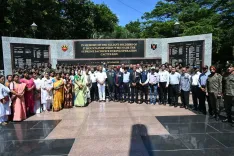
Andhra Pradesh ranks 2nd in India under MISHTI mangrove scheme, restores 2,047 hectares

Synopsis
Andhra Pradesh has climbed to second place nationally under the Centre's MISHTI mangrove scheme, restoring over 2,047 hectares in a single year and investing ₹18.04 crore in coastal ecosystems. The state's Fish Bone Technique and Great Green Wall initiative are positioning it as a replicable model for climate-resilient coastal governance in India.
Key Takeaways
Andhra Pradesh secured second place in India under the MISHTI scheme of the Ministry of Environment, Forest and Climate Change.
2,047.70 hectares of mangrove plantations were developed in 2025–26 , with ₹18.04 crore invested in coastal restoration.
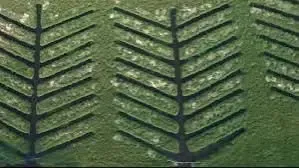
The innovative Fish Bone Technique was adopted to improve tidal circulation and mangrove survival rates.
Nearly 7,000 acres of mangroves restored over the past two years under the Great Green Wall of Andhra Pradesh .
Target for 2026–27 : restore 1,618 hectares of mangrove ecosystems across the state.
Deputy CM Pawan Kalyan credited field officers and frontline forest staff for the achievement.
Andhra Pradesh has secured second place among all Indian states under the MISHTI (Mangrove Initiative for Shoreline Habitats and Tangible Incomes) scheme of the Ministry of Environment, Forest and Climate Change, the state's Forest Department announced on Sunday, 27 July 2025. The ranking reflects the state's large-scale coastal restoration push under the Great Green Wall of Andhra Pradesh initiative.
Key Achievements in 2025–26
The Forest Department reported that 2,047.70 hectares of mangrove plantations were developed across the state during 2025–26, backed by an investment of ₹18.04 crore in coastal ecosystem restoration. The department has also deployed the innovative Fish Bone Technique, which improves tidal water circulation, boosts mangrove survival rates, and enhances long-term ecological resilience along the coast.
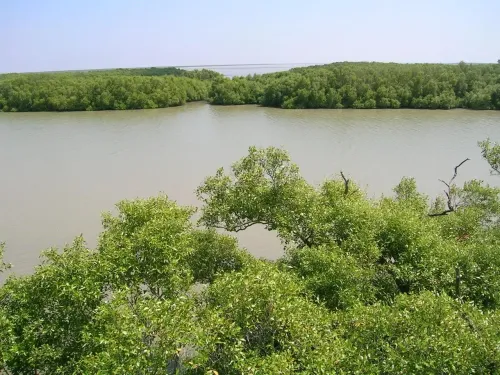
Over the past two years, the state reports that nearly 7,000 acres of mangroves have been restored and developed, according to the Forest Department's statement.
What the MISHTI Scheme Entails
The MISHTI scheme, operated under the Union Ministry of Environment, Forest and Climate Change, is a centrally coordinated programme targeting mangrove restoration along India's coastline. It links shoreline habitat conservation with income support for coastal communities — a dual mandate that makes the ranking significant not just ecologically but economically.
Andhra Pradesh's 1,053 km coastline makes it one of India's most exposed states to cyclones, storm surges, and sea erosion. Mangroves serve as a natural buffer against these threats while also functioning as blue carbon sinks — ecosystems that sequester carbon from the atmosphere and ocean.
What the Government Said
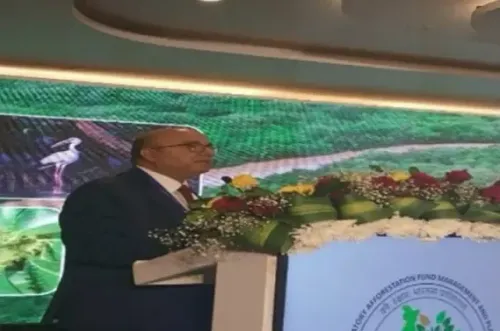
Deputy Chief Minister and State Forest Minister Pawan Kalyan called the second-place ranking 'a proud milestone in the journey towards ecological restoration and climate resilience.' In a statement, he credited the Principal Chief Conservator of Forests and Head of Forest Force (PCCF & HoFF), senior officers, field personnel, and frontline forest staff for the achievement.
'The successful restoration of more than 2,047 hectares of mangroves, adoption of innovative conservation practices, and unwavering focus on protecting our coastal ecosystems reflect the Department's vision and hard work,' Kalyan said.
On the occasion of the International Day for the Conservation of Mangrove Ecosystems, Kalyan described mangroves as 'the guardians of our coast, the lungs of our shoreline, and one of nature's greatest gifts to humanity,' adding that protecting them is 'about safeguarding lives, strengthening ecological security, securing livelihoods, and preserving the natural wealth that future generations deserve.'
Targets for 2026–27
Building on current momentum, the Forest Department has set a target to restore 1,618 hectares of mangrove ecosystems across Andhra Pradesh in 2026–27. Kalyan separately indicated a goal of restoring an additional 4,000 acres during the same period under the Great Green Wall initiative, reaffirming the state's resolve to protect coastal communities from climate-related risks.
Broader Impact on Coastal Communities
Beyond ecological metrics, the restoration programme is framed as a livelihood intervention. Coastal communities dependent on fisheries and shoreline agriculture stand to benefit from reduced erosion, improved marine biodiversity, and the income-support components embedded in the MISHTI framework. This comes amid growing scientific consensus that mangrove loss accelerates coastal vulnerability — a risk that is acutely felt along Andhra Pradesh's cyclone-prone eastern seaboard.
With science-based restoration methods and a structured multi-year target in place, Andhra Pradesh's trajectory under MISHTI will be closely watched as a model for other coastal states.
Point of View
But the more consequential detail is the Fish Bone Technique — a structural intervention that addresses one of mangrove restoration's chronic failure points: poor tidal circulation leading to low survival rates. If the technique's outcomes are independently verified, it could become a national template. The harder question is whether the 1,618-hectare target for 2026–27 is backed by equivalent budget allocation, or whether it represents ambition outpacing resources — a pattern that has undermined coastal restoration programmes elsewhere in India.
NationPress
27 Jul 2026
Frequently Asked Questions
What is the MISHTI scheme and why does Andhra Pradesh's ranking matter?
MISHTI stands for Mangrove Initiative for Shoreline Habitats and Tangible Incomes, a Union government scheme under the Ministry of Environment, Forest and Climate Change aimed at restoring mangroves along India's coastline. Andhra Pradesh securing second place signals that the state's large-scale restoration efforts — over 2,047 hectares in 2025–26 — are among the most substantial in the country.
How many hectares of mangroves has Andhra Pradesh restored?
The state developed 2,047.70 hectares of mangrove plantations in 2025–26 alone, with nearly 7,000 acres restored over the past two years under the Great Green Wall of Andhra Pradesh initiative. The target for 2026–27 is an additional 1,618 hectares.
What is the Fish Bone Technique used in mangrove restoration?
The Fish Bone Technique is an innovative method adopted by the Andhra Pradesh Forest Department that creates a network of channels resembling a fish skeleton to improve tidal water circulation in restoration sites. It results in higher mangrove survival rates and enhanced long-term ecological resilience.
How much has Andhra Pradesh invested in coastal ecosystem restoration?
The state invested ₹18.04 crore in coastal ecosystem restoration during 2025–26 as part of its MISHTI-linked mangrove development programme.
Why are mangroves important for Andhra Pradesh's coastline?
Andhra Pradesh has a 1,053 km coastline that is highly vulnerable to cyclones, storm surges, and sea erosion. Mangroves act as a natural buffer against these hazards, support marine biodiversity, sustain coastal livelihoods, and sequester blue carbon — making them critical to the state's climate resilience strategy.