What Steps Are Experts Taking to Protect Mangrove Ecosystems at the Andhra Pradesh Workshop?
Synopsis
The two-day workshop in Andhra Pradesh gathered experts and officials to discuss vital strategies for conserving mangrove ecosystems while promoting sustainable coastal livelihoods. With the MISHTI initiative at the forefront, this event underscored the importance of coordinated efforts in protecting these invaluable ecosystems.
Key Takeaways
MISHTI initiative is pivotal for mangrove conservation.
Collaboration among states is essential for effective implementation.
Mangroves are crucial for climate resilience and coastal protection.
Financial support for biodiversity management is vital for local economies.
Microorganisms hold significant potential for various sectors.
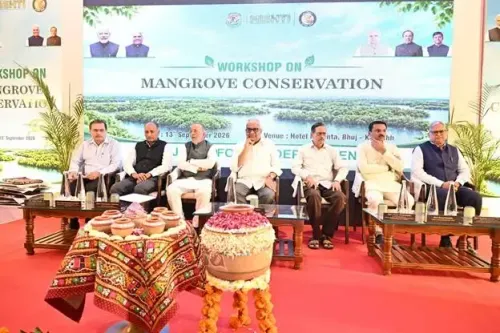
New Delhi, Jan 9 (NationPress) Forest officials and various stakeholders convened to explore methods for enhancing mangrove ecosystems and ensuring sustainable coastal livelihoods during a two-day national workshop that concluded on Friday in Andhra Pradesh, according to an official statement.
The workshop, known as MISHTI (Mangrove Initiative for Shoreline Habitats and Tangible Incomes), was inaugurated by Pawan Kalyan, the Deputy Chief Minister of Andhra Pradesh, who expressed gratitude to Prime Minister Narendra Modi for his visionary leadership.
MISHTI aims at the development and conservation of mangrove ecosystems, with a strong focus on mangrove restoration, shoreline protection, biodiversity conservation, and creating tangible livelihood opportunities for coastal communities, as stated by the Environment Ministry.
Pawan Kalyan also acknowledged the efforts of Bhupender Yadav, the Union Minister for Environment, Forest and Climate Change, for supporting state-level mangrove conservation via the MISHTI initiative.
This workshop gathered experts, forest officials, and stakeholders to discuss sustainable mangrove conservation and restoration strategies, the official added.
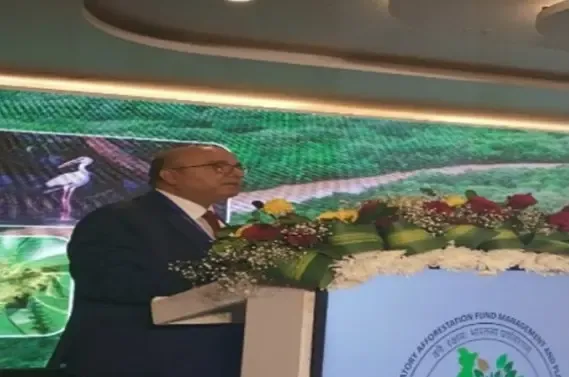
A pivotal presentation was made by Anand Mohan, the Chief Executive Officer of the National Compensatory Afforestation Fund Management and Planning Authority (CAMPA), where he highlighted the goals and implementation framework of the MISHTI initiative.
The mission aligns with the objectives of the Mangrove Alliance for Climate (MAC), of which India became a proactive member during the COP-27 of the United Nations Framework Convention on Climate Change (UNFCCC).
During the presentation, Mohan emphasized the vital role of mangroves in climate resilience, coastal protection, and providing sustainable economic benefits, urging for coordinated efforts among states and institutions for effective execution.
This workshop served as a crucial platform for knowledge exchange, sharing best practices, and policy discussions, reinforcing the commitment to fortifying mangrove ecosystems and ensuring sustainable coastal livelihoods under the MISHTI framework.
On Thursday, the National Biodiversity Authority, under the Ministry of Environment, Forest and Climate Change, allocated Rs 68 lakh to Biodiversity Management Committees (BMCs) in Wada tehsil of Palghar district and the Brihanmumbai Municipal Corporation in Maharashtra as part of Access and Benefit Sharing (ABS).
This funding originates from the commercial exploitation of soil microorganisms, specifically bacteria from the Bacillus genus, utilized for developing innovative probiotic products.
This exemplifies the effective application of the ABS framework, ensuring that benefits derived from India's rich microbial biodiversity are shared fairly with local communities and custodians.
Approximately 15 percent of ABS applications involve microorganisms, highlighting their potential in sectors like agriculture, healthcare, and biotechnology.
This mechanism channels benefits to farmers, local communities, BMCs, and other stakeholders while promoting the conservation and sustainable use of biological resources, as per the statement.
Point of View
I believe that the ongoing discussions surrounding mangrove conservation are crucial for not only environmental sustainability but also for the livelihoods of coastal communities. The MISHTI initiative represents a proactive approach towards safeguarding our natural resources. It is imperative that we continue to engage stakeholders and foster collaborative efforts to protect our ecosystems.
NationPress
1 Oct 2026
Frequently Asked Questions
What is the purpose of the MISHTI initiative?
The MISHTI initiative aims to develop and conserve mangrove ecosystems while promoting sustainable livelihoods for coastal communities through restoration, protection, and biodiversity conservation.
Who inaugurated the MISHTI workshop?
The MISHTI workshop was inaugurated by Pawan Kalyan, the Deputy Chief Minister of Andhra Pradesh.
What significant financial support was announced during the workshop?
The National Biodiversity Authority announced a disbursement of Rs 68 lakh to Biodiversity Management Committees in Maharashtra as part of Access and Benefit Sharing.
Why are mangroves important?
Mangroves play a critical role in climate resilience, coastal protection, and providing sustainable economic benefits to local communities.
What percentage of ABS applications involves microorganisms?
Approximately 15 percent of ABS applications involve microorganisms, showcasing their potential in agriculture, healthcare, and biotechnology.