Ramaswamy Meets Ohio Manufacturers, Calls for Industrial Revival
Synopsis
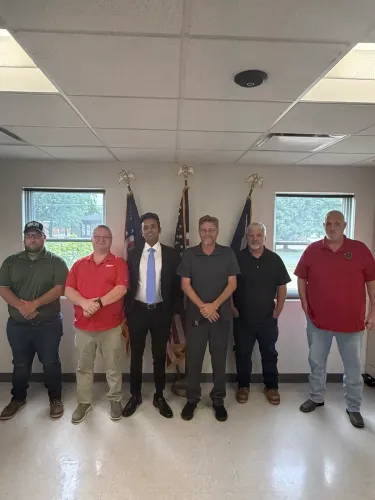
Entrepreneur Vivek Ramaswamy met the Ohio Manufacturers' Association on June 16, 2026, invoking Akron's rubber legacy, Toledo's glass industry, the Youngstown-Cleveland steel corridor, and Cincinnati's machine-tool heritage to call for a U.S. manufacturing renaissance in Ohio.
Key Takeaways
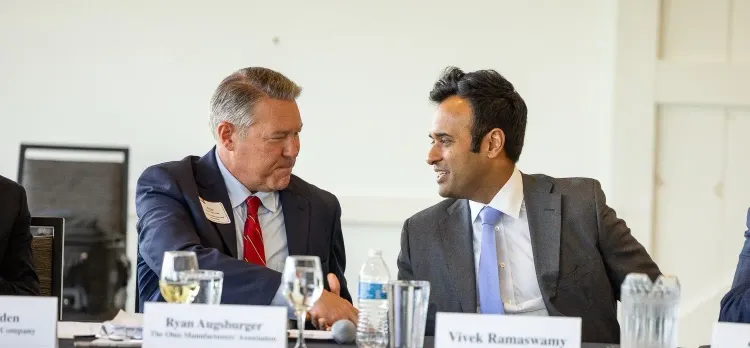
Entrepreneur Vivek Ramaswamy met the Ohio Manufacturers' Association on June 16, 2026 , calling for Ohio to 'lead again' in manufacturing.
He cited four Ohio cities: Akron (rubber), Toledo (glass), the Youngstown-Cleveland corridor (steel), and Cincinnati (machine tools).
The meeting is consistent with Ramaswamy's 2024 presidential campaign platform of deregulation and manufacturing reshoring.
As former co-lead of the DOGE advisory effort, Ramaswamy has linked government efficiency to domestic industrial competitiveness.
Potential outcomes to watch include state-level manufacturing incentives and federal regulatory rollbacks during the 2026–2027 legislative sessions.
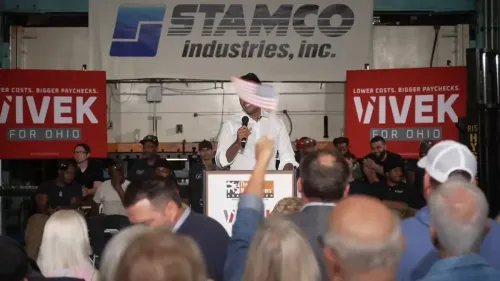
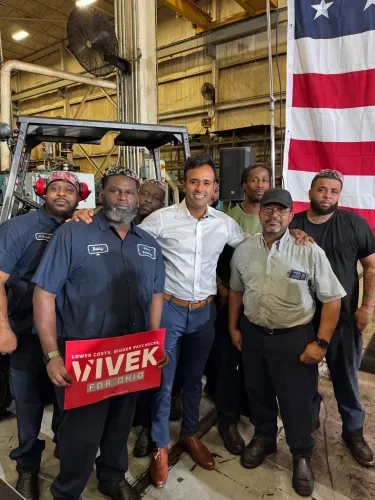
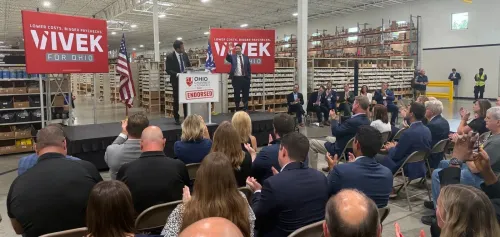
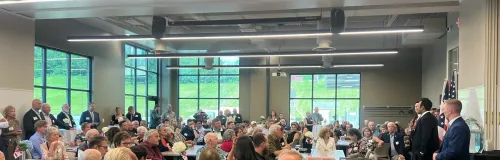
Entrepreneur Vivek Ramaswamy met with the Ohio Manufacturers' Association on Tuesday, June 16, 2026, calling on Ohio to reclaim its historic role as a global manufacturing leader. The former co-lead of the Department of Government Efficiency (DOGE) advisory effort invoked the state's industrial heritage — from Akron's rubber industry to Toledo's glass sector and the Youngstown-Cleveland steel corridor — as a blueprint for a manufacturing comeback.
Context
In his post, Ramaswamy wrote: 'Ohio led the world in manufacturing. Akron was the rubber capital, Toledo was the Glass City, the Youngstown-Cleveland corridor was a great steel-producing bastion, Cincinnati was a machine-tool hub. It's time for us to lead again.' The statement followed what he described as a 'great discussion' with the Ohio Manufacturers' Association, a trade body that advocates for state and federal policies supporting industrial competitiveness and job growth.
The four cities Ramaswamy cited each represent a distinct chapter in Ohio's industrial history. Akron was once home to the world's largest rubber and tyre companies. Toledo earned its 'Glass City' nickname through dominant flat-glass and automotive-glass production. The Youngstown-Cleveland corridor anchored American steel output for much of the twentieth century, while Cincinnati built a global reputation in precision machine tools.
Policy Backdrop
Ramaswamy's push for manufacturing revival is consistent with positions he advanced throughout his 2024 Republican presidential campaign, where he repeatedly called for deregulation and trade measures to reshore jobs lost since the 1990s. As a former co-lead of the DOGE advisory effort — launched after the 2024 election to cut federal regulations and reduce bureaucracy — he has framed government efficiency as a prerequisite for domestic industrial competitiveness.
The broader Republican Rust Belt playbook has deep roots. The first Trump administration (2017–2021) enacted tariffs on steel and aluminium alongside the Tax Cuts and Jobs Act, both presented as tools to revive industrial capacity in states like Ohio. Ramaswamy's meeting with the Ohio Manufacturers' Association signals continued engagement with that constituency heading into the 2026–2027 legislative cycle.
Stakeholders and Impact
Ohio's manufacturing sector remains a significant employer in the state, though decades of deindustrialisation have hollowed out communities that once led global output. Workers in the Youngstown-Cleveland corridor and in cities like Akron and Toledo have experienced sustained job losses tied to automation, offshoring, and shifting global supply chains.
The Ohio Manufacturers' Association represents businesses across these sectors and has long lobbied for regulatory relief, workforce development funding, and trade policies that favour domestic producers. Ramaswamy's direct engagement with the association suggests a continued effort to build a policy coalition around reshoring and deregulation in one of the most electorally competitive Midwestern states.
The post also fits within a wider pattern of concern about China's industrial dominance and supply-chain vulnerabilities exposed during pandemic-era disruptions — themes that have gained traction across the political spectrum in recent years.
What's Next
Analysts and industry observers will watch whether Ramaswamy's engagement with the Ohio Manufacturers' Association translates into concrete legislative proposals — particularly potential state-level manufacturing incentives or federal regulatory rollbacks tied to DOGE recommendations during the 2026–2027 sessions. His continued visibility in Ohio also keeps him prominent in a state that has become a bellwether for Republican industrial policy. Whether the rhetoric of revival connects to actionable policy will determine its lasting impact on the communities he invoked.
Point of View
Glass, steel, machine tools — he signals policy depth beyond generic pro-manufacturing rhetoric. The move fits a broader Republican effort to lock in Midwest industrial constituencies ahead of future electoral cycles. Whether this translates into concrete legislative proposals tied to DOGE recommendations will be the real test of his post-campaign influence.
NationPress
16 Sept 2026
Frequently Asked Questions
Why did Vivek Ramaswamy meet the Ohio Manufacturers' Association?
Ramaswamy met the Ohio Manufacturers' Association to discuss reviving Ohio's manufacturing sector, invoking the state's historic dominance in rubber, glass, steel, and machine tools and calling for policies to restore that industrial leadership.
What is the Ohio Manufacturers' Association?
The Ohio Manufacturers' Association is a trade body representing Ohio-based manufacturers that advocates for state and federal policies aimed at boosting industrial competitiveness and job growth.
What was Ohio historically known for in manufacturing?
Ohio was historically a global leader in rubber production centred in Akron, glass manufacturing in Toledo, steel output along the Youngstown-Cleveland corridor, and precision machine tools in Cincinnati.
What is DOGE and what role did Ramaswamy play?
DOGE, or the Department of Government Efficiency, was an advisory initiative launched after the 2024 election to cut federal regulations and reduce bureaucracy. Ramaswamy served as its co-lead alongside Elon Musk before stepping away to run for Ohio governor.
What policies could follow Ramaswamy's meeting with Ohio manufacturers?
Observers are watching for potential state-level manufacturing incentives in Ohio and federal regulatory rollbacks linked to DOGE recommendations that could emerge during the 2026–2027 legislative sessions.