Ramaswamy Pushes Ohio Voter ID Into State Constitution via Issue 3
Synopsis
Entrepreneur Vivek Ramaswamy is urging Ohio voters to approve Issue 3, a ballot measure he helped advance with the state legislature that would embed a photo voter ID requirement directly in the Ohio state constitution, making it significantly harder to reverse in the future.
Key Takeaways
Ramaswamy announced on September 27, 2026 that he worked with the Ohio Legislature to place Issue 3 on the ballot.
Issue 3 would amend the Ohio state constitution to require photo ID for voting — a higher legal bar than a standard statute.
Ohio first introduced statewide voter ID rules in 2006 , with expansions through the 2010s and early 2020s .
Constitutionalising voter ID is part of a broader Republican-led post- 2020 strategy to make election-security measures harder to unwind.
Ramaswamy called on voters to 'show up and vote YES on Issue 3' in the upcoming ballot.
Post-passage litigation and implementation timelines are the key developments to watch if the measure is approved.
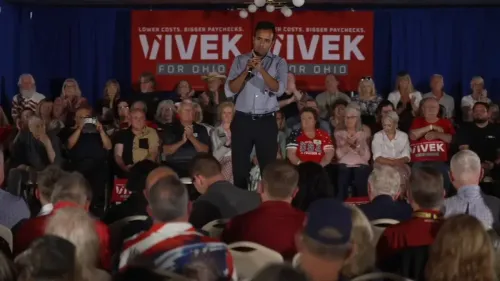
A constitutional amendment — not just a law — is what entrepreneur Vivek Ramaswamy wants for Ohio's voter ID rules, and he is now urging residents to deliver it at the ballot box. Ramaswamy announced on Sunday, September 27, 2026, that he worked alongside the Ohio Legislature to place Issue 3 — a measure to enshrine a photo ID voting requirement directly in the state constitution — on this year's ballot.
Why the Constitution, Not Just a Statute?
Ramaswamy's push to embed photo ID at the constitutional level is a deliberate strategic choice. Laws can be amended or repealed by a future legislative majority; constitutional provisions are far harder to undo. His post put it plainly: 'It's time to put a photo ID voter requirement into our state constitution.' That framing signals the goal is permanence, not just policy.
The move follows a national pattern of Republican-led efforts — accelerated after 2020 — to lock election-security measures into foundational legal texts, placing them beyond the reach of ordinary legislative shifts. Ohio is now among the states testing whether voters themselves will ratify that approach directly.
Ohio's Long Road to Voter ID
Ohio first enacted a statewide voter ID law in 2006, requiring government-issued identification at polling stations. Through the 2010s and into the early 2020s, successive legislation expanded identification requirements and tightened mail-in ballot verification rules. What Ramaswamy is now proposing goes a step further — lifting the requirement out of the statutory code entirely and writing it into the constitution, where county election boards and future legislatures would have far less room to modify it.
Ramaswamy's Role and the Legislative Path to the Ballot
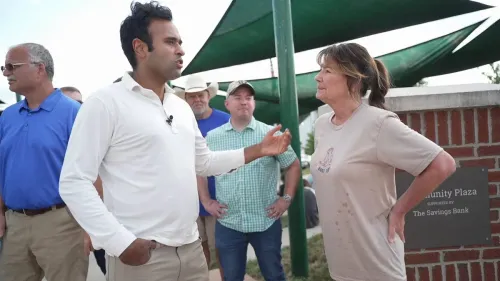
As a prominent Ohio-based entrepreneur, Strive Asset Management founder, and former 2024 Republican presidential candidate, Ramaswamy carries national profile to what is, at its core, a state-level campaign. His post confirms he was actively involved in working with the legislature to clear the procedural hurdles required to place a constitutional amendment before voters — a process that typically demands supermajority approval in both chambers before a measure reaches the ballot.
The final step, as Ramaswamy framed it, now belongs to Ohio voters: 'Show up and vote YES on Issue 3.'
What Happens If Issue 3 Passes — or Fails
A 'yes' vote would constitutionalise photo ID requirements, triggering implementation timelines and, almost certainly, legal challenges over access and equal-protection questions that have accompanied voter ID battles in other states. A 'no' vote would leave the existing statutory framework in place but deliver a political signal about the limits of appetite for constitutional entrenchment of election rules. Either outcome is likely to ripple beyond Ohio, given Ramaswamy's national platform and the broader Republican push on election security heading into future cycles.
The stakes in November are simple: Ohio voters will decide not just a policy, but how deeply it gets rooted.
Point of View
Minimising future legislative exposure. For Indian observers tracking US electoral politics, Ohio's outcome will be a bellwether: if constitutional enshrinement succeeds at the ballot, expect the model to migrate to other competitive states rapidly. The underlying tension — between ID requirements as election security versus barriers to access — is unlikely to be resolved by any single ballot result.
NationPress
27 Sept 2026
Frequently Asked Questions
What is Ohio Issue 3 on voter ID?
Issue 3 is a 2026 Ohio ballot measure that would amend the state constitution to require photo identification for voting. Entrepreneur Vivek Ramaswamy worked with the Ohio Legislature to place it on the ballot.
Why does Vivek Ramaswamy want voter ID in the Ohio constitution?
Ramaswamy argues that placing the photo ID requirement in the state constitution makes it far more durable than a regular law, which can be changed by a future legislative majority.
Does Ohio already have a voter ID law?
Yes. Ohio first enacted a statewide voter ID law in 2006 and subsequently expanded ID requirements through the 2010s and early 2020s. Issue 3 would elevate those requirements to constitutional status.
When will Ohio vote on Issue 3?
Issue 3 is on the 2026 Ohio ballot. Ramaswamy's September 27, 2026 post urged voters to 'show up and vote YES' in the upcoming election.
What happens after Ohio voters decide on Issue 3?
If approved, the constitutional amendment would trigger implementation timelines and is expected to face legal challenges over voter access. If defeated, Ohio's existing statutory voter ID framework remains in place.