Ramaswamy Vows to Cut Property Taxes, Red Tape in State Push
Synopsis
Vivek Ramaswamy — former DOGE co-lead and 2024 presidential candidate — has pledged to slash property taxes, cut red tape, and unleash the economy for hardworking families, marking a clear state-level political pivot in October 2026.
Key Takeaways
Entrepreneur Vivek Ramaswamy posted a campaign-style pledge on October 26, 2026 , vowing to fight for hardworking families at the state level.
Key promises include slashing property taxes , cutting red tape, and unleashing the state economy.
The messaging directly mirrors the deregulation agenda Ramaswamy championed during his 2024 Republican presidential campaign and as co-lead of the DOGE advisory effort .
Ramaswamy is founder and executive chairman of Strive Asset Management , giving him a corporate platform alongside his political activism.
The post fits a broader Republican pattern of extending federal efficiency-first arguments into state-level tax and regulatory policy .
The specific state targeted has not been confirmed, making upcoming state legislative sessions and election cycles the key events to watch.
Entrepreneur Vivek Ramaswamy is taking the deregulation playbook he honed on the national stage and pointing it squarely at the state level — promising to slash property taxes, cut red tape, and supercharge the local economy for working families.
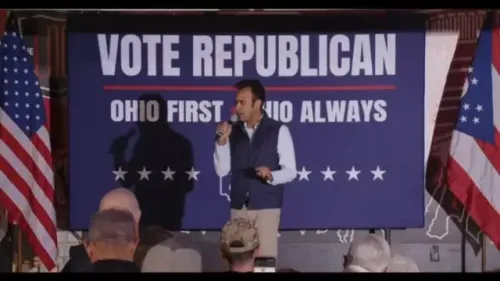
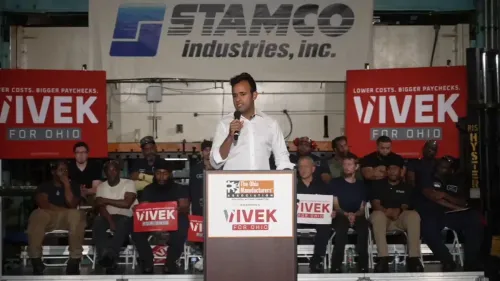
In a video post on Monday, October 26, 2026, Ramaswamy declared: 'We're going to fight for you and your families. Cut red tape, slash property taxes, unleash our economy, and make lives better for hardworking families across our state.' The message is combative, forward-leaning, and unmistakably campaign-pitched.
From DOGE to the Doorstep: A National Efficiency Agenda Goes Local
Ramaswamy built his national profile on two pillars: a 2024 Republican presidential run that made government inefficiency its central target, and his co-leadership of the US Department of Government Efficiency (DOGE) advisory effort under the Trump administration. Both chapters were defined by the same vocabulary — deregulation, streamlining, and pro-growth disruption. What's striking now is the translation of that federal-level ambition into a state-level political commitment.
Property tax relief is the sharpest edge of this pledge. For millions of homeowners, property taxes are the most viscerally felt government cost — arriving annually, impossible to defer, and directly tied to the roof over their heads. A promise to 'slash' them lands differently from abstract pledges about federal deficits. It is personal, immediate, and electorally potent.
The Broader Republican Pattern — and Why This Moment Matters
Ramaswamy's pitch fits a wider Republican pattern of pushing deregulation and tax reduction agendas from Washington down to state capitols. Following the DOGE experiment at the federal level, several Republican figures have begun recycling efficiency-first arguments to challenge state-level bureaucracies — a strategic pivot that extends the movement's reach into everyday governance. Property tax reform, in particular, has become a live fault line in a number of US states, where rising valuations have outpaced household income growth and made tax relief a cross-partisan pressure point.
As a founder and executive chairman of Strive Asset Management, Ramaswamy has consistently argued that economic freedom and reduced government footprint go hand in hand. This post signals that argument is now being deployed as an explicit political platform at the state tier.
The specific state remains the key variable to watch — and the one that will determine whether this pledge translates into a legislative fight, a ballot campaign, or a gubernatorial bid. What is already clear: the DOGE-era efficiency brand has found a new battleground, and Ramaswamy intends to be its standard-bearer.
Point of View
He is targeting the cost that most directly pressures middle-income homeowners, a group that swings elections. The move also tests whether the deregulation-and-efficiency coalition that animated his 2024 presidential run can be rebuilt as a durable state-level force. If successful, it could offer a template for other post-DOGE Republicans seeking to translate national efficiency rhetoric into concrete local mandates.
NationPress
26 Oct 2026
Frequently Asked Questions
What has Vivek Ramaswamy promised in his latest political statement?
Ramaswamy has pledged to cut red tape, slash property taxes, and unleash the state economy to improve lives for hardworking families, as stated in his October 26, 2026 post.
What is Vivek Ramaswamy's political background?
Ramaswamy ran for the Republican presidential nomination in 2024 and subsequently served as co-lead of the DOGE advisory effort under the Trump administration, focused on government efficiency and deregulation.
What is Strive Asset Management and how is Ramaswamy connected?
Strive Asset Management is a financial firm that advocates for shareholder value over ESG priorities; Ramaswamy founded it and serves as its executive chairman.
Why are property tax cuts a significant political issue in the United States?
Property taxes are levied directly on homeowners and rise with property valuations, making them one of the most immediately felt government costs. Reform promises carry strong electoral appeal, particularly for middle-income households.
Is Vivek Ramaswamy running for a state office in 2026?
His post carries clear state-level campaign language, but the specific state and the nature of any formal candidacy have not been officially confirmed based on available information.