RIS at 44: India's rise tied to Global South, says MoS External Affairs
Synopsis
At RIS's 44th Foundation Day, India's MoS for External Affairs framed the country's growth as inseparable from the Global South's rise — a signal of how deeply development diplomacy has moved to the centre of India's foreign policy identity, backed by four decades of think-tank research feeding directly into multilateral negotiations.
Key Takeaways
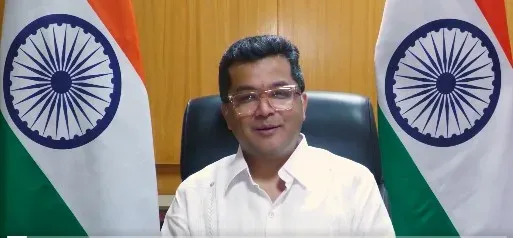
MoS External Affairs Pabitra Margherita addressed the RIS 44th Foundation Day on 31 May 2025 in New Delhi .
He linked India's development vision to the advancement of Global South nations, citing PM Modi's foreign policy outlook.
RIS was established in 1983 to provide analytical support to developing countries in international economic negotiations.
A parallel conference on India–Africa Agricultural Transformation was held with ICRISAT and DAKSHIN , covering climate-resilient farming and digital agriculture.
Former NITI Aayog member Prof.
Ramesh Chand and MEA Joint Secretary Aparna Ray also addressed the event.
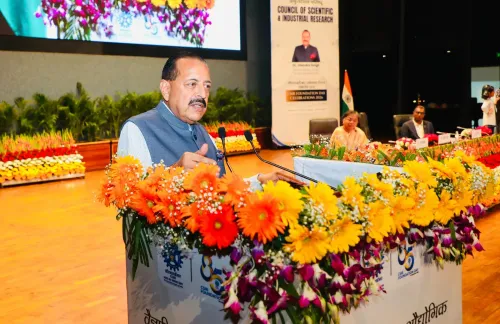
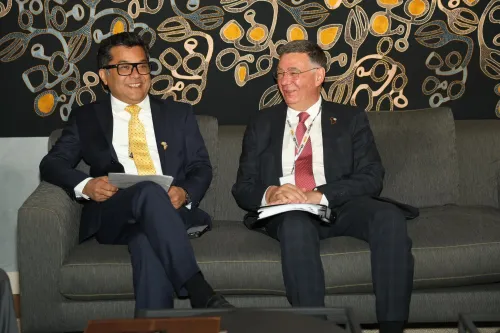
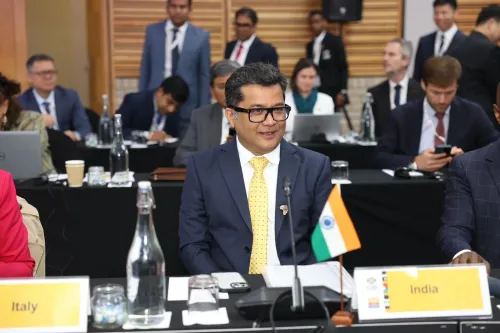
Minister of State for External Affairs Pabitra Margherita on 31 May 2025 declared that India's development journey is intrinsically linked to the progress of the Global South, not merely its own advancement, while addressing the 44th Foundation Day of the Research and Information System for Developing Countries (RIS) in New Delhi. The event brought together senior policymakers, diplomats, scholars, and development practitioners to mark four decades of the institution's policy research work.
Key Remarks from the Foundation Day Address
Delivering the Foundation Day address, Margherita congratulated RIS on completing 44 years as a leading policy think-tank and underscored its pivotal role in generating evidence-based policy inputs for developing nations. Invoking the vision of Prime Minister Narendra Modi, he stressed that India's growth ambitions are inseparable from the collective advancement of Global South nations in international forums.
He commended the institution's four decades of evidence-based policy research and its sustained contribution to amplifying the voice of developing countries in multilateral negotiations.
Distinguished Voices on RIS's Four-Decade Journey
Professor Ramesh Chand, former NITI Aayog member, reflected on his long association with RIS and its formative years, noting that the role of think-tanks has expanded considerably in response to emerging global challenges and rising policy complexities. He commended RIS for continuously broadening its research agenda to keep pace with a rapidly evolving global environment.
Aparna Ray, Joint Secretary (Policy Planning and Research) in the Ministry of External Affairs, lauded RIS for its contribution to international policy negotiations and its sustained support to Global South countries. She highlighted the institution's work in advancing frameworks centred on inclusivity, equity, South-South cooperation, and sustainable development.
Seshadri Chari, RIS Governing Council member, noted that the institution has emerged as an increasingly influential think-tank at a time when the global landscape has undergone profound transformations, growing more relevant as geopolitical uncertainties deepen.
RIS Director General Traces the Institution's Origins
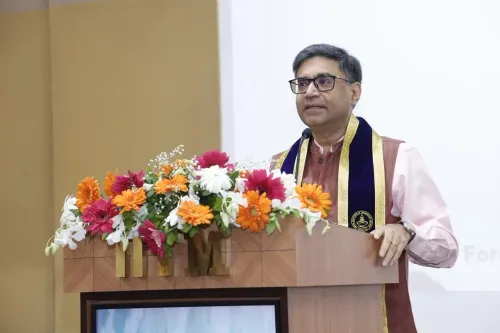
Professor Sachin Kumar Sharma, RIS Director General, traced the institution's journey since its establishment in 1983, noting it was founded to equip developing countries with analytical tools to navigate the complexities of international economic and political negotiations. He observed that RIS has become even more relevant in an era marked by the fragmentation of multilateral institutions and growing geopolitical uncertainties.
India–Africa Agriculture Conference Held Alongside
As part of the Foundation Day celebrations, RIS organised a conference on 'Strengthening India–Africa Partnership for Agricultural Transformation' in collaboration with DAKSHIN – Global South Centre of Excellence at RIS and the International Crops Research Institute for the Semi-Arid Tropics (ICRISAT). The conference convened policymakers, researchers, industry representatives, and agricultural experts to deliberate on sustainable farming systems, climate-resilient agriculture, digital public infrastructure, and agri-start-up ecosystems.
Participants exchanged best practices aimed at fostering inclusive, technology-driven agricultural development across Africa and the broader Global South. This comes amid growing momentum around India's leadership in South-South cooperation, particularly following its G20 presidency in 2023 which placed the Global South agenda at the centre of multilateral discussions.
What This Signals for India's Foreign Policy Posture
The Foundation Day underscored RIS's continuing role in shaping India's development diplomacy, with its research feeding directly into positions taken at forums such as the United Nations, WTO, and G20. As India deepens its engagement with Africa, Southeast Asia, and Latin America, institutions like RIS are expected to play a larger role in building the analytical scaffolding for those partnerships.
Point of View
Or whether the think-tank remains a ceremonial fixture in the foreign policy ecosystem. The India–Africa agriculture conference is a more concrete signal: if the frameworks developed there feed into binding bilateral agreements, it would mark a genuine shift from symbolism to substance. The real test of India's Global South leadership is not the rhetoric at foundation days but the policy outcomes that follow.
NationPress
26 Sept 2026
Frequently Asked Questions
What is RIS and why is its 44th Foundation Day significant?
The Research and Information System for Developing Countries (RIS) is a New Delhi-based policy think-tank established in 1983 to provide analytical support to developing nations in international economic and political negotiations. Its 44th Foundation Day, held on 31 May 2025, marked four decades of evidence-based policy research that has informed India's positions in multilateral forums.
What did MoS Pabitra Margherita say at the RIS Foundation Day?
Margherita said India's development journey is not solely about its own progress but is intrinsically linked to the advancement of the Global South. He commended RIS for four decades of evidence-based research and its role in amplifying the voice of developing countries in global forums.
What was the India–Africa agricultural conference about?
The conference, held alongside the Foundation Day, focused on 'Strengthening India–Africa Partnership for Agricultural Transformation' and was organised with ICRISAT and DAKSHIN. It brought together experts to discuss sustainable farming, climate-resilient agriculture, digital public infrastructure, and agri-start-up ecosystems across Africa and the Global South.
Who else spoke at the RIS 44th Foundation Day?
The event featured addresses by former NITI Aayog member Professor Ramesh Chand, MEA Joint Secretary Aparna Ray, RIS Governing Council member Seshadri Chari, and RIS Director General Professor Sachin Kumar Sharma, along with diplomats, scholars, and former RIS members.
How does RIS contribute to India's foreign policy?
RIS generates policy research and knowledge products that feed into India's positions at international forums such as the UN, WTO, and G20. It focuses on South-South cooperation, inclusive development, and equity frameworks that have become central to India's development diplomacy, particularly in its engagement with African and other Global South nations.