Rubio slams ICC at Federalist Society, defends US sovereignty and Trump foreign policy
Synopsis
Secretary of State Marco Rubio used a prominent conservative legal forum to put the ICC on notice — without announcing new sanctions. His remarks signal the Trump administration's intent to reassert US sovereignty against international legal institutions, reviving a confrontation that defined the first Trump term and was walked back under Biden.
Key Takeaways
Secretary of State Marco Rubio criticised the ICC at the Federalist Society's National Lawyers Convention in Washington on Friday .
Rubio argued international institutions use legal frameworks to constrain US power and that Americans never consented to ICC jurisdiction.
No new sanctions or formal policy changes against the ICC were announced.
He also criticised US judges for using injunctions to advance personal preferences and called for broader institutional influence beyond electoral wins.
On Iran , Rubio said economic pressure has made military action unnecessary for now, with the goal being to prevent Tehran from acquiring a nuclear weapon.
The United States is not a party to the Rome Statute , though the treaty allows ICC jurisdiction in certain cases involving nationals of non-member states.
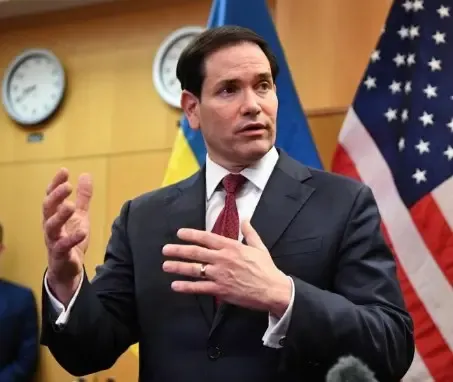
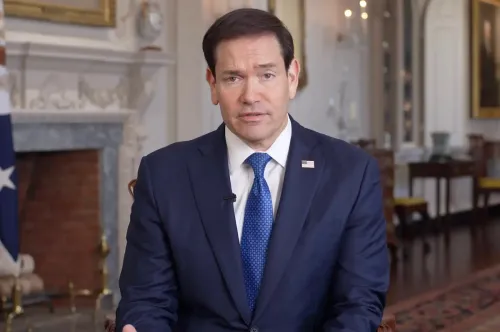
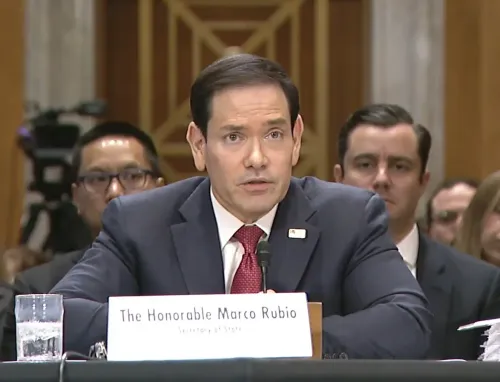
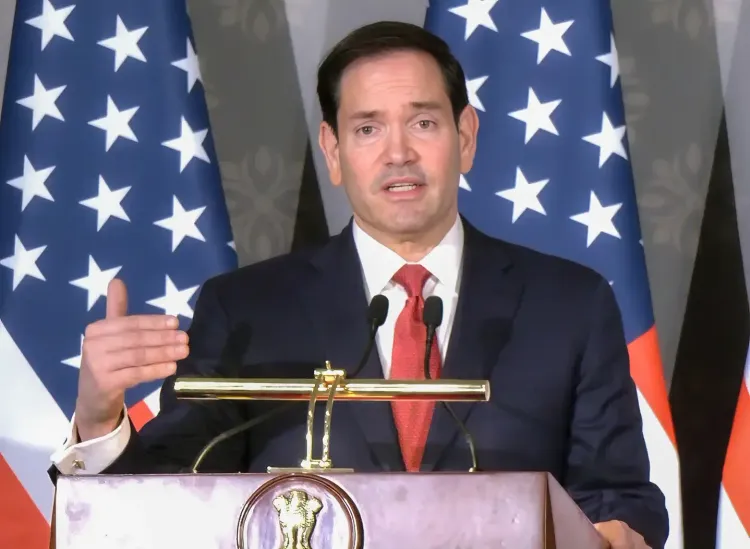
US Secretary of State Marco Rubio on Friday sharply criticised the International Criminal Court (ICC), asserting that international institutions were weaponising legal frameworks to constrain American power and override decisions made by the United States. Speaking at the Federalist Society's National Lawyers Convention in Washington, Rubio insisted that Americans had never consented to the court's jurisdiction and warned against any attempt to enforce its rulings against US citizens.
Core Argument: Sovereignty Over International Law
Rubio's remarks were framed as a defence of national sovereignty and a broader articulation of the Trump administration's approach to foreign policy and international institutions. He accused international officials and advocacy groups of selectively invoking legal principles to oppose US military actions, border enforcement policies, and domestic decisions. Notably, he did not announce any new sanctions against the ICC or a formal change in the US legal relationship with the court.
The Secretary extended his critique beyond international bodies, accusing certain American judges of using injunctions to advance personal preferences rather than apply the law. He argued that lasting political change required influence not only in elected office but also in universities, the media, and other institutions that shape public discourse.
Praise for the Federalist Society
Rubio praised the Federalist Society for its decades-long role in cultivating lawyers and developing conservative legal thought. He said winning elections alone was insufficient to transform the institutions that govern American life — a signal that the administration views the legal and cultural establishment as a continued battleground.
On Iran, Immigration, and US Engagement Abroad
In response to audience questions, Rubio defended US overseas engagement while insisting that American national interests must remain the guiding principle. He acknowledged that foreign events directly affect US security, markets, and migration patterns.
On immigration, he drew a distinction between entering the United States for economic opportunity and genuinely embracing an American identity, affirming that the country would continue welcoming immigrants while maintaining controls over admission.
Asked about tensions with Iran, Rubio said the primary US objective was preventing Tehran from acquiring a nuclear weapon. He argued that sustained economic pressure had sufficiently weakened Iran to make military action unnecessary at this stage.
The ICC Jurisdiction Question
The United States is not a signatory to the Rome Statute, the treaty that established the ICC. However, the statute contains provisions allowing jurisdiction over nationals of non-member states in specific circumstances — including alleged crimes committed on the territory of a state that has accepted the court's authority. Critics of the court argue this creates overreach; the ICC and its supporters maintain it is a necessary check on impunity.
This is not the first time a US administration has pushed back against the ICC. The Trump administration's first term saw sanctions imposed on ICC officials, a measure later reversed by the Biden administration. The latest rhetoric from Rubio signals a return to that confrontational posture, even without a formal new policy announcement.
How the administration translates this rhetoric into concrete policy — whether through sanctions, diplomatic pressure, or legislative action — will determine the practical impact on US-ICC relations in the months ahead.
Point of View
No executive order, no concrete break with the status quo. That makes it more significant as a signal than as an action: the Trump administration is re-staking its maximalist sovereignty position for an audience that shapes the federal judiciary. The ICC criticism is inseparable from the administration's broader framing of international institutions — from the UN to the WTO — as instruments of elite overreach. What's missing from the mainstream read is Rubio's domestic subtext: his attack on judicial injunctions and his call to contest universities and media are as much about internal US politics as they are about The Hague.
NationPress
14 Nov 2026
Frequently Asked Questions
What did Marco Rubio say about the ICC?
Rubio criticised the International Criminal Court at the Federalist Society's National Lawyers Convention on Friday, arguing that international institutions use legal principles to constrain American power and that US citizens had never agreed to submit to the court's jurisdiction. He warned against enforcing ICC decisions against Americans but did not announce new sanctions or a formal policy change.
Is the United States a member of the International Criminal Court?
No. The United States has not ratified the Rome Statute, the treaty that established the ICC. However, the statute allows the court to exercise jurisdiction in certain cases involving nationals of non-member states, particularly when alleged crimes occur on the territory of a country that accepts the court's authority — a provision the US has long disputed.
What is the Trump administration's broader stance on international institutions?
The Trump administration has consistently framed international bodies as overreaching entities that challenge US sovereignty. Rubio's remarks at the Federalist Society extended this to the ICC, international advocacy groups, and even domestic judges, arguing that American interests must guide all foreign engagement.
What did Rubio say about Iran?
Rubio said the primary US objective is to prevent Iran from acquiring a nuclear weapon. He argued that sustained economic pressure has weakened Tehran sufficiently to make military action unnecessary at present, suggesting the administration is currently prioritising a sanctions-first approach.
Has the US targeted the ICC before?
Yes. During the first Trump administration, the US imposed sanctions on ICC officials, a move later reversed by the Biden administration. Rubio's remarks signal a potential return to that confrontational posture, though no new measures have been formally announced as of this speech.