Rubio hails US-India ties as 'stronger than ever' on Independence Day
Synopsis
US Secretary of State Marco Rubio used India's Independence Day to send a pointed diplomatic signal — anchoring the world's largest bilateral democracy partnership explicitly to the personal bond between Trump and Modi, and extending its scope to the Indian Ocean region. The breadth of sectors named, from AI to critical minerals, reflects how structurally deep the relationship has become.
Key Takeaways
US Secretary of State Marco Rubio congratulated India on Independence Day, 15 August , in a formal State Department statement.
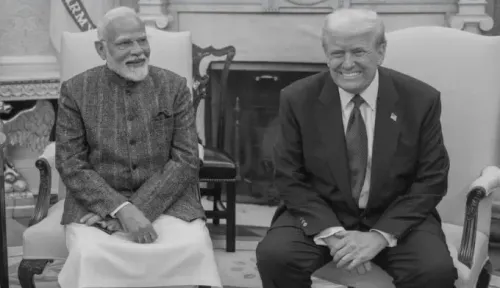
Rubio credited the 'personal relationship' between President Donald Trump and Prime Minister Narendra Modi for the relationship being 'stronger than ever'.
Key areas of cooperation cited: defence , energy security , critical minerals , artificial intelligence , space cooperation , and commerce .
Rubio framed the partnership as a stabilising force for the broader Indian Ocean region , not just a bilateral arrangement.
People-to-people ties, including the Indian-American diaspora , were described as the 'foundation' of the partnership.
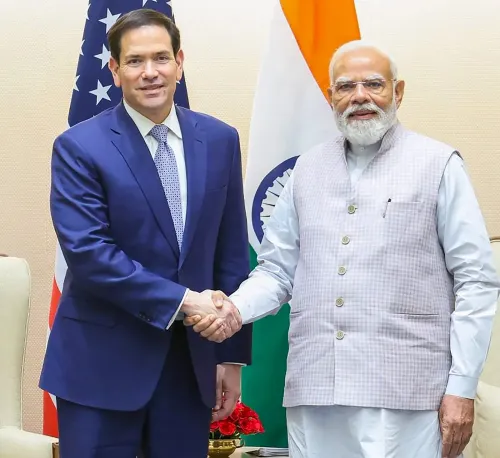
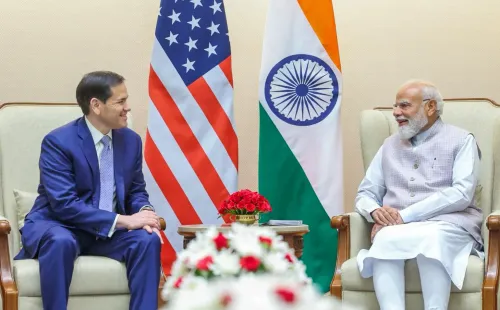
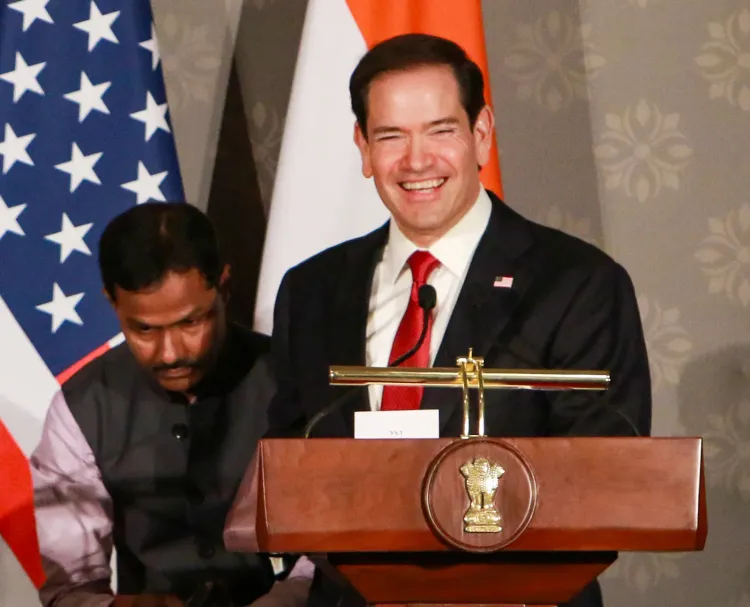
US Secretary of State Marco Rubio on Friday, 15 August extended Independence Day greetings to India, declaring that the bilateral relationship is 'stronger than ever' — crediting the personal rapport between President Donald Trump and Prime Minister Narendra Modi as the driving force behind the expanding partnership between the world's two largest democracies.
What Rubio Said
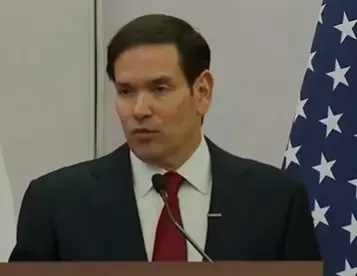
'On behalf of the United States of America, I extend warm congratulations to the people of India on their Independence Day,' Rubio said in a statement issued by the State Department on the eve of India's celebrations. He placed the Trump-Modi relationship at the centre of the message: 'Thanks to the personal relationship between President Trump and Prime Minister Modi, the US-India relationship continues to grow and is stronger than ever.'
Key Areas of Bilateral Engagement
Rubio identified defence, energy security, critical minerals, artificial intelligence, space cooperation, and commerce as the primary pillars of the partnership. 'From defense and energy security to critical minerals, artificial intelligence, space cooperation, and commerce, our collaboration is making both of our nations, and the broader Indian Ocean region, safer, stronger, and more prosperous,' he said.
The explicit mention of the Indian Ocean region signals Washington's intent to frame the US-India partnership not merely as a bilateral arrangement but as a stabilising force across a strategically contested geography. This comes amid heightened great-power competition in the Indo-Pacific, where both nations have deepened defence and intelligence coordination in recent years.
People-to-People Ties as Foundation
Rubio also highlighted the role of diaspora and family connections in sustaining the relationship. 'The deep ties of friendship and family between our two peoples form the foundation of a partnership that is innovative, resilient, and forward-looking,' he said. The Indian-American community, numbering over 4 million, is widely regarded as one of the most influential diaspora groups in the United States.
Context and Significance
India marks Independence Day on 15 August each year, commemorating its freedom from British colonial rule in 1947. The occasion is observed with the Prime Minister's address from the ramparts of the Red Fort in New Delhi, flag-hoisting ceremonies, and cultural events nationwide. Indian diplomatic missions and diaspora organisations hold parallel commemorations around the world.
Notably, US Independence Day messages to India have grown more substantive in recent years, reflecting the elevation of the relationship under successive administrations. Rubio's statement, issued directly by the State Department, underscores the diplomatic weight Washington now attaches to the partnership. The Secretary concluded by expressing confidence in the road ahead: 'The United States looks forward to the future our two countries will build together.'
Point of View
Washington signals that the partnership's momentum is personality-driven, which cuts both ways: it accelerates cooperation when the chemistry holds, but introduces fragility if political winds shift. The enumeration of AI, critical minerals, and space alongside defence suggests the US is keen to lock in structural interdependence before any such volatility can occur. The Indian Ocean reference is the sharpest geopolitical signal in the statement — it positions India not as a regional partner but as a co-guarantor of Indo-Pacific stability, a framing New Delhi has historically been cautious about accepting too explicitly.
NationPress
29 Sept 2026
Frequently Asked Questions
What did US Secretary of State Marco Rubio say about India on Independence Day?
Rubio issued a State Department statement on 15 August congratulating India and declaring the US-India relationship 'stronger than ever', attributing the momentum to the personal bond between President Donald Trump and Prime Minister Narendra Modi.
Which areas of cooperation did Rubio highlight in his Independence Day message?
Rubio identified defence, energy security, critical minerals, artificial intelligence, space cooperation, and commerce as the primary areas of expanding US-India collaboration. He said the partnership is making both nations and the Indian Ocean region safer and more prosperous.
Why is the Trump-Modi personal relationship significant for US-India ties?
Rubio explicitly credited the Trump-Modi personal rapport as the engine of bilateral growth, suggesting that high-level political chemistry is being used to accelerate cooperation across strategic and economic sectors. Analysts note this framing also means the relationship's pace could be sensitive to shifts in either leader's political standing.
What is the significance of Rubio mentioning the Indian Ocean region?
By extending the partnership's scope to the broader Indian Ocean region, the US is framing India as a co-guarantor of regional stability — a signal of Washington's Indo-Pacific strategy and its desire to deepen security coordination with New Delhi beyond purely bilateral interests.
When did India gain independence, and how is the day observed?
India gained independence from British colonial rule on 15 August 1947. The day is marked annually with the Prime Minister's address from the Red Fort in New Delhi, flag-hoisting ceremonies, and cultural events across the country and at Indian diplomatic missions worldwide.