S. Korea, US sign MOU to launch shipbuilding partnership initiative
Synopsis
South Korea and the US have formalised a shipbuilding MOU in Washington, launching the Korea-US Shipbuilding Partnership Initiative (KUSPI) and anchoring Seoul's pledge to invest US$150 billion in American maritime manufacturing — the largest sectoral bet within a US$350 billion bilateral trade framework.
Key Takeaways
South Korea and the US signed a shipbuilding MOU on 9 May 2025 in Washington.
The deal establishes the Korea-US Shipbuilding Partnership Initiative (KUSPI) .
Seoul has pledged US$150 billion for US shipbuilding as part of a broader US$350 billion bilateral investment commitment.
A Korea-US Shipbuilding Partnership Centre will be set up in Washington later this year.
South Korea's first investment projects under the trade deal are expected to be announced after a relevant law takes effect in June 2025 .
South Korea and the United States have signed a memorandum of understanding (MOU) to advance bilateral shipbuilding cooperation, with Seoul committing to invest US$150 billion in the US shipbuilding sector as part of a broader bilateral trade agreement. The deal was formalised in Washington on 9 May 2025, marking a significant step in allied industrial collaboration.
Who Signed and What Was Agreed
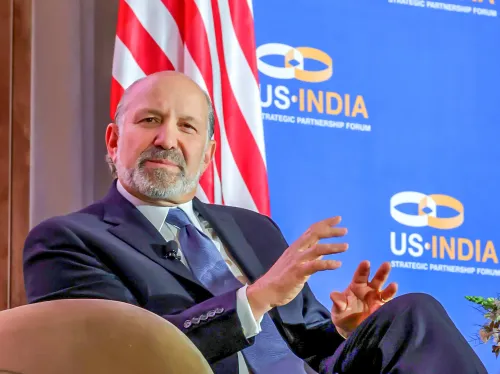
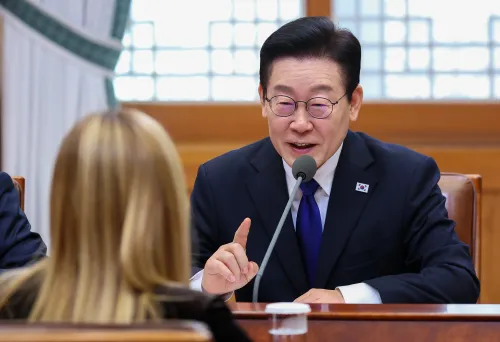
Park Jung-sung, Deputy Minister for Trade at South Korea's Ministry of Trade, Industry and Resources (MOTIR), and William Kimmitt, US Under Secretary of Commerce for International Trade, inked the MOU in Washington. The signing was overseen by South Korean Industry Minister Kim Jung-kwan and US Commerce Secretary Howard Lutnick, according to the International Trade Administration (ITA).
The MOU establishes the Korea-US Shipbuilding Partnership Initiative (KUSPI) — a new bilateral platform covering commercial shipbuilding, workforce development, industrial modernisation, and maritime manufacturing investment.
The Financial Commitment Behind the Deal
The shipbuilding MOU is embedded within a larger trade framework under which South Korea has pledged to invest a total of US$350 billion in the United States, with an annual cap of US$20 billion. The US$150 billion earmarked for shipbuilding represents the single largest sectoral commitment under that agreement.
This comes as the US seeks to revitalise a domestic shipbuilding sector that has significantly contracted over the past several decades, ceding ground to Asian manufacturers — particularly from South Korea, Japan, and China.
Key Institutions and Operational Structure
The partnership will be anchored by the Korea-US Shipbuilding Partnership Centre, expected to be established in Washington later this year. The centre will facilitate interactions between US shipbuilding companies, suppliers, universities, and research institutes, with the Commerce Department serving as the US government's primary point of contact.
On the Korean side, MOTIR will coordinate cooperation across government stakeholders and provide the personnel and funding necessary for the centre's operations. Specific activities will include facilitating foreign direct investment into the US maritime industrial base, workforce training, shipyard productivity improvement projects, and technical exchanges.
The ITA described the initiative as building on
Point of View
The US$150 billion commitment is simultaneously a goodwill gesture and a calculated move to deepen supply-chain interdependence with its primary security guarantor. The real test will be whether KUSPI produces verifiable shipyard capacity and jobs, or becomes another MOU that generates press releases without moving steel. With China's dominance in global shipbuilding now a stated US security concern, the political will is there — but execution timelines and the June legal trigger bear close watching.
NationPress
10 May 2026
Frequently Asked Questions
What is the Korea-US Shipbuilding Partnership Initiative (KUSPI)?
KUSPI is a new bilateral platform established under the MOU signed on 9 May 2025 between South Korea and the United States. It covers commercial shipbuilding, workforce development, industrial modernisation, and maritime manufacturing investment, and will be anchored by a partnership centre to be set up in Washington later this year.
How much is South Korea investing in US shipbuilding?
South Korea has committed US$150 billion to the US shipbuilding sector as part of a broader bilateral trade agreement that pledges a total of US$350 billion in US investments, subject to an annual cap of US$20 billion.
Who signed the shipbuilding MOU between South Korea and the US?
The MOU was signed by Park Jung-sung, Deputy Minister for Trade at South Korea's MOTIR, and William Kimmitt, US Under Secretary of Commerce for International Trade. The signing was overseen by Industry Minister Kim Jung-kwan and Commerce Secretary Howard Lutnick.
When will South Korea's first investment projects under the trade deal be announced?
According to Industry Minister Kim Jung-kwan, South Korea's first investment projects under the bilateral trade deal are expected to be announced after a relevant law comes into effect in June 2025.
What will the Korea-US Shipbuilding Partnership Centre do?
The centre, to be established in Washington later in 2025, will facilitate foreign direct investment into the US maritime industrial base, coordinate workforce training, support shipyard productivity projects, and serve as a hub for technical exchanges between government, industry, and research institutions from both countries.