Sacks Fires Back at Anthropic CEO Over AI Regulation Push

Synopsis
White House AI and Crypto Czar David Sacks published a nine-point rebuttal to Anthropic CEO Dario Amodei on August 17, 2026, arguing that Amodei's push for a federal AI pre-deployment review agency would entrench regulatory capture by frontier labs and handicap the US relative to China.
Key Takeaways
Sacks accused Amodei of deploying a straw-man argument by framing all regulation critics as absolutists, while Sacks himself supports antitrust enforcement including against Anthropic.
He invoked Nobel laureate George Stigler's definition of regulatory capture — rules designed primarily for the benefit of the regulated industry — and applied it directly to Anthropic's lobbying and hiring of Biden AI-policy officials.
Sacks labelled Amodei's proposed federal AI review body a 'DMV for AI,' arguing it would create approval queues that favour well-resourced incumbents like Anthropic over smaller competitors and open-source developers.
He warned that equivalent rules applied to open and closed models could effectively ban open-source AI without a formal prohibition, leaving the US isolated while China advances without similar constraints.
Sacks cited Thomas Sowell's 'Vision of the Anointed' and investor Gavin Baker's framing — 'AI is too powerful to centralize' — to argue that concentrating gatekeeping in a corporate-state partnership carries serious historical risks.
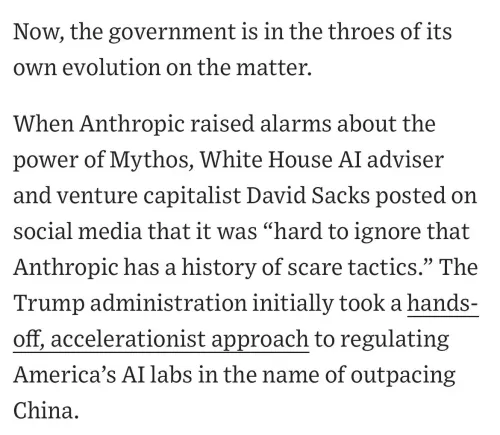
The sharpest fault line in American AI policy cracked open further on Monday, August 17, 2026, when White House AI and Crypto Czar David Sacks published a nine-point rebuttal to Anthropic CEO Dario Amodei, accusing him of advancing a regulatory framework that would hand a small circle of frontier labs — and a federal bureaucracy — gatekeeping power over which AI capabilities reach the public.
The Straw Man Sacks Won't Accept
Amodei had argued that critics of AI regulation live in a 'bubble' where all oversight is automatically suspect. Sacks dismissed that framing as a straw man. 'Of course treating all regulation as capture would be overly simplified — but almost no one holds that view,' he wrote, noting that he has himself called for strong antitrust enforcement against Big Tech and would apply those rules to Anthropic too if the company drifted toward monopoly status.
The distinction matters because it moves the debate off a cartoon and onto the specific proposal Amodei has championed: a new federal agency that would review and approve frontier AI models before release. Sacks has heard it pitched as an 'FDA for AI,' an 'FAA for AI,' and most recently a 'FINRA for AI.' He calls it a 'DMV for AI' — a queue-generating bureaucracy whose rules would only grow more labyrinthine over time.
Stigler's Ghost and the Revolving Door
Sacks reached for Nobel laureate economist George Stigler to give the charge of regulatory capture its precise meaning. Stigler defined it as regulation acquired by an industry and designed primarily for that industry's benefit — a direct challenge to the idea that agencies arise from a benevolent state correcting market failures. The mechanism, Sacks argued, is well understood: concentrated industry stakes, sustained lobbying, and the revolving door between companies and the agencies that oversee them.
He applied that framework directly to Anthropic, which he said has hired multiple senior Biden administration AI-policy officials and built a substantial government-affairs operation alongside a network of aligned organisations pushing its preferred frameworks at state and federal levels. The company, he argued, is structurally positioned to shape any approval process it nominally submits to — while smaller competitors wait in line.
The China Gap and the Open-Model Question
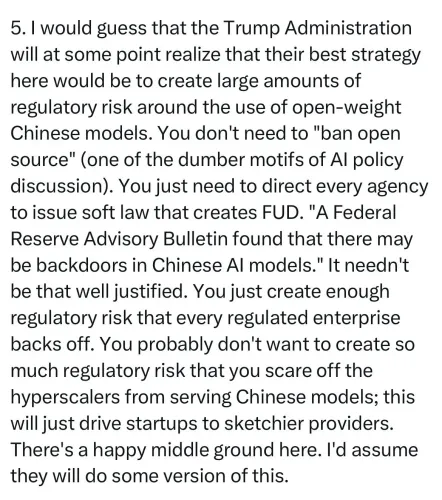
The geopolitical stakes sharpened the argument. China, Sacks noted, will not adopt equivalent pre-release approval requirements. A U.S. licensing regime would therefore handicap American developers relative to Chinese competitors who face no such queue — a risk he said is compounded by Anthropic's posture toward open-source models. Amodei has called open models dangerous in Senate testimony, criticised their lack of central monitoring, and linked them to intellectual-property theft. Sacks argued that insisting identical rules apply to both open and closed models could achieve a de facto ban without ever calling it one, leaving the United States 'an island of costly closed models while the rest of the world races ahead.'
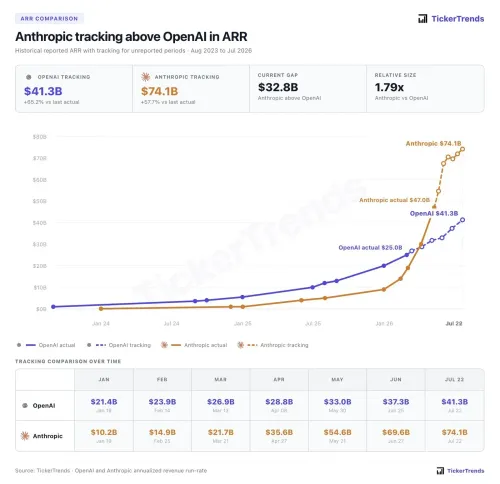
Anthropic is on track to become one of the most valuable companies in history, Sacks wrote, with the resources to navigate any approval process and influence the rules while rivals wait. That asymmetry, he said, is not incidental — it is the structural logic of the proposal.
Fear Narratives and the 'Vision of the Anointed'
The final section of Sacks's post turned to public messaging. He disputed Amodei's claim that negative public sentiment toward AI stems from a long-standing erosion of trust in institutions, arguing instead that Anthropic's own communications — including a forecast, which Sacks cited but which remains unverified, that AI would eliminate 50 percent of entry-level knowledge jobs within five years — have done more than anything to shape public fear.
He invoked economist Thomas Sowell's concept of 'The Vision of the Anointed' to describe what he sees as the underlying mindset: elite intellectuals convinced that only they possess the judgment to govern a powerful technology. And he closed with investor Gavin Baker's crisp summary of the divide: 'Dario believes frontier AI is too powerful to distribute; we believe it is too powerful to centralize.' The weight of human history, Sacks concluded, gives reason to fear the outcome of concentrating that authority in a marriage of corporate and state power.
That sentence is not a rhetorical flourish. It is a direct policy challenge — and Washington will have to answer it.
Point of View
And it arrives as Congress weighs new AI oversight legislation. By naming Anthropic's government-affairs build-out and its hiring of Biden-era officials, he is effectively framing the company as a regulatory-capture risk — a charge that, if it gains traction, could complicate Anthropic's credibility as a neutral safety advocate. The invocation of Stigler and Sowell signals that this debate is migrating from technical safety discourse into the older, sharper terrain of political economy. The central tension — whether pre-deployment review protects the public or entrenches incumbents — will define the next phase of US AI legislation.
NationPress
17 Aug 2026
Frequently Asked Questions
What did David Sacks say about Dario Amodei and AI regulation?
Sacks published a nine-point rebuttal arguing that Amodei's proposal for a federal agency to approve AI models before release would create regulatory capture, favour large incumbents like Anthropic, and handicap the US relative to China.
What is regulatory capture and how does it apply to AI?
Nobel laureate George Stigler defined regulatory capture as rules acquired by an industry and designed primarily for its own benefit. Sacks applied this concept to Anthropic, pointing to the company's lobbying operations and hiring of former government AI officials.
What is the difference between an open AI model and a closed AI model?
Open models release their weights publicly so anyone can run or modify them, while closed models are accessed only through a company's controlled interface. Sacks argued that requiring identical oversight rules for both could effectively suppress open-source AI development.
Why does Sacks call the proposed AI agency a 'DMV for AI'?
He used the term to mock the likely pace and bureaucratic growth of a pre-deployment review process, arguing it would create long approval queues that slow US innovation while China faces no equivalent constraints.
Who is Gavin Baker and what is his role in this AI debate?
Gavin Baker is an investor who has publicly disagreed with Amodei on AI governance. Sacks cited Baker's summary of the core divide: Amodei believes frontier AI is too powerful to distribute widely, while Sacks and Baker believe it is too powerful to centralize.