Sacks Backs US AI Lead, Dismisses Kimi Panic

Synopsis
White House AI and Crypto Czar David Sacks dismissed concerns over China's Kimi chatbot on July 25, 2026, arguing US frontier models remain ahead, Kimi's cost edge is overstated, and Trump's light-touch regulation is driving record revenue growth at Anthropic and OpenAI.
Key Takeaways
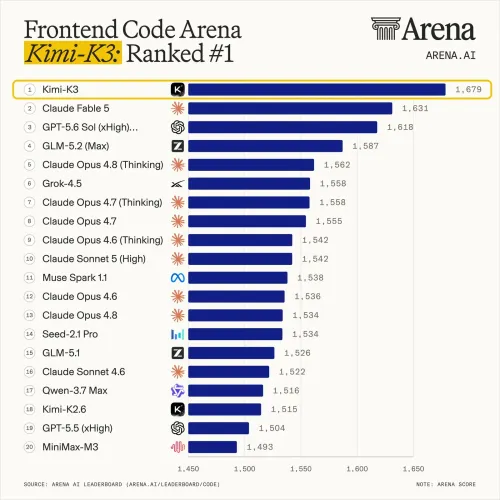
White House AI and Crypto Czar David Sacks posted on July 25, 2026 urging an end to what he called the 'Kimi Panic' over China's Moonshot AI chatbot.
Sacks cited analyst Ben Thompson 's finding that Kimi's cost advantage largely disappears when higher token usage and infrastructure costs are accounted for.
He described Anthropic and OpenAI as growing revenue 'at rates Silicon Valley has never seen before at this scale,' calling it the clearest market-winning signal.
Sacks explicitly endorsed President Trump 's 'light-touch regulatory approach' as the reason US AI remains competitive.
He warned against 'unnecessary rules' that could, in his framing, cause the US to 'sabotage itself' in the global AI race.
The post aligns with Commerce Secretary Howard Lutnick 's public position defending American AI leadership.
White House AI and Crypto Czar David Sacks on Friday, July 25, 2026, publicly backed US Commerce Secretary Howard Lutnick's position on American artificial intelligence dominance, arguing that fears over Chinese AI challenger Kimi are overblown and that frontier US models remain decisively ahead of global competition.
Context
Sacks posted on X that what he called the 'Kimi Panic' — a wave of concern in US technology circles over the cost-efficiency of Moonshot AI's Kimi chatbot — needs to stop. He cited analysis by Ben Thompson, founder of the technology strategy publication Stratechery, who argued that Kimi's apparent cost advantage largely disappears once higher token usage and the real infrastructure costs of running a model of that scale are factored in. 'Open weights still require expensive infrastructure,' Sacks wrote.
Moonshot AI is a Beijing-based company that has positioned Kimi as a lower-cost frontier model, drawing comparisons to US labs and sparking debate in Silicon Valley about whether Chinese AI is closing the capability and cost gap faster than expected.
Policy Backdrop
Sacks's post is a direct defence of the Trump administration's deregulatory posture on AI. 'President Trump's light-touch regulatory approach is working,' he wrote, adding that the US will continue to win 'as long as we don't sabotage ourselves with unnecessary rules.' This framing echoes the administration's sustained effort to roll back the reporting requirements and safety standards introduced under the previous administration's October 2023 executive order on AI.
The Trump White House has consistently treated AI as a national competitiveness priority, with Sacks's role as AI and Crypto Czar designed to coordinate policy across agencies and signal to the private sector that Washington will not impose heavy compliance burdens. The administration's position draws a direct line between deregulation and American technological leadership.
Stakeholders and Impact
Anthropic and OpenAI are at the centre of Sacks's argument. He stated that both companies are 'growing revenue at rates that Silicon Valley has never seen before at this scale,' describing commercial traction as 'the clearest test of who is winning the market.' Anthropic, backed by Amazon and Google, and OpenAI, which counts Microsoft as a major investor, have both reported rapid enterprise adoption in recent quarters.
For Indian enterprises and technology investors, the US-China AI race carries direct implications: American frontier model APIs underpin a large share of India's fast-growing AI startup ecosystem, and any shift in the competitive balance — or in US export-control policy — would affect access to cutting-edge models and cloud infrastructure.
What's Next
Sacks's call to 'let our horses run' signals that the administration will resist congressional proposals to reintroduce mandatory AI safety rules or expand export controls on advanced chips in ways that could slow domestic development. Upcoming releases of next-generation models from US labs will be closely watched as practical tests of whether the capability gap Sacks describes holds.
Any move in Congress to legislate AI safety standards — or to tighten semiconductor export controls — will now face this public benchmark: whether it risks, in the administration's framing, the US 'sabotaging itself' in the race against Chinese AI.
Point of View
Making any future legislative push for safety mandates politically costly. By anchoring the argument in revenue growth at Anthropic and OpenAI, Sacks shifts the debate from benchmark scores — where comparisons are contested — to commercial outcomes, a metric the administration controls the narrative around. The invocation of Secretary Lutnick ties AI competitiveness directly to trade and export-control policy, suggesting a coordinated messaging strategy across the cabinet. For observers tracking US-China tech rivalry, this post marks a clear administration line: confidence, not caution, is the official posture heading into the next cycle of frontier model releases.
NationPress
22 Oct 2026
Frequently Asked Questions
What is the Kimi AI chatbot that David Sacks mentioned?
Kimi is a chatbot developed by Moonshot AI, a Beijing-based Chinese artificial intelligence company. It gained attention in US tech circles in 2026 for its apparent cost efficiency compared to American frontier models, sparking debate about whether China was closing the AI gap.
Why did David Sacks say the 'Kimi Panic' needs to stop?
Sacks argued that concerns over Kimi are overstated because its cost advantage largely disappears when higher token usage and the real infrastructure costs of running the model are factored in, a point he attributed to analyst Ben Thompson of Stratechery.
How are Anthropic and OpenAI performing according to David Sacks?
Sacks stated that both Anthropic and OpenAI are growing revenue at rates Silicon Valley has never seen before at their scale, which he described as the clearest indicator of who is winning the AI market. Specific figures were not cited in the post.
What is Trump's AI policy that David Sacks defended?
Sacks defended what he called President Trump's 'light-touch regulatory approach' to AI, which involves rolling back mandatory safety reporting requirements introduced under the previous administration and avoiding new compliance rules that could slow US AI development.
Who is David Sacks and what is his role in the Trump administration?
David Sacks is the White House AI and Crypto Czar in the second Trump administration. He is also co-founder and general partner of Craft Ventures and a co-host of the All-In Podcast, making him one of the most prominent Silicon Valley voices inside the US government.