Japan PM Takaichi arrives in Delhi for 16th India-Japan Annual Summit
Synopsis
Japanese PM Sanae Takaichi has landed in New Delhi with over 150 business leaders in tow — her first India visit since taking office. The 16th India-Japan Annual Summit with PM Modi is set to operationalise a 10-year joint vision covering investment, energy, and Indo-Pacific security, signalling that the partnership is moving from rhetoric to structured economic architecture.
Key Takeaways
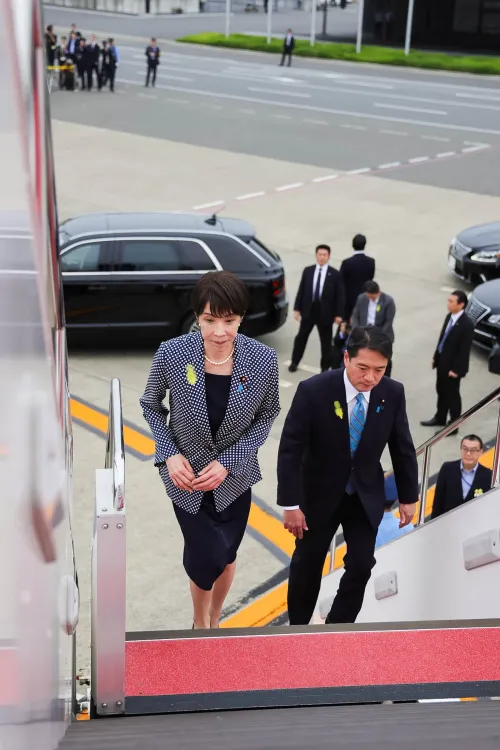
Japanese PM Sanae Takaichi departed Tokyo on 1 July for a three-day visit to New Delhi — her first official trip to India since assuming office.
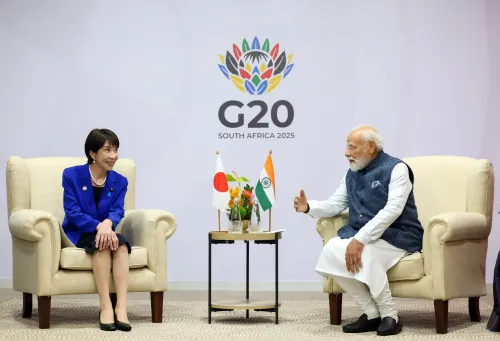
She will hold the 16th India-Japan Annual Summit with Prime Minister Narendra Modi on Thursday .
A delegation of more than 150 Japanese business leaders is accompanying Takaichi, with a dedicated business forum on the agenda.
Talks will be anchored in the Japan-India Joint Vision for the next 10 years , covering investment, innovation, energy, and economic security.
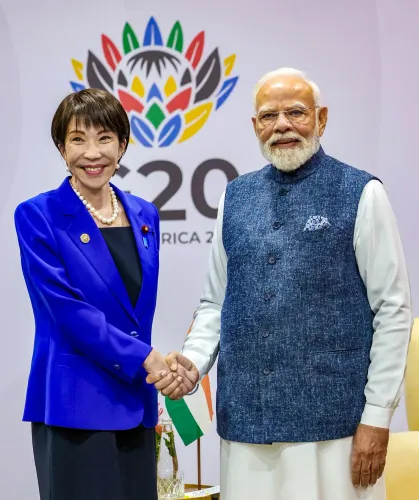
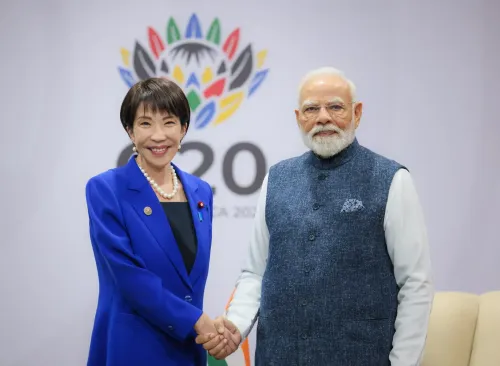
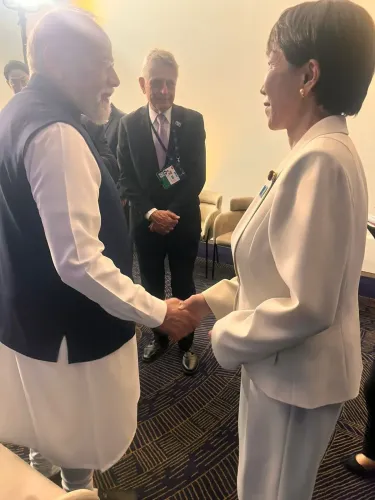
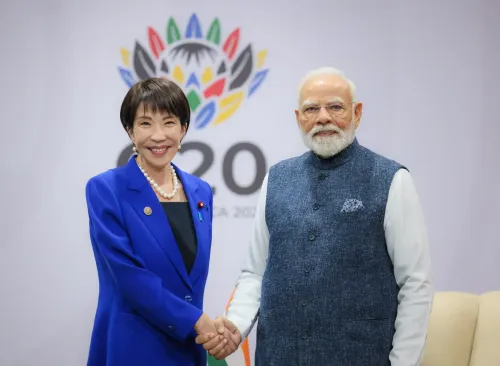
Modi and Takaichi had already met on the G7 sidelines in France in June, where both leaders committed to deepening ties in trade and investment.
Japanese Prime Minister Sanae Takaichi departed Tokyo on Wednesday, 1 July for a three-day official visit to New Delhi, where she will hold the 16th India-Japan Annual Summit with Prime Minister Narendra Modi. The visit — her first to India since assuming office — comes at a moment of heightened global uncertainty, with both nations signalling a deepening of their Special Strategic and Global Partnership.
What Takaichi Said Before Departing
Addressing an informal press briefing ahead of her departure, Takaichi underscored the strategic weight of the bilateral relationship. 'In the midst of increasing uncertainty in the international situation, the importance of collaboration with India, which shares fundamental values and strategic interests, is growing ever greater,' she said. She added that with 'more than 150 individuals from Japan's business community' accompanying the delegation, both sides aim to 'broaden the scope of Japan-India cooperation through public-private partnership and realise a strong economy.'
Summit Agenda and Ceremonial Reception
Takaichi arrived in New Delhi on Wednesday evening and is scheduled to receive a Ceremonial Reception at Rashtrapati Bhavan on Thursday morning. The summit with Prime Minister Modi will see both sides review and strengthen the full spectrum of bilateral cooperation, as well as discuss regional and global issues of mutual interest, according to the Ministry of External Affairs (MEA). Takaichi will also attend a business forum during the visit.
The 10-Year Joint Vision Framework
Japan's Foreign Ministry, in a statement ahead of the visit, said discussions would focus on 'further strengthening of complementary cooperation toward economic growth through investment and innovation, as well as in areas such as energy and other economic security.' This sits within the framework of the Japan-India Joint Vision for the next 10 years, announced during Prime Minister Modi's visit to Japan last August. Tokyo has framed the partnership as central to realising 'a free and open Indo-Pacific.'
G7 Sidelines Meeting and Prior Momentum
The New Delhi summit builds on a meeting between Modi and Takaichi on the sidelines of the Group of Seven (G7) Summit in France earlier in June. Modi subsequently posted on X: 'Had a great interaction with Prime Minister Sanae Takaichi of Japan. India and Japan will continue to deepen ties in diverse sectors, with a priority on trade and investment.'
Strategic Foundations of the Partnership
India and Japan's bilateral ties rest on deep civilisational and cultural affinity, formally elevated to a Special Strategic and Global Partnership. There is deliberate policy convergence between India's Act-East Policy, its Indo-Pacific Oceans Initiative (IPOI), and the SAGAR principle on one hand, and Japan's Free and Open Indo-Pacific Vision on the other. The annual summit format — now in its 16th edition — reflects the institutionalised depth of that alignment. With a large business delegation in tow and a 10-year vision document already in place, this visit is expected to translate strategic intent into concrete economic deliverables.
Point of View
Both India and Japan have clear incentives to move beyond symbolism and build durable economic architecture. Whether the summit produces binding investment commitments or another aspirational communiqué will be the real measure of this visit.
NationPress
1 Jul 2026
Frequently Asked Questions
What is the 16th India-Japan Annual Summit?
It is a bilateral leaders' meeting between Prime Minister Narendra Modi and Japanese Prime Minister Sanae Takaichi in New Delhi, the 16th edition of an annual summit format between the two countries. The talks are expected to cover trade, investment, energy, economic security, and Indo-Pacific issues.
Why is Takaichi's India visit significant?
This is Takaichi's first official visit to India since she assumed office as Japanese Prime Minister. She is accompanied by over 150 Japanese business leaders, and the visit is anchored in a 10-year joint vision framework agreed during PM Modi's visit to Japan last August.
What areas will India and Japan discuss at the summit?
According to Japan's Foreign Ministry, discussions will focus on investment, innovation, energy, and economic security, framed within the Japan-India Joint Vision for the next 10 years. Regional and global issues of mutual interest, including Indo-Pacific stability, are also on the agenda.
Did Modi and Takaichi meet before this summit?
Yes. Prime Minister Modi met Takaichi on the sidelines of the G7 Summit in France in June 2025, where both leaders stated that India and Japan would continue to deepen ties with a priority on trade and investment.
What is the India-Japan Special Strategic and Global Partnership?
It is the highest tier of bilateral relationship between India and Japan, grounded in shared democratic values, cultural ties, and strategic convergence on the Indo-Pacific. India's Act-East Policy and Indo-Pacific Oceans Initiative align closely with Japan's Free and Open Indo-Pacific Vision.