CM Pema Khandu conducts aerial survey of flood-hit Arunachal

Synopsis
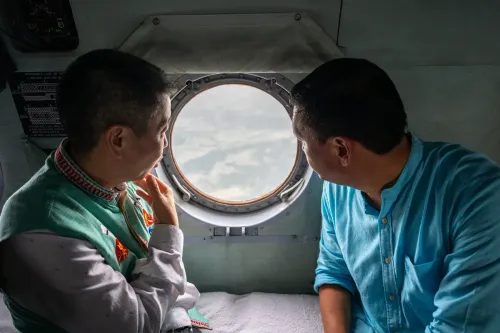
Chief Minister Pema Khandu joined Union Ministers Shivraj Singh Chouhan and Kiren Rijiju for an aerial survey of flood-affected areas in Arunachal Pradesh on 1 July 2026, signalling a joint Centre-state push to assess monsoon damage and coordinate relief.
Key Takeaways
Pema Khandu , Chief Minister of Arunachal Pradesh , conducted an aerial survey of flood-affected areas on 1 July 2026 .
Union Ministers Shivraj Singh Chouhan and Kiren Rijiju participated in the joint survey, indicating central government engagement.
Arunachal Pradesh faces annual monsoon flooding from Himalayan rivers, particularly tributaries of the Brahmaputra .
Relief coordination falls under the National Disaster Management Act, 2005 , with funds channelled via the National Disaster Response Fund (NDRF) .
The Flood Management Programme , administered since 2007 , funds embankments and drainage works in northeastern states.
A formal damage memorandum and possible NDRF deployment are expected as follow-up steps.
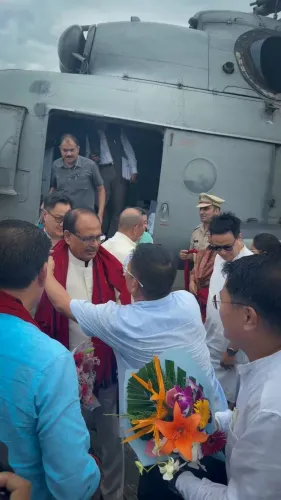
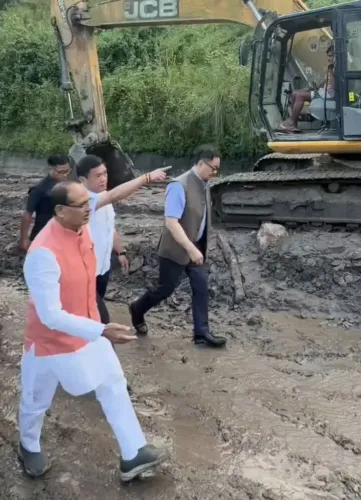
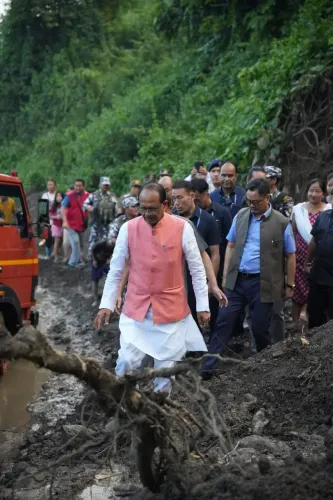
Arunachal Pradesh Chief Minister Pema Khandu conducted an aerial survey of flood-affected areas across the state on Wednesday, 1 July 2026, accompanied by Union Ministers Shivraj Singh Chouhan and Kiren Rijiju. The joint survey signals a coordinated union-state response to monsoon-driven flooding that has impacted communities across the Himalayan state.
Context
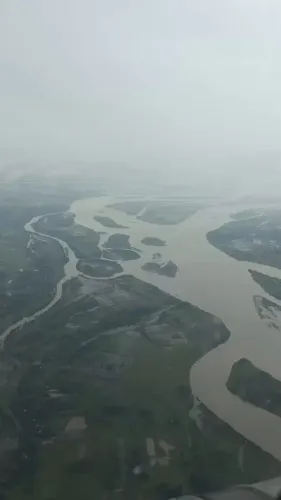
Chief Minister Khandu shared footage of the aerial assessment on social media, noting that the survey was conducted alongside Union Ministers Shivraj Singh Chouhan and Kiren Rijiju. The visit underscores the urgency with which both the state and central governments are treating this year's flood situation in Arunachal Pradesh.
Arunachal Pradesh is one of India's most flood-prone states, with rivers originating in the Himalayas — many of them tributaries of the Brahmaputra — regularly breaching banks during the monsoon season, displacing tribal communities and damaging infrastructure in remote border districts.
Policy Backdrop
Disaster response coordination between the Centre and state governments is governed by the National Disaster Management Act, 2005, which established the framework for deploying funds and personnel during floods and other calamities. Relief expenditure is channelled primarily through the National Disaster Response Fund (NDRF), with states submitting damage memoranda to unlock central assistance.
The Ministry of Jal Shakti has administered the Flood Management Programme since 2007, funding embankment construction, river channel surveys, and drainage improvement projects in northeastern states including Arunachal Pradesh. Aerial surveys by central and state officials are a standard first step in quantifying damage before formal relief requests are processed.
Stakeholders and Impact
The communities most directly affected are the tribal populations living in river valleys and low-lying areas across Arunachal Pradesh, many of whom face annual displacement during the monsoon months. Damage to roads, bridges, and agricultural land in the strategically sensitive border state compounds both humanitarian and security concerns.
The presence of Kiren Rijiju, a Union Minister originally from Arunachal Pradesh, alongside Shivraj Singh Chouhan — a senior cabinet colleague with administrative experience — signals that the Centre is treating the situation with political as well as administrative seriousness. Their participation in the survey is expected to expedite the state's formal request for central relief funds.
What's Next
Following aerial assessments of this nature, state governments typically submit a detailed damage memorandum to the Ministry of Home Affairs and the National Disaster Management Authority (NDMA), which then recommends release of funds from the NDRF. Deployment of additional NDRF teams for rescue and relief operations in the worst-affected districts may also follow.
Observers will watch for announcements of central allocations for flood mitigation infrastructure — including embankments and early-warning systems — as well as any parliamentary or assembly-level discussions on long-term flood management in Arunachal Pradesh. The survey sets the stage for a formal inter-governmental response in the days ahead.
Point of View
Signalling to constituents that the state has direct access to the cabinet. The visit fits a broader pattern of union-state alignment on disaster response in border regions where infrastructure deficits and strategic sensitivities intersect. Whether the optics translate into accelerated central funding and durable flood mitigation investment will be the real test in the weeks ahead.
NationPress
1 Jul 2026
Frequently Asked Questions
Why did Union Ministers visit Arunachal Pradesh on 1 July 2026?
Union Ministers Shivraj Singh Chouhan and Kiren Rijiju visited Arunachal Pradesh to conduct an aerial survey of flood-affected areas alongside Chief Minister Pema Khandu, as part of a coordinated central-state disaster assessment.
Which areas of Arunachal Pradesh were affected by floods in 2026?
The aerial survey covered flood-affected areas across Arunachal Pradesh, though specific district-level details have not been officially enumerated yet in public statements.
What is the NDRF and how does it help flood-hit states?
The National Disaster Response Fund (NDRF) is a central pool of funds established under the National Disaster Management Act, 2005, used to provide financial assistance to states for immediate relief and reconstruction after natural disasters like floods.
Is Arunachal Pradesh prone to annual flooding?
Yes, Arunachal Pradesh experiences recurring monsoon flooding every year due to rivers originating in the Himalayas, many of which are tributaries of the Brahmaputra, regularly inundating low-lying and valley areas.
What happens after an aerial flood survey by government officials?
After an aerial survey, the state government typically prepares a damage memorandum submitted to the Ministry of Home Affairs and the National Disaster Management Authority, which can then recommend release of central relief funds and additional NDRF team deployments.