Spain snap election Nov 29: Sanchez calls early polls after housing vote defeat
Synopsis
Spain's minority coalition government could not hold: after Congress rejected two housing decrees, Pedro Sanchez has called a snap election for 29 November, framing it as a fight for 'affordable housing, public services, and social rights' against political elites. Corruption cases, the Ceuta migration crisis, and vote-by-vote parliamentary survival made this moment all but inevitable.
Key Takeaways
Pedro Sanchez called a snap general election for 29 November on 5 October 2026 .
The trigger was Spain's Congress rejecting two government housing decrees on Friday.
Sanchez held emergency talks with PSOE ministers and senior figures over the weekend before deciding.
The coalition has faced mounting pressure from corruption cases involving PSOE-linked figures and the Ceuta migration crisis .
Spain declared a 'situation of interest for national security' over the Ceuta crossings — the first such declaration in the country's democratic era.
The People's Party (PP) and Vox have accused the government of mishandling both migration and Morocco policy.
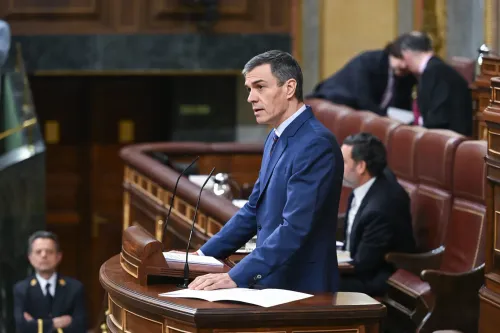
Spanish Prime Minister Pedro Sanchez on Monday, 5 October 2026, announced a snap general election for 29 November, after Spain's Congress rejected two housing decrees put forward by his coalition government. The defeat on Friday marked a fresh blow to a minority administration that has spent months negotiating every legislative vote with a fractious set of parliamentary partners.
What Triggered the Snap Election
The lower house voted down both housing measures, which formed a central pillar of the Socialist Party (PSOE)-led government's response to Spain's worsening housing affordability crisis. Despite last-minute negotiations to secure enough support, the government fell short, reportedly unable to keep its coalition allies aligned on the package.
Sanchez held emergency consultations over the weekend with senior ministers and senior figures within the PSOE before settling on early elections rather than limping through to the end of the parliamentary term.
What Sanchez Said
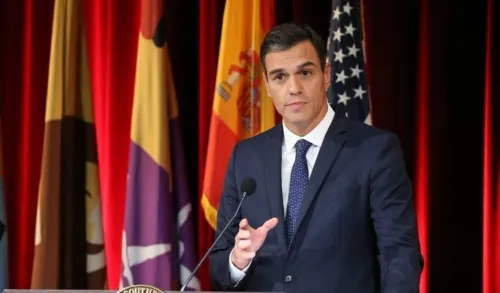
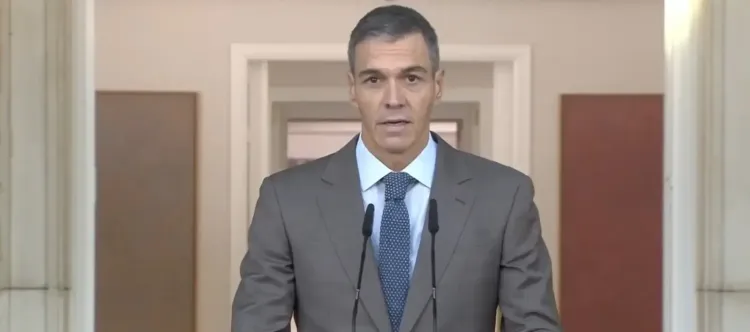
Sharing a video of his address on X (formerly Twitter), Sanchez declared: 'Facing their penthouses, their cuts, and their servility to the elites, our commitment to the people: affordable housing, public services, and social rights. Spain must continue advancing, and for that, we need citizens to bolster our strength in Parliament. It's time to mobilise. It's time to fight. On November 29, we're going to make history. Again.'
The combative framing positions the election as a class contest — a deliberate attempt to energise the left-wing base rather than appeal to the centre ahead of a difficult campaign.
Mounting Pressures on the Coalition
The housing vote was the final straw in what has been a turbulent stretch for the Sanchez government. Several people close to the PSOE have been caught up in corruption cases and separate legal proceedings, eroding the government's moral authority with both partners and voters.
The migration crisis in Ceuta has also taken a toll. In July, thousands of migrants crossed from Morocco into Spain's North African enclave of Ceuta, prompting the deployment of additional state resources. Weeks later, the government declared a 'situation of interest for national security' — the first such declaration in Spain's democratic era. The conservative People's Party (PP) and the far-right Vox accused the government of responding too slowly and questioned its broader policy towards Morocco.
A Fragile Majority Running Out of Road
Sanchez's coalition has never commanded a comfortable working majority in Congress. It has been forced to negotiate almost every piece of legislation on a vote-by-vote basis with a range of smaller parties, sustaining multiple defeats in the chamber over the past year. Analysts note this is not the first time the government has come close to collapse; each reprieve has come at a political cost.
With the election now set for 29 November, both the PP and Vox will seek to capitalise on voter fatigue with the coalition, while PSOE will look to frame the contest around social rights and housing — the very issues that proved too divisive in the current Congress to survive.
Point of View
And the PSOE enters the campaign without a majority mandate to point to. The deeper issue is structural — Spain's fragmented multi-party parliament has made stable governance nearly impossible without the kind of grand coalitions that neither the left nor the right has been willing to contemplate. November 29 may produce yet another hung parliament, not the 'history' Sanchez is promising.
NationPress
5 Oct 2026
Frequently Asked Questions
Why did Pedro Sanchez call a snap election in Spain?
Sanchez called the snap election for 29 November after Spain's Congress voted down two housing decrees central to his government's response to the country's housing affordability crisis. The defeat, combined with months of coalition instability, corruption cases, and the Ceuta migration crisis, prompted him to seek a fresh public mandate rather than continue with a weakened parliamentary position.
When is Spain's snap general election?
Spain's snap general election is scheduled for 29 November 2026. Sanchez announced the date on 5 October after consultations with senior ministers and PSOE figures over the weekend.
What were the housing decrees that Spain's Congress rejected?
The two rejected decrees were part of the Spanish government's legislative response to the country's housing crisis. The exact provisions were not detailed in the announcement, but they formed a key policy package that Sanchez had been unable to pass despite negotiation efforts with coalition partners.
What is the Ceuta migration crisis and how did it affect Sanchez's government?
In July, thousands of migrants crossed from Morocco into Spain's North African enclave of Ceuta, prompting the government to deploy extra resources and later declare a 'situation of interest for national security' — the first such declaration in Spain's democratic era. The conservative PP and far-right Vox accused the Sanchez government of acting too slowly and questioned its policy towards Morocco, adding political pressure to the coalition.
What challenges has the Sanchez coalition faced before this election call?
The coalition has faced a fragile parliamentary majority, requiring vote-by-vote negotiations for nearly every piece of legislation and sustaining multiple defeats in Congress. It has also been damaged by corruption cases involving figures close to the PSOE and public criticism over the handling of migration at Ceuta.