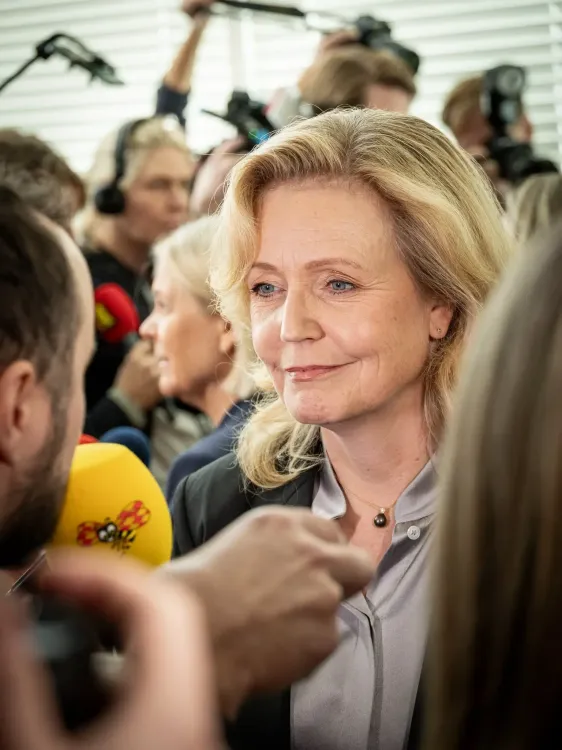
Sweden PM deadlock deepens as parliament rejects Elisabeth Thand Ringqvist
Synopsis
Two months after Sweden's general election, parliament has now rejected two separate prime ministerial nominees — and the country is no closer to a government. With outgoing PM Ulf Kristersson now tasked with a third attempt and an extraordinary election looming as a constitutional backstop, Sweden's political crisis is entering its most critical phase yet.
Key Takeaways
The Swedish parliament voted 324 to 25 on 3 November to reject Centre Party leader Elisabeth Thand Ringqvist as prime minister.
This is the second failed PM nomination since Sweden's general election on 13 September ; Magdalena Andersson was rejected on 15 October .
Thand Ringqvist reaffirmed the Centre Party will not cooperate with the Sweden Democrats or the Left Party .
Outgoing PM Ulf Kristersson (Moderate Party) has been tasked with fresh consultations between 3–10 November .
Under Sweden's Constitution, if all four nominees are rejected, an extraordinary election must be held within three months .
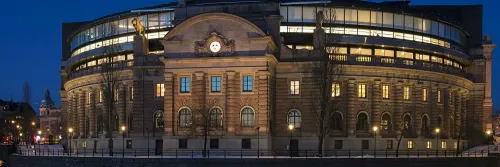
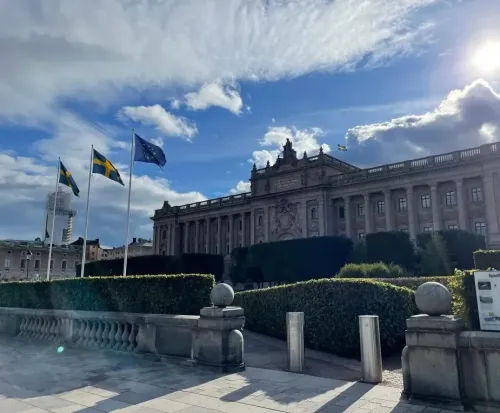
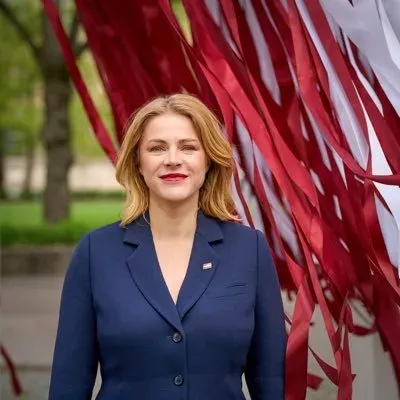
The Swedish parliament on Tuesday, 3 November rejected Centre Party leader Elisabeth Thand Ringqvist as the country's new prime minister, deepening a political deadlock that has persisted for nearly two months since Sweden's general election on 13 September. The vote was overwhelming: 324 lawmakers voted against her nomination, with only 25 — exclusively from her own Centre Party — voting in favour.
How the Nomination Came About
Parliament Speaker Andreas Norlen had tasked Thand Ringqvist on 19 October with exploring the possibility of forming a government capable of securing sufficient parliamentary support. After a week of consultations with other party leaders, she reported back on 26 October that the political conditions for a centrist government simply did not exist. Despite not having initially sought the premiership, Thand Ringqvist agreed to stand as a candidate when Norlen announced last Thursday that he would formally nominate her — effectively to conclude her formation efforts with a binding parliamentary vote.
The Centre Party's Red Lines
Following Tuesday's lopsided defeat, Thand Ringqvist reaffirmed her party's firm position: the Centre Party will neither join a government that includes the Sweden Democrats nor lend support to any government that depends on the right-wing party's backing. Equally, the party refuses to cooperate with the Left Party. Swedish political commentators note that these twin red lines have severely narrowed the space for any viable coalition, making the Centre Party simultaneously a pivotal and immovable actor in the current impasse.
Second Failed Nomination Since September Vote
Tuesday's rejection marks the second consecutive failure to elect a new prime minister since the September general election. The first came on 15 October, when parliament rejected the nomination of Social Democratic Party leader Magdalena Andersson. Andersson said on Tuesday that she is continuing efforts to form a government, signalling that the Social Democrats have not abandoned their bid.
What Happens Next
Speaker Norlen had indicated last Thursday that if Thand Ringqvist's nomination failed, Moderate Party leader and outgoing Prime Minister Ulf Kristersson would be tasked with exploring a new government formation. Kristersson has a window of one week — from 3 November to 10 November — to complete those consultations. Under Sweden's Constitution, the Speaker may nominate up to four candidates for prime minister. Should parliament reject all four, an extraordinary election must be held within three months. With two nominations already exhausted, Sweden may be heading toward either a minority government or an unprecedented snap poll.
Point of View
In practice, producing constitutional paralysis. With Ulf Kristersson now tasked for a third attempt and only four nomination slots available under the constitution, the pressure on every party to move — or to own the consequences of a snap election — has never been higher.
NationPress
3 Nov 2026
Frequently Asked Questions
Why did the Swedish parliament reject Elisabeth Thand Ringqvist as prime minister?
Parliament rejected Thand Ringqvist on 3 November 2026 by a vote of 324 to 25 because she failed to secure support beyond her own Centre Party. After consultations, she had already acknowledged on 26 October that conditions for a centrist government did not exist.
How many times has Sweden failed to elect a new prime minister since the September election?
Sweden has now failed twice. Parliament first rejected Social Democratic Party leader Magdalena Andersson on 15 October, and then rejected Centre Party leader Elisabeth Thand Ringqvist on 3 November.
What happens next in Sweden's government formation process?
Outgoing Prime Minister and Moderate Party leader Ulf Kristersson has been tasked with forming a government, with a one-week consultation window from 3 to 10 November. Under Sweden's Constitution, the speaker can nominate up to four candidates; if all are rejected, an extraordinary election must be held within three months.
Why is Sweden's Centre Party blocking government formation?
The Centre Party has ruled out cooperating with both the right-wing Sweden Democrats and the left-wing Left Party. Swedish political commentators say these twin red lines have sharply narrowed viable coalition options, making the party a key obstacle to breaking the deadlock.
Could Sweden be forced into a snap election?
Yes. Sweden's Constitution allows the parliament speaker to nominate up to four candidates for prime minister. With two nominations already rejected, if the remaining attempts also fail, an extraordinary election must be called within three months.