300-year-old Guru Granth Sahib manuscript: India Consulate, Edinburgh Uni plan darshan
Synopsis
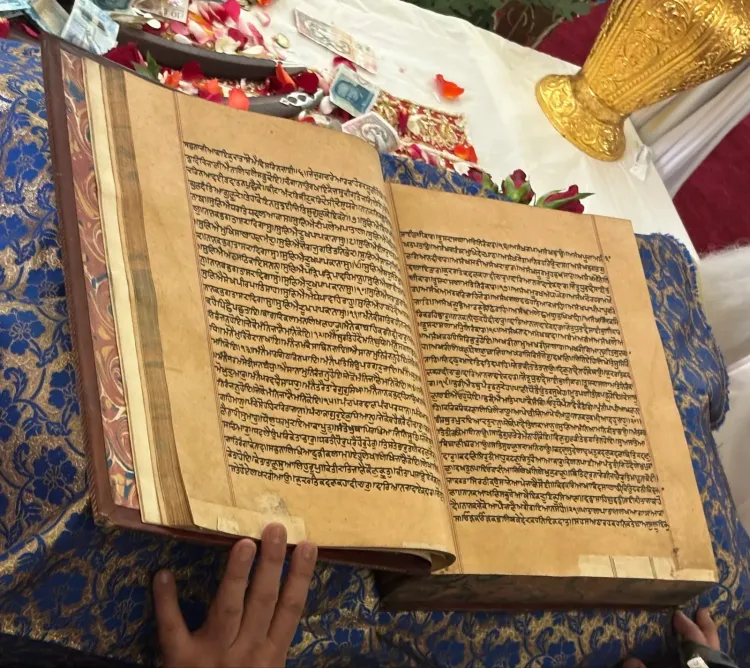
A 300-year-old handwritten Guru Granth Sahib manuscript — seized from Maharaja Kharak Singh's fort in 1848 by the same British officer who handed over the Koh-I-Noor — has sat in Edinburgh University's archives for over 175 years. Now, the Indian Consulate and the university are working together to bring the Sikh community face-to-face with it, first in Edinburgh and next in Glasgow.
Key Takeaways
The Indian Consulate in Edinburgh met University of Edinburgh officials and Gurudwara representatives on 30 June to plan darshan of a 300-year-old Guru Granth Sahib manuscript.
The manuscript belonged to Maharaja Kharak Singh , second Maharaja of the Sikh Empire, and was taken from the fort at Dullewalla in 1848 .
It was gifted to the university by Sir John Spencer Login , who also delivered the Koh-I-Noor to Queen Victoria.
The manuscript was discovered in university archives in 2020 and has since undergone extensive restoration.
Its first public presentation took place in November at Guru Nanak Gurdwara, Edinburgh ; darshan at Central Gurdwara, Glasgow is being coordinated.
Sikh Sanjog , represented by Mrs.
Trishna Singh , is among the community organisations involved in the coordination.
The Indian Consulate in Edinburgh on Tuesday, 30 June convened a coordination meeting with officials from the University of Edinburgh and Gurudwara representatives from Edinburgh and Glasgow to facilitate community darshan of a 300-year-old manuscript of Sri Guru Granth Sahib Ji Maharaj. The sacred handwritten saroop, once belonging to Maharaja Kharak Singh of Punjab, has been held in the university's archives for over 175 years.
Background: How the Manuscript Reached Edinburgh
According to the University of Edinburgh, the Guru Granth Sahib is one of three Sikh scriptures in its collection. The manuscript formerly belonged to Kharak Singh, the second Maharaja of the Sikh Empire, and was taken from the fort at Dullewalla in India during its capture in 1848. It was subsequently gifted to the university by Sir John Spencer Login — the same British officer who brought the Koh-I-Noor diamond to Queen Victoria, according to Geraldine Dick, Corporate Communications Manager at the University of Edinburgh, writing on 25 November 2025.
Discovery, Restoration and Preservation
Although the scriptures are believed to have been at the university for more than 175 years, formal efforts to study and document them only began in 2020, when the manuscript was discovered in the university's archives. Since then, it has undergone extensive restoration and preservation work. The consulate described the process as 'a meaningful step in preserving and celebrating our shared heritage.'
Historic First Public Presentation
The handwritten manuscript was first presented to the public in November at Guru Nanak Gurdwara, Edinburgh. The Consul General attended the event alongside community members, calling it a 'historic first public presentation.' The consulate noted it was 'a remarkable moment of faith, heritage and community,' expressing gratitude to Edinburgh Gurdwara, Sikh Sanjog, and the University of Edinburgh for bringing the occasion together.
Coordination for Glasgow Darshan
The 30 June meeting brought together the consulate team, Gurudwara representatives from Edinburgh and Glasgow, Mrs. Trishna Singh of Sikh Sanjog, and university officials. The objective was to coordinate arrangements for darshan of the manuscript at Central Gurdwara, Glasgow. The consulate reaffirmed its commitment to 'supporting the Sikh community across Scotland through cultural, heritage and community services.'
What Happens Next
With the coordination meeting now concluded, formal darshan arrangements at Central Gurdwara in Glasgow are expected to be finalised in the coming weeks. The initiative reflects a broader effort by Indian diplomatic missions to engage diaspora communities around shared religious and cultural heritage — and signals continued collaboration between the university and the Sikh community in Scotland.
Point of View
Gifted to a British institution, and left unstudied for over 175 years. That it took until 2020 for the university to begin formal examination raises questions about how many similar artefacts remain unacknowledged in European archives. The Indian Consulate's active role here is diplomatically significant: it frames heritage engagement as a live instrument of diaspora outreach, not a ceremonial footnote. Whether this coordination leads to a broader conversation about long-term custodianship — or remains a one-off darshan event — will be the real measure of its impact.
NationPress
30 Jun 2026
Frequently Asked Questions
What is the 300-year-old Guru Granth Sahib manuscript held at the University of Edinburgh?
It is a handwritten saroop of Sri Guru Granth Sahib Ji Maharaj, one of three Sikh scriptures in the University of Edinburgh's collection. The manuscript formerly belonged to Maharaja Kharak Singh, the second Maharaja of the Sikh Empire, and has been at the university for more than 175 years.
How did the Guru Granth Sahib manuscript reach the University of Edinburgh?
The manuscript was taken from the fort at Dullewalla in India during its capture in 1848 and was subsequently gifted to the University of Edinburgh by Sir John Spencer Login — the same British officer who brought the Koh-I-Noor diamond to Queen Victoria, according to the university's own records.
When was the manuscript first shown to the public?
The handwritten manuscript was first presented publicly in November at Guru Nanak Gurdwara in Edinburgh, with the Consul General attending alongside community members. Arrangements are now being coordinated for a darshan at Central Gurdwara in Glasgow.
What is Sikh Sanjog and what is its role in this initiative?
Sikh Sanjog is a Scotland-based Sikh community organisation. Its representative, Mrs. Trishna Singh, participated in the 30 June coordination meeting alongside the Indian Consulate, University of Edinburgh officials, and Gurudwara representatives from Edinburgh and Glasgow.
Why does this manuscript matter to the Sikh community?
The manuscript is a sacred religious text with direct historical ties to the Sikh Empire, making its darshan — the act of reverential viewing — deeply significant for Sikhs in Scotland and beyond. Its discovery, restoration, and public display represent a rare convergence of faith, colonial history, and diaspora heritage.