CM Fadnavis Vows Stricter Penalties for Adults Who Lure Minors Into Crime
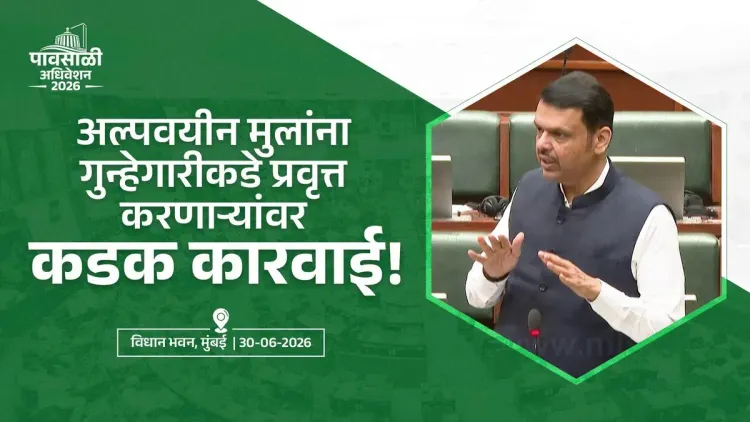
Synopsis
Maharashtra CM Devendra Fadnavis announced on 30 June 2026 at the Vidhan Sabha that the state will increase punishment for adults who incite minors to commit crimes, signalling a legislative push during the Monsoon Session 2026 to strengthen child protection and deter criminal exploitation of juveniles.
Key Takeaways
Maharashtra Chief Minister Devendra Fadnavis announced on 30 June 2026 that punishment for adults who incite minors into criminal activity will be increased.
The announcement was made from the floor of the Maharashtra Vidhan Sabha in Mumbai during the Monsoon Session 2026 .
The statement was made in both English and Marathi, indicating a formal legislative commitment.
The move is intended to close gaps in the existing juvenile justice framework, which critics say does not adequately deter adult recruiters of minors.
A formal legislative proposal, state amendment, or government resolution is expected to follow during the current session.
If enacted, Maharashtra would become a benchmark for other Indian states on protecting minors from criminal exploitation.
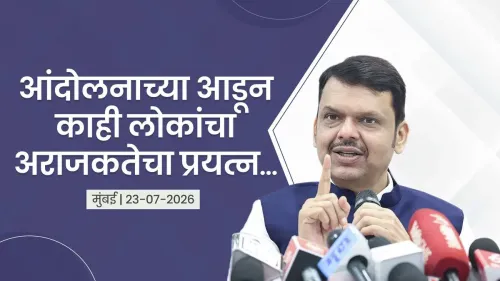
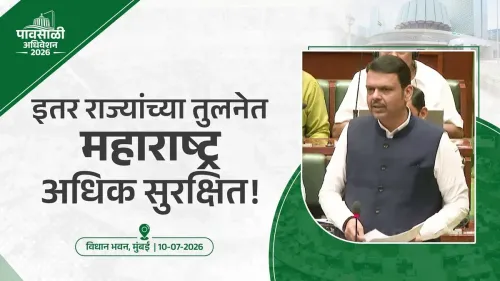
Maharashtra Chief Minister Devendra Fadnavis announced on Tuesday, 30 June 2026, that the state government will increase punishment for individuals who incite minors to engage in criminal activities. The declaration was made from the floor of the Maharashtra Vidhan Sabha in Mumbai during the ongoing Monsoon Session 2026.
Posting on X, Fadnavis stated in both English and Marathi: 'अल्पवयीन मुलांना गुन्हेगारीकडे प्रवृत्त करणाऱ्यांवरील शिक्षेत वाढ करण्यात येईल' ['Punishment for those who incite minors to engage in criminal activities will be increased']. The bilingual announcement signals that the commitment was made formally on the legislative record.
Context
The statement comes amid growing concern across Indian states about organised criminal networks — including gangs and syndicates — deliberately recruiting juveniles to carry out offences, exploiting the relatively lighter consequences they face under juvenile justice frameworks. Maharashtra, as India's most urbanised and economically active state, has seen documented instances of minors being used as couriers, lookouts, and even direct participants in violent crimes in cities such as Mumbai, Pune, and Nagpur.
Under the existing Juvenile Justice (Care and Protection of Children) Act, 2015, adults who use children for criminal purposes can face prosecution, but enforcement and sentencing have often been criticised as inadequate deterrents. The Chief Minister's announcement suggests the state is considering either legislative amendments or stricter administrative enforcement to close this gap.
Policy Backdrop
The Monsoon Session 2026 of the Maharashtra Vidhan Sabha opened against a backdrop of the ruling Mahayuti alliance — comprising the BJP, Shiv Sena (Shinde faction), and NCP (Ajit Pawar faction) — pushing a legislative agenda focused on law, order, and social welfare. Toughening penalties for adults who exploit minors aligns with the BJP's broader national positioning on child protection and crime deterrence.
At the central level, the Bharatiya Nyaya Sanhita (BNS), 2023, which replaced the Indian Penal Code, introduced or strengthened several provisions relating to offences against children. A state-level enhancement of punishment for those who recruit minors into crime would complement this national framework, though the precise mechanism — whether through a state amendment, a special ordinance, or executive guidelines — was not specified in the Chief Minister's statement.
Stakeholders and Impact
Child rights organisations and juvenile justice advocates have long demanded stronger accountability for adult perpetrators who use children as instruments of crime, arguing that the children themselves are victims of exploitation rather than willing offenders. Stricter punishment for adult inciters would directly address this concern and could reduce the incentive for criminal networks to recruit juveniles.
Law enforcement agencies in Maharashtra, including the Mumbai Police and state CID, are expected to be key implementers of any enhanced penalty regime. For families in low-income urban neighbourhoods — where recruitment of minors by criminal elements is most acute — the policy shift, if enacted, could serve as a meaningful deterrent.
What's Next
The announcement made on the Vidhan Sabha floor on 30 June 2026 is likely to be followed by a formal legislative proposal or a government resolution during the current Monsoon Session. Legal drafters in the Maharashtra Home Department would need to identify the specific statutes to be amended and the quantum of enhanced punishment. Stakeholder consultations with child welfare bodies and the judiciary may also be required before any bill is tabled. If enacted, Maharashtra would set a precedent that other states could follow in addressing the systemic exploitation of minors by adult criminal actors.
Point of View
Combining child-welfare optics with a law-and-order posture that has broad cross-party appeal. By making the commitment bilingually on the Vidhan Sabha record, the Chief Minister ensures political accountability and pre-empts Opposition charges of inaction on urban crime. The move also dovetails with the BJP-led Centre's Bharatiya Nyaya Sanhita reforms, allowing the Maharashtra government to present itself as a proactive implementer of the new national criminal justice architecture. The critical question now is whether the announcement translates into a tabled bill within this session or remains a statement of intent.
NationPress
29 Sept 2026
Frequently Asked Questions
What did CM Devendra Fadnavis announce on 30 June 2026?
Maharashtra Chief Minister Devendra Fadnavis announced at the Vidhan Sabha in Mumbai on 30 June 2026 that the state government will increase punishment for adults who incite or lure minors into criminal activities.
Which session of the Maharashtra legislature did Fadnavis make this announcement in?
The announcement was made during the Monsoon Session 2026 of the Maharashtra Vidhan Sabha in Mumbai.
What law currently governs adults who use minors for crime in India?
The Juvenile Justice (Care and Protection of Children) Act, 2015, and provisions under the Bharatiya Nyaya Sanhita, 2023, address adults who exploit minors for criminal purposes, though enforcement has been criticised as an insufficient deterrent.
How will Maharashtra increase punishment for those who incite minors to commit crimes?
The specific mechanism — whether a state legislative amendment, a special ordinance, or executive guidelines — was not detailed in CM Fadnavis's statement. A formal proposal is expected to emerge from the Maharashtra Home Department during the Monsoon Session.
Why is the recruitment of minors into crime a concern in Maharashtra?
Maharashtra, particularly cities like Mumbai, Pune, and Nagpur, has seen organised criminal networks exploit juveniles as couriers, lookouts, and participants in offences, taking advantage of lighter legal consequences that minors face under juvenile justice laws.