Political Tensions Rise as Republicans and Democrats Debate Voting Legislation
Synopsis
The U.S. Senate is embroiled in a heated debate over the SAVE Act, proposed by Republicans and denounced by Democrats as a voter suppression tactic. With millions of Americans potentially affected, both parties are standing firm on their positions.
Key Takeaways
Republicans advocate for the SAVE Act as a means to enhance election integrity.
Democrats label the act as a voter suppression initiative.
The proposal requires proof of citizenship and photo ID for voting.
Potential impact on millions of eligible voters is a significant concern.
Political polarization is evident in the ongoing debate over voting rights.
Washington, March 18 (NationPress) A significant political showdown commenced in the U.S. Senate as Republicans advocated for the SAVE Act, which they claim is essential for election security. Conversely, Democrats criticized the legislation as a tactic for voter suppression that could disenfranchise millions of eligible Americans from casting their votes.
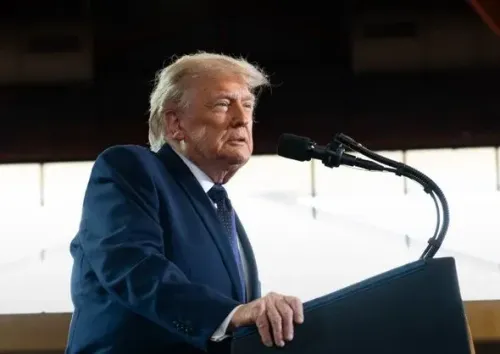
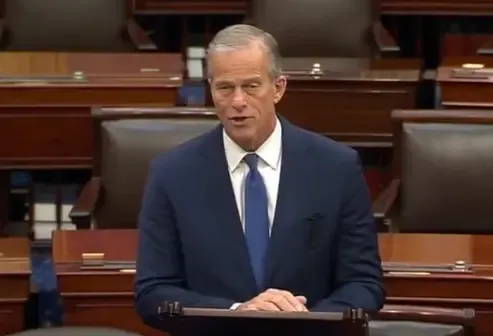
Senate Majority Leader John Thune emphasized two core components of the proposal: "you must verify your citizenship to register to vote in this nation" and "you must present an ID to cast your vote."
He asserted that these requirements mirror common practices in American society. "We should certainly be able to extend these standards to something as vital as voting in our country," Thune argued, highlighting that ID checks are a standard procedure for various services like banking and travel.
Republicans portrayed the legislation as a necessary measure to uphold election integrity. Senator John Barrasso stated, "I believe that only U.S. citizens should participate in American elections." He further added, "Voters should present a photo ID to cast their ballots."
Barrasso noted that Republicans would push for votes to compel Democrats to clarify their stance. "Republicans endorse voter ID laws, while Democrats support open borders and illegal voting," he asserted.
Senator Shelley Moore Capito characterized the initiative as "common sense," referring to her home state's existing voter ID law. She mentioned that proving citizenship would safeguard "the fundamental right to vote that belongs to us all."
Democrats firmly opposed the legislation, cautioning that it might disrupt established voting processes.
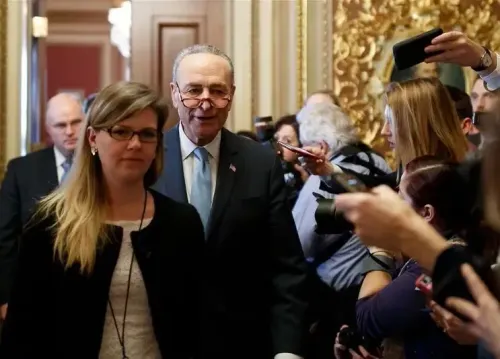
Senate Minority Leader Charles Schumer remarked, "The SAVE Act is not merely a voter ID bill. It is, in every aspect, a bill aimed at suppressing voters." He cautioned that the proposal "could disenfranchise over 20 million Americans," while also threatening to eliminate online voter registration and mail-in voting options.
Schumer further criticized the identification stipulations during voter registration, stating, "Having a driver’s license is no longer sufficient. Even military IDs wouldn’t qualify. This is extreme."
Senator Amy Klobuchar mentioned that the bill would create barriers for voters while disregarding economic issues. "Their goal is to remove people from the voter rolls and push their elections through," she stated.
Senator Alex Padilla expressed that the proposal would complicate the process for eligible Americans to "register, maintain their registration, and cast their votes." He labeled it "a bill for voter suppression" and "a bill for purging voters."
Thune acknowledged that it remains uncertain whether Republicans could garner sufficient votes, but he defended the decision to proceed. "I believe it is crucial to have the discussion, to engage in debate on the Senate floor," he concluded.
Point of View
This debate highlights a significant polarization in U.S. politics. While one side emphasizes election integrity through identification requirements, the other warns of potential disenfranchisement. The contrasting views underscore the ongoing struggle over voting rights and access in America.
NationPress
20 Sept 2026
Frequently Asked Questions
What is the SAVE Act?
The SAVE Act is a proposed legislation by Republicans aiming to require proof of citizenship and photo identification for voters in U.S. elections.
Why do Democrats oppose the SAVE Act?
Democrats argue that the SAVE Act is a voter suppression measure that could disenfranchise millions of eligible voters and disrupt established voting systems.
What are the main arguments for the SAVE Act?
Proponents, including Senate Republicans, argue that the bill is essential for ensuring election integrity and reflects standard identification practices found in other areas of life.
How might the SAVE Act affect voting access?
If enacted, the SAVE Act could create additional hurdles for eligible voters to register and vote, potentially leading to disenfranchisement.
What is the current status of the SAVE Act?
The SAVE Act is currently in debate in the U.S. Senate, with Republicans pushing for a vote while facing strong opposition from Democrats.