Intensifying Debate in the U.S. Senate Over Voting Legislation
Synopsis
A contentious debate unfolds in the U.S. Senate as lawmakers discuss a bill requiring proof of citizenship for voting. Democrats express concerns about potential voter disenfranchisement, while Republicans advocate for measures to safeguard election integrity. The implications of these discussions could reshape voting access for millions.
Key Takeaways
Lawmakers are debating a bill mandating proof of citizenship for voting.
Democrats fear potential voter disenfranchisement.
Republicans advocate for election integrity through documentation.
Alternative provisions exist for those lacking formal identification.
Historical data shows non-citizen voting incidents are extremely rare.
Washington, March 12 (NationPress) On Thursday, lawmakers engaged in a heated discussion regarding a proposed bill that mandates proof of citizenship for voting. Democrats cautioned that this could disenfranchise millions of voters, while Republicans argued it is essential for safeguarding the integrity of elections.
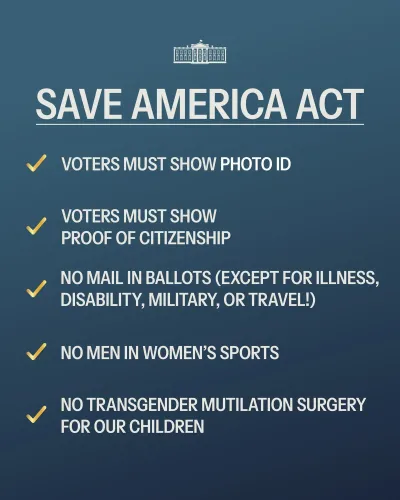
The focal point of the debate was the proposed "Save America Act," which would enforce requirements for U.S. citizenship proof and photo identification for individuals registering to vote in federal elections.
Democratic Senator Richard J. Durbin, ranking member of the committee, highlighted concerns that such legislation might bar millions of eligible citizens from exercising their right to vote due to stringent documentation demands.
Durbin stated, "An estimated 9 percent of American voters lack the identification mandated by this bill. This effectively means these individuals will be unable to cast their votes, which I believe is the underlying objective of this administration."
He further contended that common forms of identification, such as a driver's license, would not suffice under the new regulations.
"What is deemed acceptable is a passport," he noted. "Half of Americans do not possess a passport; those who wish to acquire it for voting will have to pay $186 and endure a wait of three to four weeks for processing."
Moreover, he pointed out that voters who have changed their names due to marriage or other reasons may encounter additional obstacles, as they would need documents linking their current name to their birth records.
Republican lawmakers, on the other hand, defended the legislation as a necessary measure to ensure that only U.S. citizens participate in federal elections.
Senator Mike Lee remarked that the bill contains provisions for individuals who are unable to locate their official documents, such as birth certificates or passports.
"Upon reviewing the bill, you will find that we have made specific accommodations for those lacking documentation," Lee explained.
"If one cannot provide documentation verifying the information on their birth certificate or passport, the legislation mandates that each state must allow an alternative method in which a person can, through attestation, provide a sworn statement."
Lee added that state authorities would then verify this information against official records.
"This places the responsibility on the state to follow up and ascertain the authenticity of the claims," he said.
He emphasized that lawmakers aimed to ensure that "no American would be left in the dark," ensuring that citizens are not excluded from voting due to missing paperwork.
In response, Durbin argued that incidents of non-citizens participating in U.S. elections have historically been exceedingly rare.
"This issue is such a minor blip on the American political radar that, over the past two decades, only 24 cases of non-Americans attempting to vote have been documented," he stated.
Point of View
The ongoing debate in the U.S. Senate highlights the complex intersection of voting rights and election integrity. While both sides present valid arguments, the potential impact on millions of voters must be carefully considered. The dialogue reflects broader national concerns about accessibility and security in the democratic process.
NationPress
26 Sept 2026
Frequently Asked Questions
What is the Save America Act?
The Save America Act is a proposed bill that requires proof of U.S. citizenship and photo identification for individuals registering to vote in federal elections.
Why do Democrats oppose the bill?
Democrats argue that the bill's strict documentation requirements could disenfranchise millions of eligible voters.
What provisions are included for those without documentation?
The bill includes provisions allowing individuals to provide a sworn statement as an alternative to official documentation.
How rare are cases of non-citizens voting in U.S. elections?
Senator Durbin pointed out that historically, there have only been 24 documented cases of non-citizens attempting to vote in the past 20 years.
What are the identification requirements under the proposed bill?
The proposed bill requires a passport as acceptable identification, which many Americans do not possess.