South Korea, Japan reaffirm defence ties against North Korean nuclear threats
Synopsis
South Korea and Japan have moved to strengthen their defence partnership — including a push into AI and unmanned systems — as North Korea's nuclear and missile build-up continues and the broader Seoul-Washington-Tokyo trilateral framework faces a rapidly shifting security environment. The talks also cast a quiet spotlight on the Yasukuni Shrine episode that sidelined Japan's own defence minister just weeks ago.
Key Takeaways
Vice Defence Minister Lee Doo-hee of South Korea met counterpart Atsushi Ando in Tokyo on 9 October 2026 during a two-day visit.
Both sides reaffirmed the importance of the Seoul-Washington-Tokyo trilateral framework to counter North Korea's nuclear and missile threats.
Officials agreed to expand defence cooperation into artificial intelligence (AI) and unmanned systems .
The meeting follows a similar engagement at the Seoul Defence Dialogue in September, where the same reaffirmations were made.
Japan's Defence Minister Shinjiro Koizumi had skipped the Seoul forum after his Yasukuni Shrine visit drew criticism from South Korea and neighbouring countries.
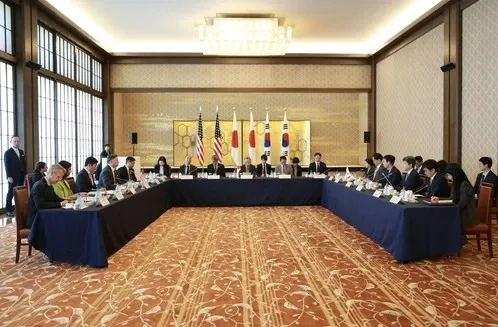
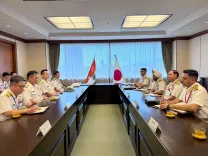
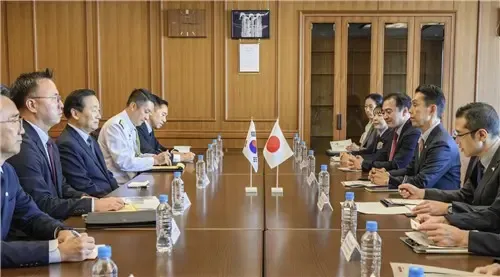
Senior defence officials of South Korea and Japan held high-level talks in Tokyo on 9 October 2026 and reaffirmed the critical importance of close bilateral and trilateral coordination to counter North Korea's evolving nuclear and missile programme, Seoul's defence ministry announced on Friday.
Key Developments
South Korea's Vice Defence Minister Lee Doo-hee met with his Japanese counterpart, Vice Defence Minister Atsushi Ando, as part of a two-day visit to Japan that began on Thursday. Earlier in the visit, Lee also paid a courtesy call on Japanese Defence Minister Shinjiro Koizumi. The trip came at Ando's invitation, following his two earlier visits to Seoul — in May for bilateral security policy consultations and in September to attend the Seoul Defence Dialogue.
What the Officials Agreed On
During the Tokyo talks, Lee and Ando reaffirmed the necessity of close coordination not only between Seoul and Tokyo, but also in the broader Seoul-Washington-Tokyo trilateral framework, to respond to North Korea's advancing nuclear and missile capabilities amid what both sides described as a rapidly changing international security environment and a grave situation on the Korean Peninsula.
Notably, the two sides also agreed to expand defence cooperation into future-oriented domains, including artificial intelligence (AI) and unmanned systems — a signal that the partnership is evolving beyond conventional military coordination into advanced technology sectors.
Trilateral Cooperation in Focus
The Tokyo meeting follows a similar engagement on the sidelines of the Seoul Defence Dialogue last month, where the same officials pledged continued efforts to deepen defence exchanges. At that forum, both sides stated that 'bilateral and trilateral cooperation between South Korea, Japan and the US is crucial for maintaining peace and stability on the Korean Peninsula, and across the region,' according to Seoul's defence ministry.
The ministry further noted that the two sides agreed to 'maintain communication and ongoing efforts to foster stable, mutually beneficial and forward-looking defence exchanges based on mutual understanding and trust.'
Background: A Complicated Bilateral Relationship
The renewed diplomatic momentum comes despite ongoing historical sensitivities between Seoul and Tokyo. At the September Seoul Defence Dialogue, Japanese Defence Minister Koizumi was notably absent — his deputy Ando attended in his place — after Koizumi's visit to the Yasukuni Shrine, a controversial wartime memorial in Tokyo widely seen as a symbol of Japan's imperialist past, drew sharp criticism from South Korea and other neighbouring countries. That episode underlines how historical grievances continue to shadow an otherwise strategically convergent relationship.
What Comes Next
With North Korea showing no signs of curtailing its missile testing programme and geopolitical pressure intensifying across the Indo-Pacific, analysts expect the Seoul-Tokyo defence axis to deepen further, particularly on shared early-warning systems and AI-integrated defence platforms. Future trilateral drills involving Washington are also widely anticipated.
Point of View
A reminder that the Korea-Japan relationship is always one shrine visit away from a diplomatic chill. Washington's role as the indispensable anchor for this trilateral — keeping two historically wary allies in the same room — remains as vital as ever, and any future US pivot away from the region would stress-test this framework severely.
NationPress
9 Oct 2026
Frequently Asked Questions
Why did South Korea and Japan hold defence talks in Tokyo on 9 October 2026?
South Korea's Vice Defence Minister Lee Doo-hee visited Tokyo at the invitation of Japanese counterpart Atsushi Ando to reaffirm bilateral and trilateral defence cooperation aimed at countering North Korea's advancing nuclear and missile capabilities. The visit also addressed expanding ties into AI and unmanned systems.
What is the Seoul-Washington-Tokyo trilateral defence framework?
It is a three-way security coordination mechanism among South Korea, Japan, and the United States aimed at maintaining peace and stability on the Korean Peninsula and across the broader Indo-Pacific region. Both Seoul and Tokyo have repeatedly described the trilateral as crucial to deterring North Korean threats.
Why was Japanese Defence Minister Shinjiro Koizumi absent from the Seoul Defence Dialogue?
Koizumi skipped the September Seoul Defence Dialogue after his visit to the Yasukuni Shrine — a Tokyo wartime memorial seen as a symbol of Japan's imperialistic past — drew criticism from South Korea and other neighbouring countries. Vice Defence Minister Atsushi Ando attended in his place.
What new areas of defence cooperation did South Korea and Japan agree to pursue?
Beyond conventional military coordination, both sides agreed to push for cooperation and exchanges in advanced science and technology sectors, specifically artificial intelligence (AI) and unmanned systems, described as a future-oriented direction for the bilateral relationship.
How does this meeting fit into the recent pattern of South Korea-Japan defence engagement?
It is the third major bilateral defence engagement in 2026, following Ando's visit to Seoul in May for security policy consultations and his September attendance at the Seoul Defence Dialogue. The frequency signals a deliberate effort to institutionalise and deepen the defence relationship amid a heightened security environment on the Korean Peninsula.