Serbia wildfires 2026: 300 hectares burn in Deliblato Sands amid extreme heat
Synopsis
A fire once declared extinguished has roared back to life in Serbia's protected Deliblato Sands reserve, consuming 300 hectares of pine forest — a warning sign that ground-level embers can outlast suppression efforts by weeks. With temperatures hitting 40°C, rivers falling below navigational thresholds, and over 434,000 hectares already burned across Europe in 2026, Serbia's crisis is a microcosm of a continent-wide emergency that prevention alone can now address.
Key Takeaways
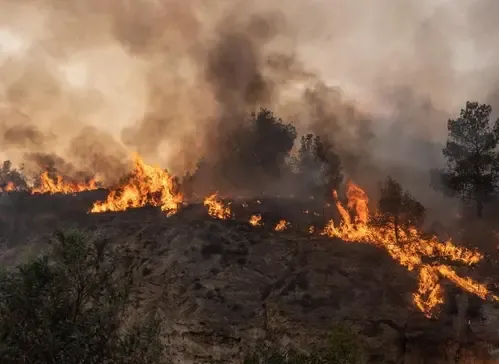
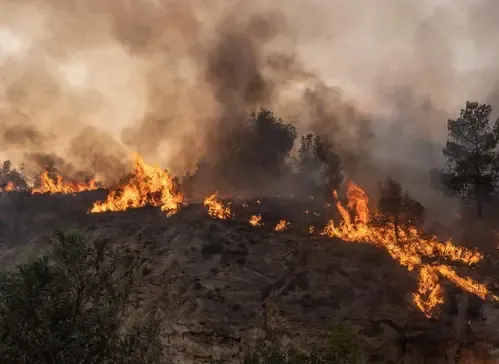
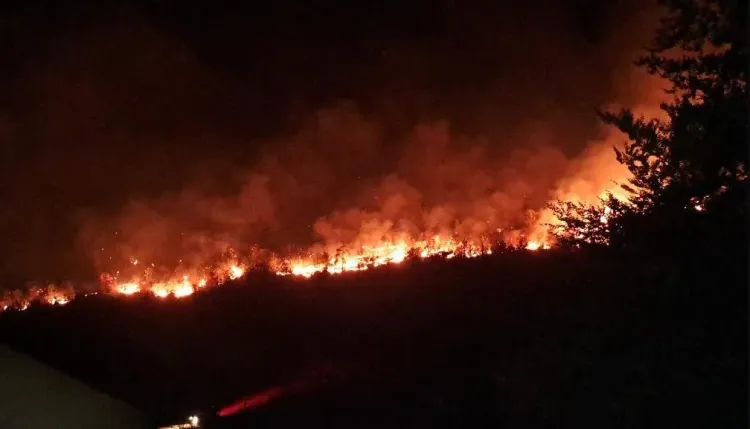
A reignited wildfire at the Deliblato Sands protected reserve in northeastern Serbia has burned approximately 300 hectares of pine forest as of 6 August 2026 .
The blaze, located 60 km east of Belgrade in the southern Banat region, was previously extinguished roughly 10 days ago before ground embers reignited it.
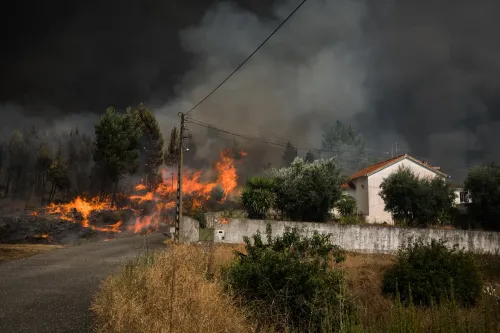
45 firefighters , volunteer brigades, and 3 police helicopters are deployed; no buildings are currently under threat.
The RHMZ forecast temperatures of 35–40°C through Thursday, with the Danube , Sava , and Tisa rivers below navigational thresholds due to prolonged drought.
The UNECE reported more than 434,000 hectares burned across Europe in 2026 as of late July, calling for stronger preventive action.
Serbian emergency services are battling multiple simultaneous wildfires across the country as a combination of strong winds, extreme heat, and prolonged drought creates dangerous fire conditions. A reignited blaze at the Deliblato Sands protected nature reserve in northeastern Serbia has consumed approximately 300 hectares of pine forest, with the fire yet to be brought under control as of 6 August 2026.
The Deliblato Sands Blaze
Serbia's public broadcaster RTS reported that a fire previously extinguished at the Deliblato Sands reserve roughly 10 days ago reignited after smouldering ground-level embers were fanned by strong winds. The reserve, located in the southern Banat region approximately 60 km east of Belgrade, is a nationally protected ecosystem particularly vulnerable to fire due to its dense pine coverage.
The Serbian Interior Ministry confirmed it had deployed all available personnel and equipment to the site. According to RTS, 45 firefighters drawn from several towns, volunteer fire brigades, and three police helicopters were actively engaged in suppression efforts. Authorities noted that no buildings were currently under threat.
Heatwave and Drought Driving Conditions
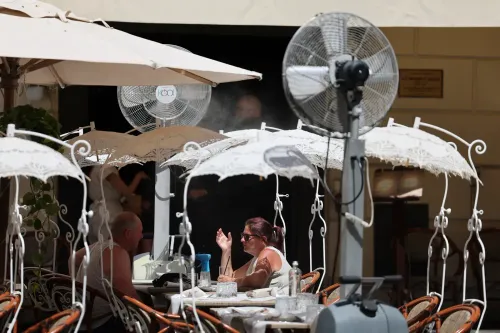
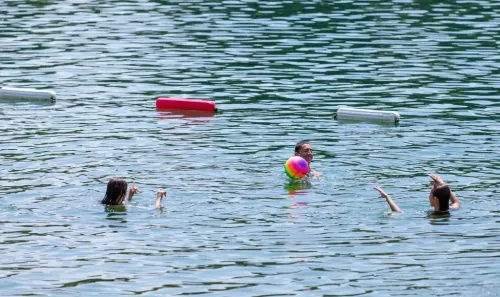
The fires coincide with the peak of a prolonged heatwave gripping the region. The Republic Hydrometeorological Service (RHMZ) forecast maximum temperatures of 35–40 degrees Celsius on Wednesday and Thursday, with tropical nights — where overnight temperatures do not fall below 20°C — expected in Belgrade and the northern province of Vojvodina.
The extended drought has also severely lowered river levels across Serbia. The RHMZ warned that the Danube, Sava, and Tisa rivers are expected to remain below navigational thresholds in the coming days. Several smaller rivers have seen flows fall close to biological minimum levels following weeks of exceptionally dry weather — a threshold below which aquatic ecosystems face serious risk.
Part of a Wider European Crisis
Serbia's fires are not an isolated incident. The United Nations Economic Commission for Europe (UNECE) announced in late July that more than 434,000 hectares have already burned across Europe in 2026, according to the latest available data. Wildfires have simultaneously raged across parts of North America, collectively destroying forests, threatening communities, and releasing vast quantities of carbon into the atmosphere.
The UNECE noted that while many fires cannot be stopped once they reach full intensity, the 2026 fire season underscores that significantly more can be done to prevent future disasters through early intervention, land management, and climate adaptation measures.
What Comes Next
Emergency services across Serbia remain on high alert as the heatwave is forecast to persist through at least Thursday. The Deliblato Sands fire's trajectory will depend heavily on wind conditions, which initially caused the re-ignition. Environmentalists have flagged the repeated burning of the protected reserve as a long-term ecological concern, particularly given the slow regeneration rate of pine forests in semi-arid conditions.
Point of View
000 hectares burned in a single season, the UNECE's call for prevention over reaction is well-timed but structurally underresourced — most Balkan nations, including Serbia, rely on reactive emergency deployment rather than year-round landscape management. The drought-driven collapse of the Danube, Sava, and Tisa to below navigational minimums adds a second-order crisis that rarely gets coverage alongside the flames: inland waterway commerce and freshwater ecology are simultaneously under stress. The 2026 season may finally force a reckoning with whether Europe's fire-response architecture, built for a cooler, wetter climate, is fit for purpose.
NationPress
6 Aug 2026
Frequently Asked Questions
Where is the Deliblato Sands wildfire in Serbia?
The Deliblato Sands is a protected nature reserve in the southern Banat region of northeastern Serbia, approximately 60 km east of Belgrade. The wildfire there has burned around 300 hectares of pine forest as of 6 August 2026.
Why did the Deliblato Sands fire reignite?
The fire, which had been extinguished about 10 days earlier, reignited because ground-level embers continued to smoulder and were fanned back to life by strong winds. This is a known risk in pine forests during prolonged dry and hot conditions.
How serious is Serbia's heatwave in August 2026?
The Republic Hydrometeorological Service (RHMZ) has forecast maximum temperatures of 35–40 degrees Celsius for Wednesday and Thursday, with tropical nights expected in Belgrade and Vojvodina. The prolonged drought has also pushed the Danube, Sava, and Tisa rivers below navigational thresholds.
How many hectares have burned across Europe in 2026?
According to the United Nations Economic Commission for Europe (UNECE), more than 434,000 hectares had already burned across Europe in 2026 as of late July, making it one of the most destructive fire seasons on record for the continent.
Are any homes or buildings at risk from the Serbia wildfire?
As of 6 August 2026, Serbian authorities confirmed that no buildings were under immediate threat from the Deliblato Sands fire. However, emergency services remain deployed and conditions could change with shifting winds and continued high temperatures.