Did Sheikh Hasina Blame Yunus for Her Ouster and Claim Bangladesh is in an 'Age of Terror'?
Synopsis
In her latest audio message, former Prime Minister Sheikh Hasina condemns the interim government led by Muhammad Yunus, asserting that Bangladesh is trapped in an 'age of terror.' Amid calls for unity against the unlawful regime, Hasina outlines a five-point agenda to restore democracy and national sovereignty ahead of the upcoming elections.
Key Takeaways
Sheikh Hasina criticizes the Yunus administration for creating an environment of fear and instability.
Alleges systematic persecution of minorities and political opponents.
Proposes a five-point agenda to restore democracy and national sovereignty.
Calls for unity among democratic and progressive forces.
Urges the UN for an impartial investigation into state abuses.
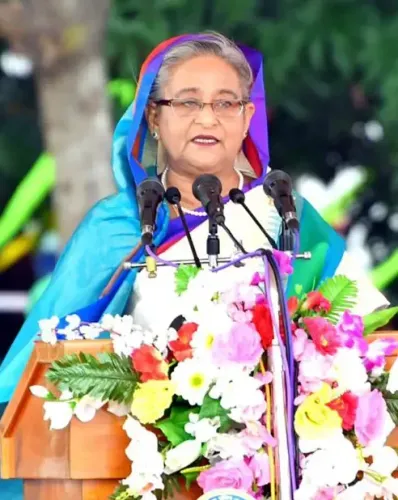
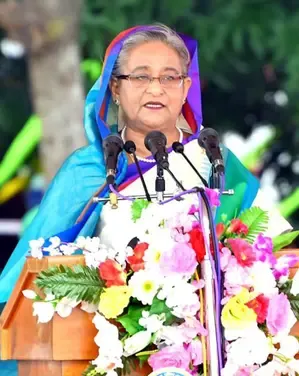
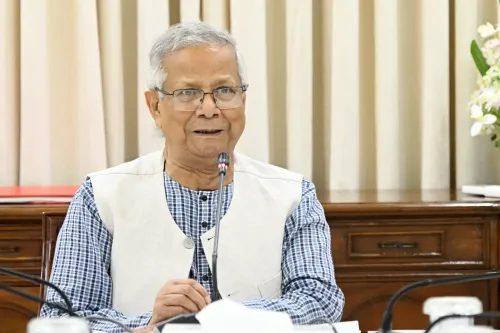
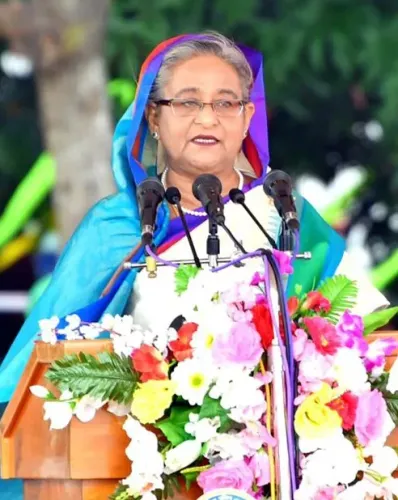
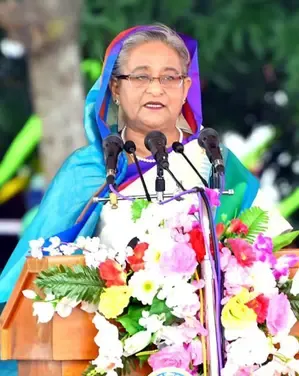
New Delhi, Jan 23 (NationPress) Bangladesh’s former Prime Minister Sheikh Hasina has harshly criticized Dhaka’s interim government, led by Muhammad Yunus, accusing it of leading the nation into “an era of terror” and labeling the Chief Adviser as a “murderous fascist”.
In a poignant 10-minute audio message shared during a media event organized by Awami League (AL) leaders at the Foreign Correspondents’ Club of South Asia in central Delhi on Friday, the ousted leader depicted Bangladesh as “bleeding” and teetering “on the brink of an abyss”.
Reflecting on the legacy of her father, Sheikh Mujibur Rahman, regarded as the architect of Bangladesh, the 78-year-old AL leader claimed that the nation, born from the Liberation War of 1971, has devolved into “a vast prison, an execution ground, a valley of death”.
Addressing her compatriots, Hasina, who has been in exile in India since August 2024 following her ousting amid widespread protests, positioned her comments as a strong rebuke to the current administration and a call to action for her supporters.
She alleged that Yunus and his associates conspired to remove her, overseeing rampant lawlessness, minority persecution, and politically motivated legal actions against her party.
In her statements, Hasina leveled serious accusations against Yunus, referring to him as a “murderous fascist”, a “usurer”, and a “money launderer”. She claimed his interim government has exploited the nation’s resources and undermined Bangladesh’s sovereignty.
Hasina further accused the interim administration of inciting mob violence, looting, and targeted assaults on vulnerable communities, employing the legal system to stifle political dissent.
She reiterated that her ousting on August 5, 2024, was a “meticulously orchestrated conspiracy”, asserting that since that time, the nation has been engulfed in fear and instability.
While blaming Yunus for her removal, Hasina asserted that Bangladesh has been enduring “an age of terror”. She contended that the existing climate renders free and fair elections unattainable unless the Yunus administration is dismantled or its power curtailed.
Facing a death sentence, the ousted leader proposed a five-point agenda deemed essential for “healing” Bangladesh. These demands included the dismissal of what she termed the illegitimate Yunus government, cessation of street violence and lawlessness, robust protections for minorities and women, an end to politically driven prosecutions, and a fair international investigation into the past year’s events.
She implored democratic, progressive, and pro-Liberation forces to unite behind the Awami League to restore the constitution and reclaim national sovereignty.
Hasina reiterated her allegations that the interim government has engaged in “lawfare” — using legal mechanisms to intimidate and imprison political adversaries — and called for a return to judicial impartiality.
She urged the United Nations to undertake a new, impartial inquiry into the circumstances surrounding her ousting and the ensuing chaos, positing that only an international investigation can properly document what she termed state-sanctioned abuses.
Her address aimed to galvanize the Awami League’s base and frame the party’s struggle as a continuation of the Liberation War’s legacy. Hasina frequently invoked the language and symbols of 1971, concluding with chants of “Joy Bangla” and references to Mujibur Rahman’s memory.
This address was made at a politically sensitive juncture, with national elections scheduled for February 12, and the AL barred from participating under current regulations.
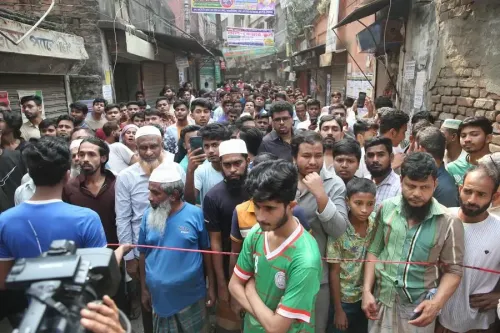
Human rights organizations and international observers have previously expressed concerns regarding restrictions on press freedoms and civil liberties in Bangladesh since 2024. Hasina’s remarks intensified those concerns by alleging systematic minority persecution and targeted violence across the nation.
Point of View
It is essential to maintain an unbiased perspective. Sheikh Hasina's recent statements reflect deep political unrest in Bangladesh. While her allegations against the interim government raise significant concerns, it is crucial to consider multiple viewpoints and ensure that all sides of the political spectrum are represented in this ongoing narrative.
NationPress
26 Sept 2026
Frequently Asked Questions
What are Sheikh Hasina's main accusations against Muhammad Yunus?
Sheikh Hasina accuses Muhammad Yunus of orchestrating her ouster and leading the country into an age of terror, labeling him a murderous fascist and claiming his administration engages in widespread lawlessness and persecution of political opponents.
What is Hasina's agenda for Bangladesh?
Hasina has proposed a five-point agenda that includes the removal of the Yunus administration, ending violence and lawlessness, protecting minorities and women, halting politically motivated prosecutions, and conducting an impartial international investigation into recent events.
What is the political situation in Bangladesh ahead of the elections?
The political climate in Bangladesh is tense, with national elections scheduled for February 12, and the Awami League being barred from contesting under current restrictions, raising concerns about the integrity of the electoral process.