Somalia kills 16 al-Shabaab militants, destroys Radio Andalus hub in twin ops
Synopsis
Somalia's intelligence agency didn't just kill militants — it went after al-Shabaab's voice. The destruction of Radio Andalus infrastructure and the elimination of its propaganda chief in a single Saturday operation signals a deliberate shift toward targeting the group's information warfare capacity, not just its fighters.
Key Takeaways
NISA and international partners killed 16 al-Shabaab militants in operations on 26 July across Middle Shabelle and Hiran regions.
Abdisamad Mohamed , head of al-Shabaab's Radio Andalus propaganda unit, was killed; operative Ali Salad was also eliminated.
The 'Security House' facility storing Radio Andalus equipment was destroyed, along with enemy vehicles and military hardware.
A second operation in Tardo, Hiran disrupted al-Shabaab fighters mobilising for attacks on Goobo and Waabweyn .
Last month, Somali forces killed 35 militants in Godey airstrikes, injuring 20 others and destroying weapons stockpiles.
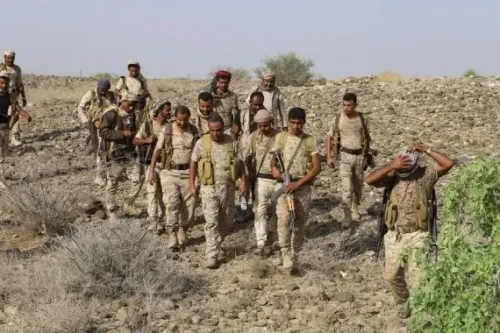
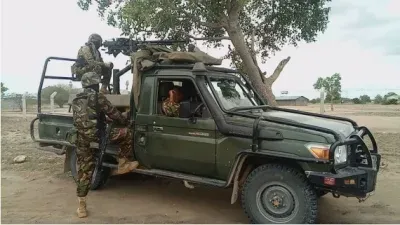
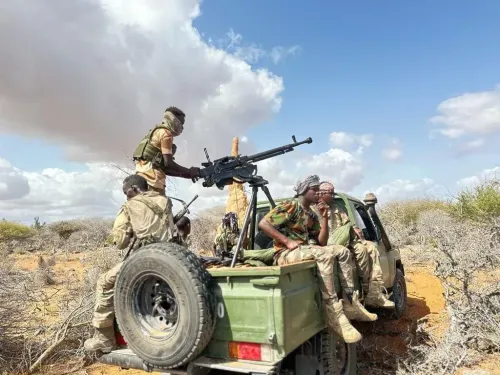
Somalia's National Intelligence and Security Agency (NISA), operating alongside international partners, killed 16 al-Shabaab militants — including two senior operatives — in coordinated strikes across Middle Shabelle and Hiran regions on Saturday evening, 26 July. The operations mark one of the most targeted blows against the militant group's propaganda and logistics infrastructure in recent months.
Key Developments
The first strike hit a facility in the Miirtaqwo area of Middle Shabelle, specifically targeting an al-Shabaab installation described as a 'Security House' that stored equipment for Radio Andalus — the group's primary propaganda broadcast arm. Abdisamad Mohamed, head of the Radio Andalus propaganda unit, was killed in the raid alongside operative Ali Salad. A third member was seriously injured. Broadcasting equipment belonging to Radio Andalus was also destroyed in the strike.
Second Operation: Hiran Region
A subsequent operation in the Tardo area of Hiran targeted al-Shabaab fighters who were reportedly mobilising for planned attacks on the towns of Goobo and Waabweyn. According to NISA, both operations resulted in the destruction of key enemy vehicles and military equipment, disrupting imminent attack preparations.
What NISA Said
'These operations are part of ongoing efforts to dismantle al-Shabaab and destroy the facilities and equipment used to carry out terrorist acts,' NISA said in an official statement. Security analysts noted that targeting the Radio Andalus infrastructure is significant — the station has long served as a recruitment and radicalisation tool across Somalia's conflict zones.
Pattern of Escalating Pressure
This is not an isolated surge. Last month, the Somali National Army, backed by international security partners, conducted a series of airstrikes in the Godey area of southern Somalia, killing 35 al-Shabaab militants and injuring 20 others, according to the Ministry of Defence. Those strikes targeted the group's cave networks, weapons caches, and hideouts, triggering secondary explosions that indicated the presence of hidden stockpiles, explosive materials, and vehicles loaded with explosives prepared for use in attacks. Security experts say the cumulative operations reflect a deliberate strategy to degrade al-Shabaab's operational and communications capacity across multiple fronts simultaneously.
What Comes Next
With Radio Andalus equipment destroyed and two of its key figures eliminated, analysts expect al-Shabaab's propaganda output to face short-term disruption. However, the group has historically reconstituted such capabilities. NISA's continued reliance on international partners signals that Somalia's security forces, while increasingly assertive, still require external support to sustain pressure on al-Shabaab's dispersed networks in the country's most volatile regions.
Point of View
And dismantling it — if the destruction is thorough — could slow radicalisation pipelines more effectively than kinetic strikes alone. Yet Somalia has announced similar operational successes before, and al-Shabaab has consistently rebuilt. The deeper question is whether NISA and its international partners have a plan to hold cleared areas and deny the group the space to reconstitute, or whether these remain high-impact but episodic raids in a war of attrition that has favoured the insurgency's resilience for over a decade.
NationPress
25 Oct 2026
Frequently Asked Questions
What happened in Somalia's latest operation against al-Shabaab?
Somalia's NISA, supported by international partners, killed 16 al-Shabaab militants in joint operations on 26 July targeting the Miirtaqwo area of Middle Shabelle and the Tardo area of Hiran. Two senior operatives were among those killed, and key enemy vehicles and equipment were destroyed.
Who was Abdisamad Mohamed?
Abdisamad Mohamed was the head of al-Shabaab's Radio Andalus propaganda unit, killed during the Miirtaqwo operation on 26 July. Radio Andalus is the militant group's primary broadcast platform used to spread extremist content and recruit fighters across Somalia.
What is Radio Andalus and why does its destruction matter?
Radio Andalus is al-Shabaab's propaganda radio station, used to broadcast extremist ideology and coordinate recruitment. The destruction of its equipment and the killing of its unit head represent a blow to the group's information warfare capacity, though analysts caution the group has rebuilt such assets before.
How does this operation fit into Somalia's broader counter-terrorism campaign?
It follows a series of escalating strikes, including airstrikes last month in the Godey area of southern Somalia that killed 35 militants and destroyed weapons caches. Security experts say the pattern reflects a coordinated effort to degrade al-Shabaab's networks, logistics, and communications simultaneously.
What areas were targeted and why?
Operations targeted Miirtaqwo in Middle Shabelle, where al-Shabaab's Radio Andalus facility was located, and Tardo in Hiran, where militants were reportedly mobilising for attacks on Goobo and Waabweyn. Both regions are among Somalia's most volatile, with persistent al-Shabaab activity.