South Korea strips prosecutors of investigation powers in landmark legal reform
Synopsis
South Korea has fundamentally redrawn its criminal justice landscape — prosecutors lose direct investigative powers entirely, with the police taking sole authority. President Lee Jae Myung signed off on the reform despite a fierce opposition boycott, framing it as the end of decades of prosecutorial overreach. The real test now is whether the police can handle the load without creating new accountability gaps.
Key Takeaways
South Korea's Cabinet approved a revision to the Criminal Procedure Act on 4 August , abolishing prosecutors' authority to conduct direct investigations.
President Lee Jae Myung called the reform 'the beginning of judicial normalisation' and is set to sign it into law.
Investigative authority now rests solely with the police ; prosecutors may only request supplementary investigations, which police have up to two months to complete.
The main opposition People Power Party (PPP) boycotted the National Assembly vote and urged a presidential veto, arguing the law would benefit criminals.
Lee acknowledged potential unintended consequences and instructed officials to build complementary oversight systems for police investigations.
The Cabinet also addressed South Korea's heat wave crisis, with temperatures exceeding 40°C , ordering emergency protections for outdoor workers and vulnerable citizens.
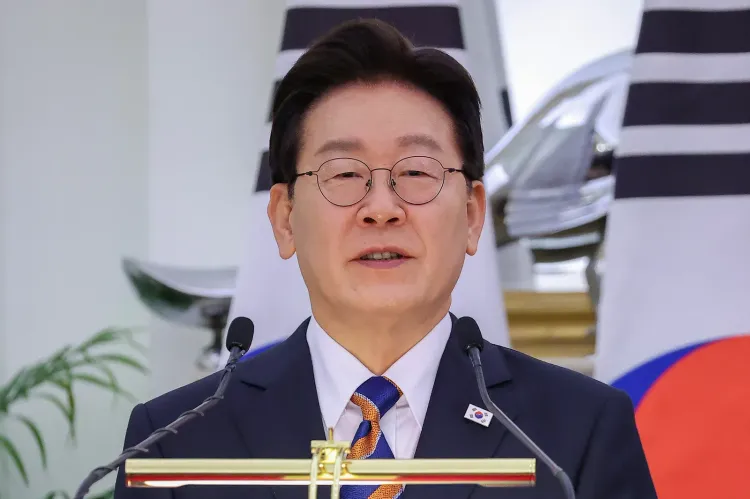
South Korea's Cabinet on Tuesday, 4 August approved a landmark revision to the Criminal Procedure Act that strips prosecutors of their authority to conduct direct investigations, transferring investigative powers exclusively to the police. President Lee Jae Myung, who presided over the Cabinet meeting, hailed the move as 'the beginning of judicial normalisation.'
What the Reform Changes
The revised law removes prosecutors' right to conduct direct investigations — including supplementary investigations — leaving the police as the sole investigative authority. Should a supplementary investigation be required, the prosecution may request the police to carry it out; the police will then have up to two months to complete such investigations. The revision passed through the National Assembly last week in a vote boycotted by the main opposition People Power Party (PPP).
What President Lee Said
'Separating investigations from indictments is the starting point for normalising the abnormal criminal justice system,' Lee said at the opening of the Cabinet meeting. He defended the revision against opposition calls for a presidential veto, arguing that such a veto is warranted only when the constitutional order is at risk or the separation of powers is threatened. 'There were many controversies, but it is difficult to view this as a serious enough situation where this revision can be viewed unconstitutional,' he said.
Lee further asserted that prosecutors had exercised 'excessive' authority — spanning indictments to the right to request court warrants — over several decades, resulting in what he described as an abnormal system in which prosecutorial power was sometimes abused to shield or target certain cases.
Opposition Pushback
One day before the Cabinet approval, the PPP held a meeting of its Supreme Council just outside Cheong Wa Dae, urging the president to veto the revision. The party argued the law would primarily benefit criminals by weakening the prosecution's investigative reach. The PPP's boycott of the National Assembly vote underscores the deep partisan divide over the reform.
Safeguards and Accountability
Acknowledging that transferring investigative authority solely to the police could create unintended consequences, Lee instructed officials to devise complementary systems to ensure transparency and capability in police investigations. He called on prosecutors to remain 'more faithful than ever' to their role as defenders of public interest and human rights, while urging police to eradicate internal irregularities and strengthen victim protection. 'No reform can be completed easily through the change of a single system,' he stressed.
Heat Wave Emergency Also Addressed
The Cabinet meeting also took up South Korea's ongoing heat wave crisis. Many parts of the country recorded temperatures exceeding 40°C as of Monday. Lee directed officials to treat the situation as a 'state disaster,' expand heat shelters, ensure workers' right to suspend work in excessive heat, and provide special protection for underprivileged citizens and outdoor labourers.
With the revision now set to be signed into law, attention shifts to implementation — and whether the police can absorb expanded investigative responsibilities without the accountability gaps that critics fear.
Point of View
Well-resourced police investigative infrastructure is a leap of faith. South Korea's police have their own history of accountability concerns, and concentrating investigative power there without robust civilian oversight could simply relocate the problem rather than solve it. President Lee's own caveat about 'unintended consequences' is the most honest line in the entire announcement — and also the one that deserves the most scrutiny as implementation begins.
NationPress
4 Aug 2026
Frequently Asked Questions
What does South Korea's Criminal Procedure Act revision do?
The revision strips prosecutors of their authority to conduct direct investigations, including supplementary investigations, transferring investigative powers exclusively to the police. If a supplementary investigation is needed, prosecutors must request the police to carry it out, and the police have up to two months to complete it.
Why did President Lee Jae Myung support the reform?
President Lee argued that prosecutors had exercised 'excessive' authority over several decades, leading to an abnormal criminal justice system where prosecutorial power was sometimes abused. He described separating investigations from indictments as 'the starting point for normalising the abnormal criminal justice system.'
Why did the People Power Party oppose the revision?
The People Power Party boycotted the National Assembly vote and urged President Lee to veto the bill, arguing it would primarily benefit criminals by weakening the prosecution's investigative reach. The party held a Supreme Council meeting outside Cheong Wa Dae the day before Cabinet approval to press for a veto.
Will the president veto the bill?
No. President Lee stated that a presidential veto is warranted only when the constitutional order is at risk or the separation of powers is threatened, and concluded the revision does not meet that threshold. He is expected to sign the bill into law.
What safeguards are being put in place after the reform?
President Lee acknowledged the risk of unintended consequences and instructed officials to devise complementary systems to ensure transparency and capability in police investigations. He also called on police to eradicate internal irregularities and strengthen victim protection as they take on expanded investigative responsibilities.