South Korea early voting hits 15.38% ahead of June 3 local elections
Synopsis
South Korea's early voting for the June 3 local elections has already drawn over 6.86 million voters — a turnout rate higher than the 2022 equivalent — as tightening races in Seoul, Busan, and Daegu and a high-profile set of parliamentary by-elections turn this into the most consequential electoral test for the Lee administration since it came to power.
Key Takeaways
More than 6.86 million voters — 15.38 per cent of 44.6 million registered voters — cast early ballots by 11 am on 31 May , surpassing the 13.65 per cent recorded at the same point in 2022 .
The June 3 elections will decide 16 mayoral and gubernatorial posts , 227 local government heads, and around 4,000 council seats.
In Seoul , DP candidate Chong Won-o leads PPP incumbent Oh Se-hoon by 42% to 36% , according to a Hankook Research poll.
In Daegu , PPP's Choo Kyung-ho leads DP's Kim Boo-kyum by a razor-thin 47.1% to 45.7% .
14 National Assembly seats are also being contested, with former PPP leader Han Dong-hoon running as an independent in Busan's Buk-A constituency.
An NEC survey found 73.6 per cent of respondents said they would 'definitely vote' on June 3.
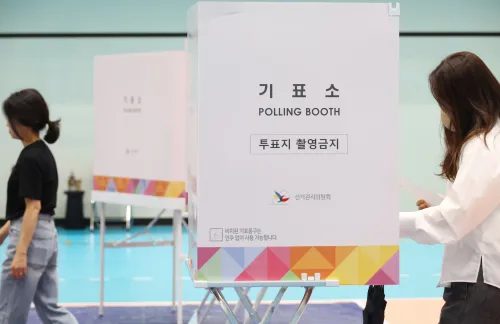
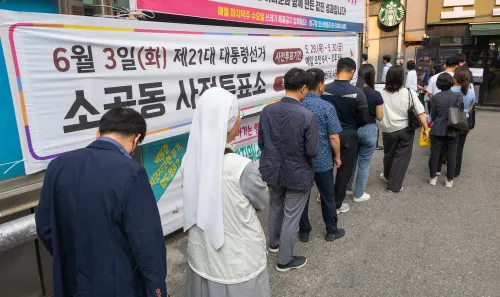
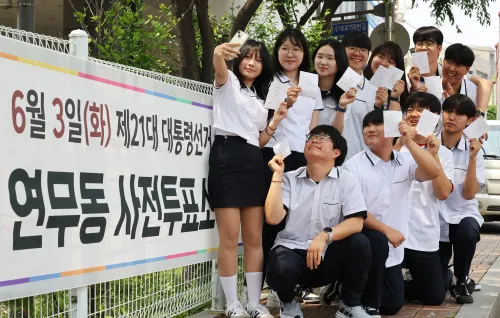
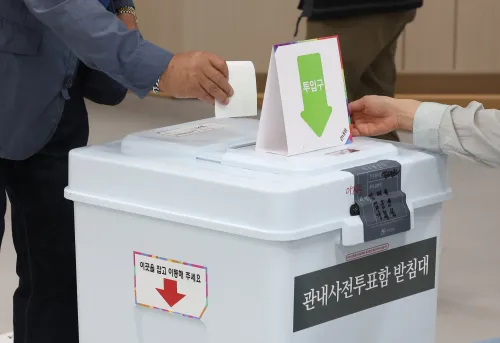
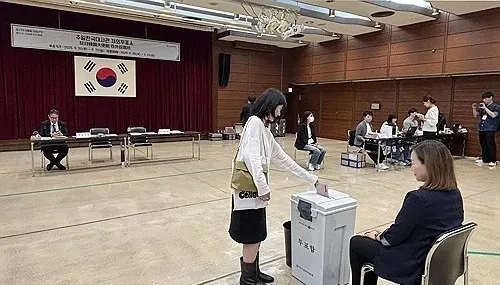
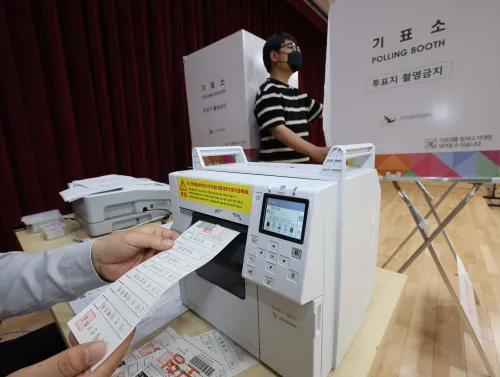
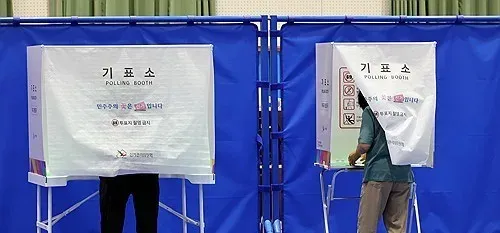
Voters across South Korea turned out in large numbers on Saturday, 31 May 2025, for the second and final day of early voting ahead of the June 3 nationwide local elections — a contest that will determine the next mayors and governors of major cities including Seoul and Busan. More than 6.86 million people, representing 15.38 per cent of the country's 44.6 million registered voters, had already cast ballots by 11 am, according to the National Election Commission (NEC).
Turnout Outpaces 2022 Elections
The early voting participation rate surpassed the 13.65 per cent recorded at the same point during the 2022 local elections, signalling heightened public interest in a vote widely regarded as the first major electoral test for the Lee administration since it assumed office last June. President Lee and first lady Kim Hea Kyung cast their early votes on Friday at a community centre near Cheong Wa Dae.
On social media platform X, President Lee urged citizens to participate, calling voting the 'lifeline' of democracy. 'Giving up voting is the same as giving up your and your family's future,' he wrote. 'Abstaining from voting is not being neutral but siding with those who harm your life and community.'
What Is at Stake on June 3
The elections will decide 16 mayoral and gubernatorial posts, 227 heads of local governments, and approximately 4,000 local council seats. Alongside these, 14 vacant National Assembly seats are being contested in parliamentary by-elections, drawing prominent political figures into the fray.
The vote takes on added significance as it is the first nationwide electoral verdict since former President Yoon Suk Yeol was removed from office following his failed martial law bid. Both the ruling Democratic Party (DP) and the main opposition People Power Party (PPP) have intensified their voter outreach, with recent surveys indicating races tightening across more regions than initially anticipated.
Key Contests to Watch
The Seoul mayoral race has emerged as the most closely watched battle, pitting incumbent Oh Se-hoon of the PPP against ruling party candidate Chong Won-o. A Hankook Research poll released Monday showed Chong leading with 42 per cent against Oh's 36 per cent.
In Daegu, a traditional conservative stronghold, PPP candidate Choo Kyung-ho holds a narrow edge over DP candidate Kim Boo-kyum — 47.1 per cent to 45.7 per cent — according to an Ace Research survey commissioned by Daegu MBC and conducted Monday and Tuesday.
In Busan, South Korea's second-largest city, DP candidate Chun Jae-soo was leading PPP incumbent Park Heong-joon — who is seeking a third term — across multiple polls released this week.
National Assembly By-Elections Add Intrigue
The parliamentary contests are drawing national attention, particularly in Busan's Buk-A constituency, where independent candidate Han Dong-hoon, former leader of the PPP, is competing against Ha Jung-woo, former presidential secretary for artificial intelligence policy and future planning, and former PPP lawmaker Park Min-shik.
An NEC survey released last Thursday found that 73.6 per cent of respondents said they would 'definitely vote' in the elections, with 39.4 per cent indicating they intended to vote during the early voting period — a figure that early turnout data appears to be validating.
What Comes Next
With early voting concluded, all eyes now shift to June 3, when the full electorate heads to the polls. The results will be closely read as a barometer of public sentiment toward the Lee government and the broader balance of power between the DP and the PPP heading into the next legislative cycle.
Point of View
Not a routine local vote. The tightening in Daegu — historically a PPP fortress — is particularly significant: if the DP can contest a conservative stronghold this closely, it suggests the PPP's base is more fractured than its leadership has acknowledged. The Seoul race, meanwhile, is a test of whether incumbency still counts when the political wind has shifted. With Han Dong-hoon running as an independent in Busan, the by-elections also risk accelerating the PPP's internal fragmentation regardless of outcome.
NationPress
26 Sept 2026
Frequently Asked Questions
When are South Korea's local elections in 2025?
South Korea's nationwide local elections are scheduled for June 3, 2025 . They will determine mayors, governors, and local council members across the country, along with filling 14 vacant National Assembly seats.
What is the early voting turnout for the June 3 South Korea elections?
More than 6.86 million people , or 15.38 per cent of registered voters, had cast early ballots by 11 am on the second day of early voting — higher than the 13.65 per cent recorded at the same stage of the 2022 local elections.
Who is running in the Seoul mayoral election 2025?
The Seoul mayoral race is a contest between PPP incumbent Oh Se-hoon and DP candidate Chong Won-o . A Hankook Research poll released Monday showed Chong leading with 42 per cent against Oh's 36 per cent.
Why are the June 3 elections significant for President Lee?
The June 3 elections are widely viewed as the first major nationwide electoral test for the Lee administration , which took office after former President Yoon Suk Yeol was removed following his failed martial law bid. The results will indicate the level of public support for the ruling Democratic Party.
Who is Han Dong-hoon and why is his candidacy notable?
Han Dong-hoon is the former leader of the People Power Party who is now running as an independent candidate in Busan's Buk-A constituency . His candidacy is notable because it reflects internal divisions within the PPP and puts a high-profile figure outside the main party structure for the first time.