South Korea DP leader Kim Min-seok steps up unity drive amid factional rift
Synopsis
South Korea's new Democratic Party chief Kim Min-seok is betting on symbolic politics — grave visits, cross-faction dinners, and pledges of a '20 to 30 year golden era' — to paper over a factional rupture that his own leadership race exposed. Whether the optics hold when real policy decisions land is the central question for the DP's near-term cohesion.
Key Takeaways
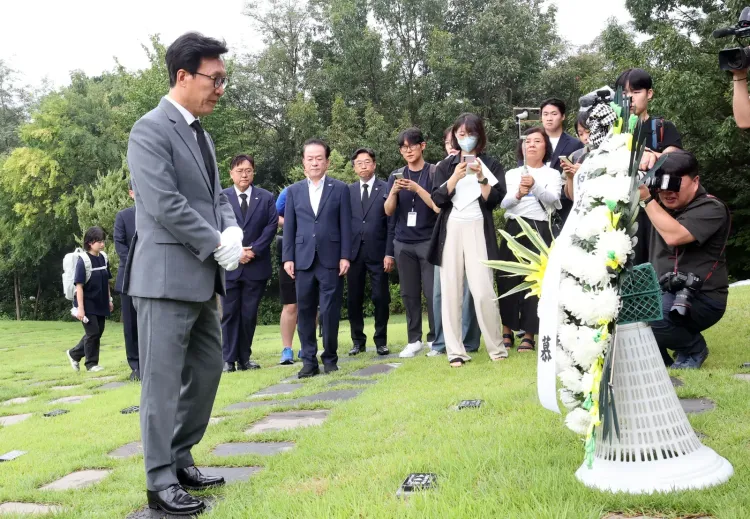
Kim Min-seok , the new Democratic Party (DP) leader, launched a reconciliation tour on 20 August , visiting graves of former liberal leaders in Sejong and Gyeonggi Province .
He pledged to build a 'golden era of 20 or 30 years' of successive DP administrations.
Factional tensions stem from the leadership race between allies of President Lee Jae Myung and supporters of former leader Jung Chung-rae .
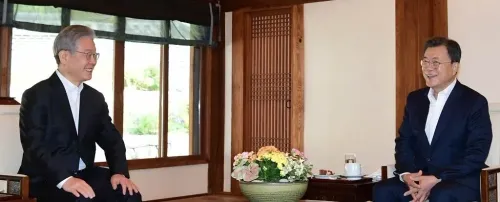
Earlier in the week, Kim paid respects to former presidents Kim Dae-jung and Roh Moo-hyun and met former President Moon Jae-in in Yangsan .
Kim attended a unity dinner hosted by President Lee with rivals Jung and Song Young-gil — a visible signal of attempted reset.
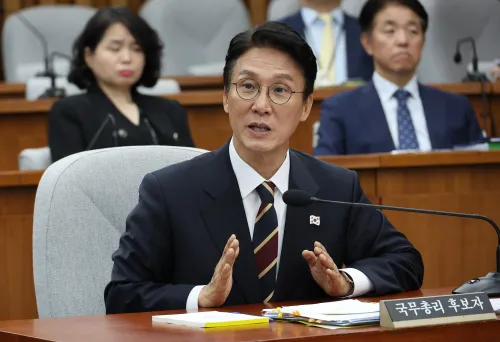
Kim Min-seok, the newly elected leader of South Korea's ruling Democratic Party (DP), intensified efforts on Thursday, 20 August to heal deep factional divisions within the party, embarking on a symbolic pilgrimage to the graves of key liberal figures as part of a deliberate reconciliation campaign.
Tribute Tour as a Unity Signal
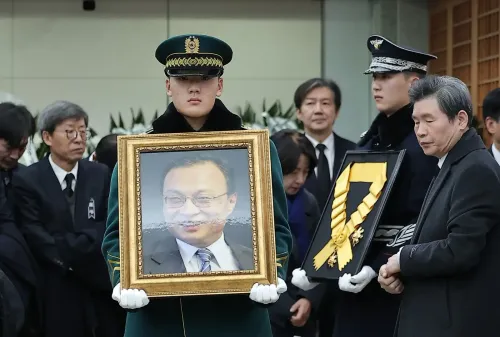
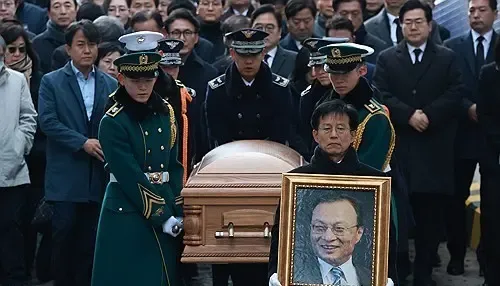
Kim visited the grave of former Prime Minister Lee Hae-chan in the central city of Sejong before travelling to Gyeonggi Province to pay his respects to Kim Geun-tae, the late former democracy activist-turned-politician. The back-to-back tributes were widely read as a message to the party's competing factions that the new leadership intends to draw on the full breadth of the DP's liberal heritage.
'We will go beyond simply winning a single parliamentary election and lay the groundwork for successive DP administrations with the aim of achieving a golden era of 20 or 30 years,' Kim told reporters after paying tribute to Lee. 'We will carry on the legacy of former Prime Minister Lee.'
The Fault Lines He Is Navigating
The unity drive comes against the backdrop of lingering tensions exposed during the recent DP leadership race — chiefly between factions aligned with President Lee Jae Myung and supporters of former DP leader Jung Chung-rae. Rep. Jung, who had sought a second consecutive term as party leader, faced criticism from some pro-Lee members who argued he prioritised the party's hard-line base over close coordination with the president on key policy issues.
Notably, the rift is not merely personal — it reflects a broader strategic debate within the DP about how aggressively to push its legislative agenda versus consolidating support ahead of the next electoral cycle.
A Week of Symbolic Outreach
Kim's reconciliation efforts began earlier in the week. On Tuesday, he paid respects to late former President Kim Dae-jung. The following day, he visited the grave of late former President Roh Moo-hyun in South Gyeongsang Province and met with former President Moon Jae-in in the southeastern city of Yangsan, where he reportedly pledged to 'heal internal wounds.' That evening, he attended a dinner hosted by President Lee alongside his former leadership rivals, Jung and Song Young-gil — a rare show of collective presence that insiders described as a deliberate reset.
What Comes Next
Whether symbolic gestures translate into durable cohesion will depend on how Kim manages policy differences and patronage within the DP's competing wings. The party's ability to project unity is seen as critical heading into the next parliamentary cycle, where a fractured ruling bloc could hand the opposition leverage. Political analysts will be watching whether the dinner diplomacy of this week yields any structural changes in how the DP coordinates between the presidency and its legislative leadership.
Point of View
But the real test will come when the party must take a unified stance on contentious legislation or cabinet appointments. South Korean ruling parties have a documented history of factional implosions that symbolic unity campaigns failed to prevent. Kim's '20 to 30 year golden era' framing is ambitious; translating it into organisational discipline is the harder task.
NationPress
20 Aug 2026
Frequently Asked Questions
Who is Kim Min-seok and why is he significant?
Kim Min-seok is the newly elected leader of South Korea's ruling Democratic Party (DP). His election matters because he inherited a party divided between factions loyal to President Lee Jae Myung and those aligned with former leader Jung Chung-rae, making internal unity his most immediate challenge.
What is the nature of the factional tension inside the Democratic Party?
The rift centres on supporters of President Lee Jae Myung versus backers of former DP leader Jung Chung-rae. Pro-Lee members reportedly criticised Jung for prioritising the party's hard-line base over coordinating with the president on key issues, a tension that surfaced sharply during the recent leadership contest.
What symbolic steps has Kim Min-seok taken to promote unity?
Since taking office, Kim has visited the graves of former Prime Minister Lee Hae-chan, former presidents Kim Dae-jung and Roh Moo-hyun, and met former President Moon Jae-in in Yangsan. He also attended a unity dinner hosted by President Lee alongside his former rivals Jung Chung-rae and Song Young-gil.
What did Kim Min-seok say about the party's future direction?
Kim told reporters he aims to go beyond winning a single parliamentary election and instead build the foundation for successive DP administrations, describing his goal as achieving a 'golden era of 20 or 30 years.' He also pledged to carry on the legacy of former Prime Minister Lee Hae-chan.
Why does DP unity matter for South Korean politics?
As the ruling party, the DP's internal cohesion directly affects its ability to govern and legislate effectively. A fractured ruling bloc risks handing the opposition leverage in parliament and could undermine President Lee Jae Myung's policy agenda ahead of the next electoral cycle.