Will South Korea's Former President Yoon Face 10 Years in Prison for Obstruction of Justice?
Click to start listening
Synopsis
In a significant legal development, a special counsel in South Korea has called for a 10-year prison sentence for former President Yoon Suk Yeol, highlighting serious charges of obstruction of justice linked to his controversial martial law declaration. This case raises critical questions about political accountability in the nation.
Key Takeaways
- 10-year prison term requested for Yoon Suk Yeol.
- Charges include obstruction of justice and violation of rights.
- Trial verdict expected on January 16.
- Potential implications for political accountability in South Korea.
- Yoon's defense claims martial law was legitimate.
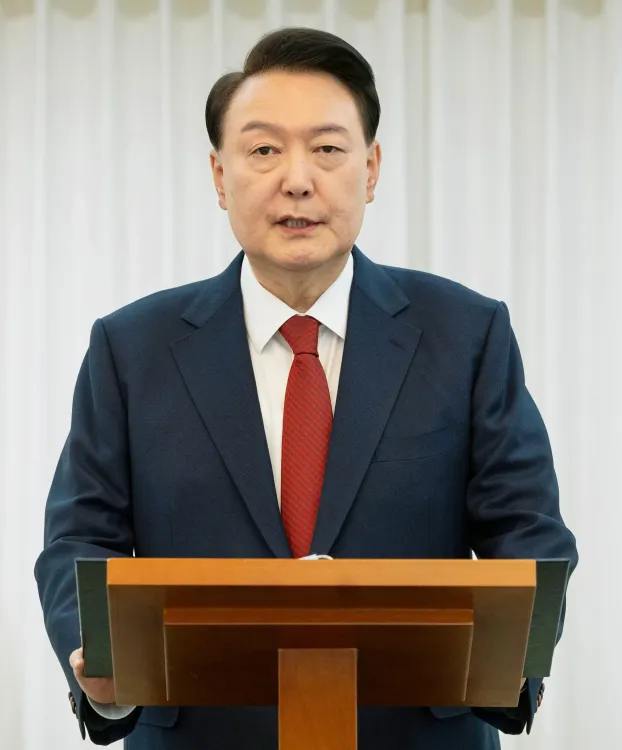
Seoul, Dec 26 (NationPress) A special counsel team has requested a 10-year prison sentence for ex-President Yoon Suk Yeol due to obstruction of justice and various charges linked to his December 2024 martial law declaration.
During the final proceedings of Yoon's trial at the Seoul Central District Court, special counsel Cho Eun-suk stated that the former president committed a serious offense by 'privatizing' state institutions to cover up and rationalize his illegal actions, as reported by Yonhap News Agency.
This request marks the first sentencing recommendation stemming from his four trials concerning martial law-related allegations.
A member of the counsel asserted, 'The defendant's unlawful actions severely undermined law and order in the Republic of Korea and caused substantial harm to the citizens who placed their trust in him.' They noted that instead of expressing remorse or an apology during the trial, Yoon continuously defended the validity of his martial law declaration.
The trial focuses on accusations that Yoon obstructed justice by impeding investigators from detaining him in January, violating the rights of nine Cabinet members excluded from discussions about his martial law strategy, and improperly modifying and destroying a revised proclamation after the decree was rescinded.
Additionally, he faces charges for directing the dissemination of misleading press releases about the martial law and for erasing records from secure devices used by military commanders at the time.
For these charges, the special counsel proposes a total of ten years: five years for obstructing his own detention, three years for violating Cabinet members' rights, distributing falsehoods to foreign media, and destroying phone records, and two years for drafting the revised proclamation.
'To restore the Constitution and uphold legal standards damaged by the defendant, as well as to avert future abuses of power by high-ranking officials in Korea's history, we must demand stringent accountability,' expressed a member of the special counsel.
Yoon is concurrently involved in three other trials related to his unsuccessful martial law declaration, including accusations of leading an insurrection.
The obstruction of justice trial is set to conclude first, with a verdict expected on January 16, just two days before Yoon's arrest period is due to end.
While Yoon's legal team contended that the verdict should be delivered only after the insurrection trial, the judge rejected this argument.
The insurrection trial is anticipated to conclude in early January, potentially leading to a verdict around February.
Point of View
I must emphasize that the unfolding legal proceedings against former President Yoon Suk Yeol represent a crucial moment in South Korea's commitment to justice and accountability. It is vital that we uphold the rule of law and ensure that all leaders are held responsible for their actions, reflecting the values of democracy that our nation cherishes.
NationPress
08/01/2026
Frequently Asked Questions
What charges is former President Yoon Suk Yeol facing?
Former President Yoon Suk Yeol is facing charges of obstruction of justice, violation of Cabinet members' rights, and issuing false press statements related to his martial law declaration.
What is the potential sentence Yoon could face?
The special counsel has sought a 10-year prison sentence for Yoon Suk Yeol.
When is the verdict expected in Yoon's trial?
The court is expected to deliver a verdict on January 16.
What impact could this case have on South Korea's political landscape?
This case could set a significant precedent for political accountability in South Korea, affecting public trust in political leaders.
How has Yoon responded to the charges against him?
Yoon has maintained that his martial law declaration was legitimate and has not expressed remorse during the trial.