Will South Korea's Defence Ministry Dismantle the Counterintelligence Command Linked to Martial Law?
Synopsis
In a significant move, South Korea's Defence Ministry aims to disband the Defence Counterintelligence Command, which has been linked to former President Yoon Suk Yeol's controversial 2024 martial law attempt. This decision will mark the end of the command's nearly five-decade existence, reflecting ongoing reforms and accountability in the military sector.
Key Takeaways
The Defence Counterintelligence Command has been implicated in a controversial martial law attempt.
The command will be officially dismantled after 49 years of operation.
A new organization is being proposed to handle counterintelligence tasks more effectively.
Reforms are aimed at enhancing accountability and transparency in military operations.
The Defence Ministry is committed to completing the reform by the end of the year.
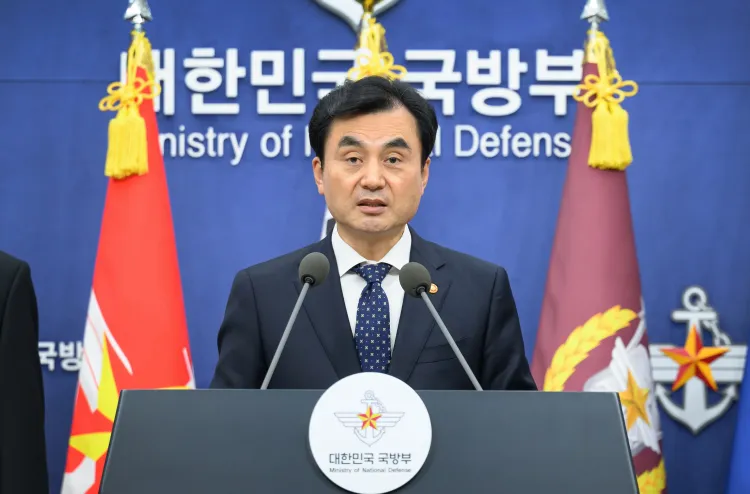
Seoul, Jan 8 (NationPress) The Ministry of National Defense in South Korea plans to disband the Defence Counterintelligence Command, which has been implicated in former President Yoon Suk Yeol's failed martial law attempt in 2024. This dissolution would conclude the command's operations after 49 years.
The command is believed to have significantly influenced Yoon's brief martial law declaration in December 2024, with its former leader currently facing trial for allegedly dispatching troops to both the National Assembly and the National Election Commission during the martial law attempt, as reported by Yonhap News Agency.
Despite undergoing multiple name changes under various administrations due to ongoing criticism regarding its powerful role, this marks the first occasion that the command will be dismantled since its inception in 1977, when it was formed to amalgamate the counterintelligence operations of the Army, Navy, and Air Force.
Hong Hyun-ik, the head of a special committee focused on reforming the command, stated, "We have proposed the constructive disbandment of the Defence Counterintelligence Command and the reassignment or removal of its current duties, including security investigations, counterintelligence, and security audits," during a briefing.
The committee, which includes military, governmental, and civilian members, has advised that a new, specialized organization be created to handle counterintelligence, counterterrorism, and intelligence related to the arms industry, according to Hong.
This initiative follows the defence ministry's efforts to revamp the military after the martial law attempt resulted in the removal of several top military officials, including former leaders of the counterintelligence and defence intelligence commands.
In a report presented to lawmakers last year, the ministry indicated that the counterintelligence command possesses "excessive" authority, ranging from intelligence acquisition to investigations, suggesting that its responsibilities should be refined to focus solely on counterintelligence.
In addition to the troop deploy on the evening of the martial law declaration, the command allegedly played a role in organizing the detention of approximately 10 significant politicians, including leaders from both the ruling and opposition parties, as well as the speaker of the National Assembly.
As part of the reform, the committee has recommended establishing a dedicated unit for personnel verification, while shifting the command's investigative roles to the ministry's current investigative headquarters. The committee also suggested that disputed responsibilities, such as gathering information on military personnel and trends, be eliminated.
To mitigate potential issues during the redistribution of functions across various units, the committee has called for the formation of a cooperative body to facilitate information sharing.
"The reform of the Defence Counterintelligence Command should aim to enhance the counterintelligence and security functions vital to national security, while upholding democratic control and constitutional principles," stated Hong.
The ministry intends to formulate detailed plans to implement the committee's recommendations and take necessary legal and organizational measures in stages, aiming to complete the reform by the year's end.
Point of View
It is our responsibility to ensure that the evolving narrative around South Korea's Defence Ministry and its military reforms is reported fairly and accurately. This disbandment reflects a broader commitment to transparency and accountability in governance, which is essential for maintaining public trust and upholding democratic values.
NationPress
24 Sept 2026
Frequently Asked Questions
What is the reason for dismantling the Defence Counterintelligence Command?
The decision to dismantle the Defence Counterintelligence Command is linked to its involvement in former President Yoon Suk Yeol's failed martial law attempt in 2024, reflecting a need for reform and accountability.
What will happen to the functions of the Defence Counterintelligence Command?
The functions of the command are expected to be reassigned or removed, with recommendations for a new specialized organization to handle counterintelligence and related areas.
What is the historical significance of this disbandment?
This marks the first time since its establishment in 1977 that the Defence Counterintelligence Command will be officially dismantled, highlighting a significant shift in military oversight and governance.
How will the reform impact military operations?
The reform aims to strengthen democratic control and enhance national security functions while redistributing responsibilities to ensure effective military operations without excessive authority.
When is the reform expected to be completed?
The Defence Ministry plans to carry out the reform in phases, with the goal of completing it by the end of the year.