How are Security Forces Erasing Maoist Ideology?
Synopsis
In a decisive move against Maoism, Indian security forces are racing towards a March 31 deadline set by Union Home Minister Amit Shah. The plan extends beyond mere elimination of Maoists to a systematic eradication of their ideology, raising significant questions about the future of such movements in India.
Key Takeaways
Security forces are targeting both Maoists and their ideology.
Different strategies are used for urban and rural operations.
Memorials for Maoist leaders are being dismantled.
Local support is crucial for the operations.
Intelligence agencies are vigilant about urban naxalite threats.
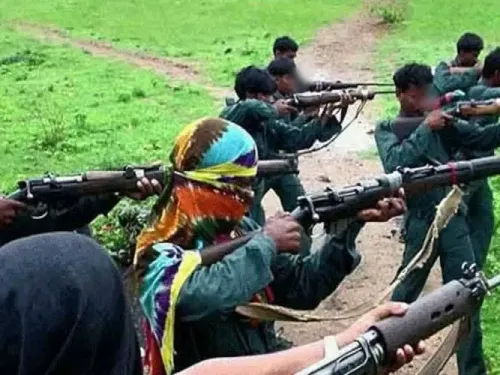
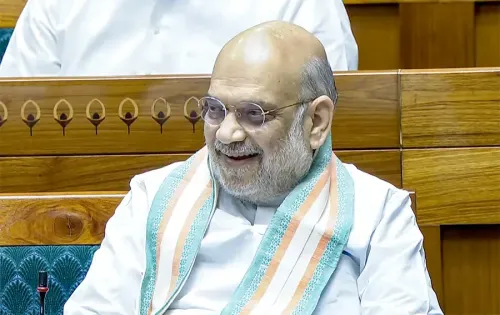
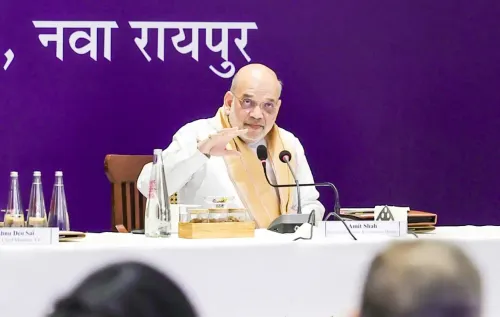
New Delhi, Feb 17 (IAN) The security forces are actively working towards achieving the March 31 target set by Union Home Minister Amit Shah to eliminate every Maoist presence in India.
As ground operations reach their final stages, the forces have initiated a crucial mission to ensure that the ideology associated with Maoism is completely eradicated.
A security official involved in these operations emphasized that this ideological battle is equally vital in combating the Maoists.
He noted that at times, the ideology can pose a greater threat, thus it must not be allowed to persist.
Efforts are ongoing both in urban and remote regions to obliterate the ideology behind the movement entirely.
The strategies employed differ for urban and rural settings, according to the officer.
Last year, intelligence agencies raised alarms about attempts to propagate Maoist ideology in urban locales.
In 2019, the National Investigation Agency (NIA) initiated an inquiry into what became known as the urban naxalite case.
The investigation revealed that several individuals were operating NGOs under the guise of social work.
In truth, these NGOs were receiving foreign funding, which was funneled into supporting the movement.
Numerous arrests were made, and the NIA discovered significant conspiracies aimed at jeopardizing national security. These individuals were also plotting to target high-profile figures, the investigation revealed.
An Intelligence Bureau official indicated that a dual approach has been adopted by the agencies. Some individuals linked to the movement were infiltrating protests, such as the recent air pollution demonstrations.
Under the pretense of addressing genuine concerns, they were promoting Maoist slogans and criticizing security forces for their actions against Maoists in the jungles.
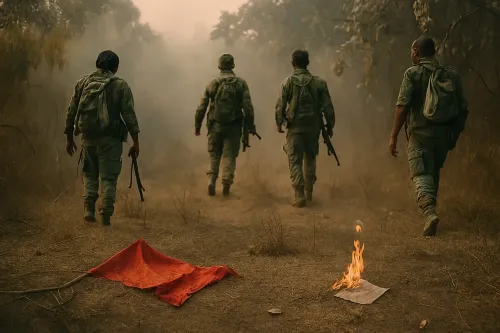
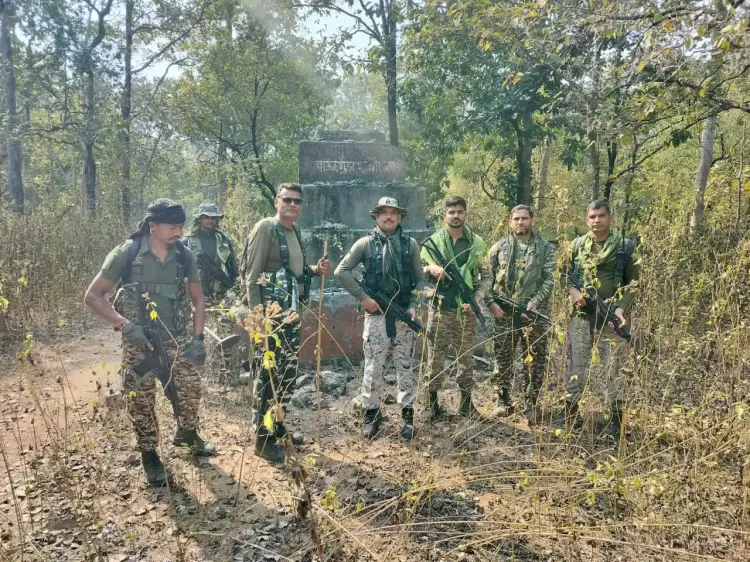
In rural areas, the CRPF has been identifying and dismantling memorials built for prominent Maoists who were killed by security forces.
This initiative is currently being executed in regions like Sukma, Bastar, and Bijapur in Chhattisgarh.
To date, security personnel have destroyed 53 memorials erected by the CPI (Maoist) to honor their key commanders and leaders. These memorials, located in forested areas, are being obliterated.
A plantation drive is underway to ensure these sites blend back into the forest, leaving no trace of the memorials.
Another official clarified that this action is significant and necessary, as these memorials could become focal points for those attempting to revive the movement. Frequent gatherings around these sites could gradually lend traction to the ideology.
Furthermore, this could compel security agencies to act. If the response is perceived as excessive, it may lead to protests erupting in various parts of the country, the official cautioned.
Our aim is to put a definitive end to this movement and to prevent any discourse surrounding it. It is one thing to suppress the movement and quite another to avert its resurgence. To achieve this, every memory associated with the naxal movement must be obliterated, the official elaborated.
The official stated that the dismantling of memorials will extend to all regions where the naxalite movement has flourished. Plans are also in motion to target other states, the official added.
During this operation, there were no objections from the local villagers. In fact, they expressed support for the security forces' actions, indicating a positive shift in sentiment as they grow weary of the naxalite threat.
Following the encounter that resulted in the death of Nambala Keshava Rao, alias Basavaraju, alongside 26 others, some of his sympathizers attempted to organize an elaborate funeral.
However, this was thwarted by the Chhattisgarh Police, who refused to release the body to individuals claiming familial ties. These individuals had sought legal intervention, leading them to communicate with the police.
The police concluded that the claimants lacked valid documentation to establish their relationship with Basavaraj.
It was uncovered that a plan was in place to turn the funeral into a major event.
Several human rights organizations also descended upon Chhattisgarh, protesting against the police's actions. They alleged that the police conducted the cremation without the presence of family members.
Another official indicated that the police discovered that the intention was to glorify the naxalite and utilize it for propaganda. Thus, the police's actions were entirely warranted, the official added.
Point of View
It is crucial to understand that while eliminating the physical presence of Maoists is necessary, addressing the ideological underpinnings is equally vital to prevent any resurgence of such movements. This dual approach reflects a commitment to national security and societal stability.
NationPress
19 Sept 2026
Frequently Asked Questions
What is the deadline set by the government to eliminate Maoists?
The deadline set by Union Home Minister Amit Shah is March 31.
What strategies are being employed to combat Maoist ideology?
The security forces are employing different strategies for urban and rural areas, including dismantling memorials and countering propaganda.
Where are the operations primarily focused?
The operations are primarily focused in areas like Sukma, Bastar, and Bijapur in Chhattisgarh.
How are local villagers reacting to the security forces' actions?
Local villagers have shown support for the actions of the security forces, indicating a growing fatigue with the naxalite threat.
What sparked the investigation into urban naxalites?
The investigation was sparked by concerns from intelligence agencies regarding the propagation of Maoist ideology in urban areas.